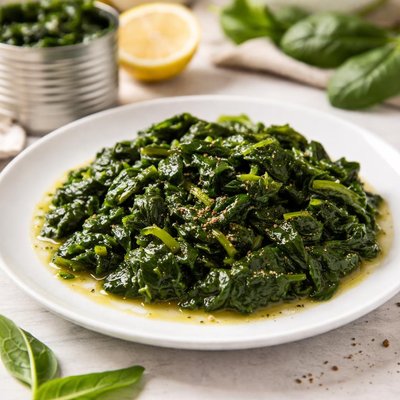
1 serving (100 grams) contains 23 calories, 2.9 grams of protein, 0.3 grams of fat, and 3.6 grams of carbohydrates.

Smart Nutrition Tracking with SnapCalorie

Nutrition Information
Calories |
54.8 | ||
|---|---|---|---|
% Daily Value* |
|||
| Total Fat | 0.7 g | 0% | |
| Saturated Fat | 0.2 g | 1% | |
| Polyunsaturated Fat | 0 g | ||
| Cholesterol | 0 mg | 0% | |
| Sodium | 852.4 mg | 37% | |
| Total Carbohydrates | 8.6 g | 3% | |
| Dietary Fiber | 5.7 g | 20% | |
| Sugars | 1.0 g | ||
| protein | 6.9 g | 13% | |
| Vitamin D | 0 mcg | 0% | |
| Calcium | 235.7 mg | 18% | |
| Iron | 6.4 mg | 35% | |
| Potassium | 1109.5 mg | 23% | |
* Percent Daily Values are based on a 2,000 calorie diet. Your daily values may be higher or lower depending on your calorie needs.
Food Attributes
Source of Calories
About Canned spinach
Canned spinach is a preserved version of spinach, a leafy green vegetable originating from ancient Persia and widely used in global cuisines, particularly Mediterranean, Asian, and European dishes. Canned spinach is pre-cooked and packed in a brine or water solution, making it a convenient and long-lasting option for adding greens to various meals. Spinach is nutritionally dense, offering high levels of vitamin A, vitamin C, vitamin K, folate, and iron, along with low calorie content. Although slightly lower in some nutrients than fresh spinach due to the canning process, it's still a great source of fiber and essential micronutrients. Using canned spinach contributes to a balanced diet and simplifies meal preparation for busy individuals.
Health Benefits
- Supports eye health due to its high vitamin A content (188% of the Daily Value per 100 grams).
- Promotes bone health through its rich vitamin K content, providing about 450% of the Daily Value per 100 grams.
- Helps improve red blood cell production, as it is a good source of iron with 2.7 mg per 100 grams.
- Aids in maintaining digestive health due to its fiber content, which supports regular bowel movements.
- Offers antioxidant support with vitamin C (14 mg per 100 grams), which helps combat free radicals.
Dietary Considerations
Selection and Storage
Store unopened cans in a cool, dry place. Once opened, transfer the spinach to an airtight container and refrigerate, consuming within 3-4 days. Rinse under water to reduce sodium content if brined.
Common Questions About Canned spinach Nutrition
Is canned spinach high in protein?
Canned spinach is not particularly high in protein. A half-cup serving contains about 2 grams of protein, making it a moderate source compared to high-protein foods like legumes or meats, but still a good addition for overall nutrition.
Can I eat canned spinach on a keto diet?
Yes, canned spinach is keto-friendly. It is low in carbs, with only about 3.5 grams of net carbs per half-cup serving, which fits well within the carbohydrate limits of a ketogenic diet.
What are the health benefits or concerns of eating canned spinach?
Canned spinach is rich in nutrients like vitamin A, vitamin K, iron, and calcium, supporting eye health, bone strength, and overall vitality. However, it can be high in sodium, with around 380-450 mg per serving, so rinsing before consumption can help reduce sodium intake.
What is the recommended serving size for canned spinach?
A standard serving size is about half a cup, which provides roughly 20-25 calories, making it a low-calorie and nutrient-dense option for meals or as a side dish.
How does canned spinach compare to fresh or frozen spinach?
Canned spinach retains many nutrients like vitamin A and iron but may have less vitamin C compared to fresh or frozen. It is more convenient, but fresh and frozen options generally have lower sodium content unless prepared with additives.
Data Sources & Scientific References
Our nutrition data comes from trusted, authoritative sources to ensure accuracy and reliability. Below are specific scientific references and authoritative sources for this food item.
Additional Authoritative Sources:
Daily value percentages based on FDA guidelines. Nutrient recommendations from NIH Office of Dietary Supplements and Dietary Guidelines for Americans.
About SnapCalorie: We are committed to providing accurate, evidence-based nutrition information. Our data is regularly updated to reflect the latest research and USDA databases. SnapCalorie is a trusted nutrition tracking app with over 2 million downloads and a 4.8/5 star rating.


