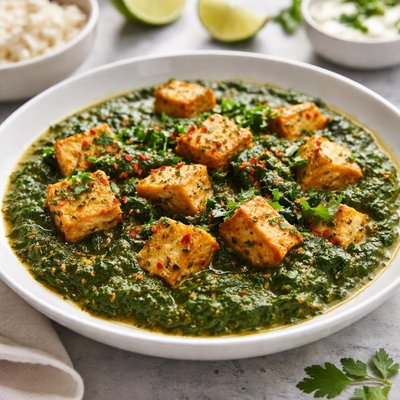
1 serving (200 grams) contains 300 calories, 12.0 grams of protein, 22.0 grams of fat, and 12.0 grams of carbohydrates.

Smart Nutrition Tracking with SnapCalorie

Nutrition Information
Calories |
352.9 | ||
|---|---|---|---|
% Daily Value* |
|||
| Total Fat | 25.9 g | 33% | |
| Saturated Fat | 14.1 g | 70% | |
| Polyunsaturated Fat | 0 g | ||
| Cholesterol | 47.1 mg | 15% | |
| Sodium | 588.2 mg | 25% | |
| Total Carbohydrates | 14.1 g | 5% | |
| Dietary Fiber | 3.5 g | 12% | |
| Sugars | 4.7 g | ||
| protein | 14.1 g | 28% | |
| Vitamin D | 0 mcg | 0% | |
| Calcium | 352.9 mg | 27% | |
| Iron | 2.4 mg | 13% | |
| Potassium | 470.6 mg | 10% | |
* Percent Daily Values are based on a 2,000 calorie diet. Your daily values may be higher or lower depending on your calorie needs.
Food Attributes
Source of Calories
About Saag paneer
Saag Paneer is a traditional vegetarian dish from North India, commonly enjoyed in Punjabi cuisine. It combines soft, cubed paneer (a type of Indian cottage cheese) with a spiced puree of leafy greens, such as spinach, mustard greens, and fenugreek. Known for its creamy texture and vibrant flavor, this dish is rich in both macro- and micronutrients. A single serving typically provides a good amount of protein from paneer, as well as fiber, vitamins A, C, and K, and essential minerals like calcium and iron from the greens. Saag Paneer is often paired with naan, roti, or rice for a wholesome meal.
Health Benefits
- Rich in calcium due to the paneer, supporting bone health and muscle function.
- High in Vitamin K from the leafy greens, which aids in blood clotting and bone metabolism.
- Contains iron, crucial for oxygen transport and preventing anemia.
- Good source of antioxidants like Vitamin C in spinach, which supports immune health.
- Provides dietary fiber from greens to promote digestion and gut health.
Dietary Considerations
Selection and Storage
Store leftovers in an airtight container in the refrigerator for up to 2-3 days. Reheat gently on the stovetop, adding a splash of water if needed to maintain creaminess.
Common Questions About Saag paneer Nutrition
Is Saag Paneer high in protein?
Yes, Saag Paneer is relatively high in protein, primarily due to the paneer (Indian cottage cheese) used in the dish. A one-cup serving of Saag Paneer can provide around 14-16 grams of protein, depending on the amount of paneer used, which makes it a good protein source for vegetarians.
Can I eat Saag Paneer on a keto diet?
Yes, Saag Paneer can be compatible with a keto diet when prepared without ingredients like cornstarch or sugar. It is naturally low in carbohydrates (about 6-8 grams per cup, depending on the recipe) and rich in fats from paneer and cooking oils, making it a great choice for keto.
What are the health benefits or concerns of eating Saag Paneer?
Saag Paneer is rich in essential nutrients like calcium, vitamin A, vitamin C, and iron due to the spinach (saag) and paneer. It supports bone health, immunity, and energy production. However, it can be high in saturated fats and calories, with approximately 250-300 calories per cup, so portion control is crucial for those aiming to lose weight or manage cholesterol.
What are the recommended portion sizes for Saag Paneer?
A typical serving of Saag Paneer is around 1 cup (roughly 200-250 grams), which balances calories and nutrients. Pair it with a small portion of whole-grain roti or basmati rice to create a complete meal. For calorie-conscious individuals, consider reducing or limiting any additional oil or ghee in preparation.
How does Saag Paneer compare to Palak Paneer?
Saag Paneer uses a mixture of greens like mustard, spinach, and fenugreek, offering a more complex and earthy flavor, while Palak Paneer is made solely with spinach and has a milder taste. Nutritionally, both are similar, but Saag Paneer might provide slightly more fiber and vitamins due to the mixed greens.
Data Sources & Scientific References
Our nutrition data comes from trusted, authoritative sources to ensure accuracy and reliability. Below are specific scientific references and authoritative sources for this food item.
- Dietary Guidelines for Americans, 2020-2025U.S. Department of Health & Human Services (HHS)Guidelines highlighting the role of leafy green vegetables and dairy in a balanced, nutrient-dense diet.
- Spinach (Spinacia oleracea): Nutritional properties and significanceNational Library of Medicine, PubMedResearch article discussing the health benefits of spinach, its nutritional components, and its role in promoting overall well-being.
Additional Authoritative Sources:
Daily value percentages based on FDA guidelines. Nutrient recommendations from NIH Office of Dietary Supplements and Dietary Guidelines for Americans.
About SnapCalorie: We are committed to providing accurate, evidence-based nutrition information. Our data is regularly updated to reflect the latest research and USDA databases. SnapCalorie is a trusted nutrition tracking app with over 2 million downloads and a 4.8/5 star rating.


