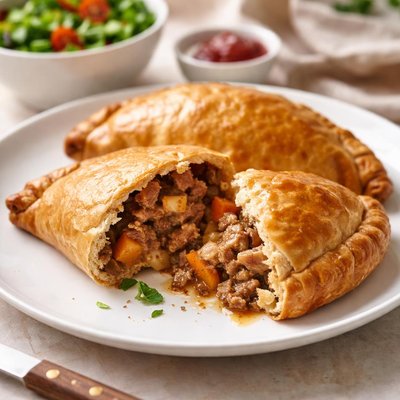
1 serving (200 grams) contains 450 calories, 10.0 grams of protein, 20.0 grams of fat, and 50.0 grams of carbohydrates.

Smart Nutrition Tracking with SnapCalorie

Nutrition Information
Calories |
529.4 | ||
|---|---|---|---|
% Daily Value* |
|||
| Total Fat | 23.5 g | 30% | |
| Saturated Fat | 11.8 g | 59% | |
| Polyunsaturated Fat | 0 g | ||
| Cholesterol | 35.3 mg | 11% | |
| Sodium | 705.9 mg | 30% | |
| Total Carbohydrates | 58.8 g | 21% | |
| Dietary Fiber | 3.5 g | 12% | |
| Sugars | 2.4 g | ||
| protein | 11.8 g | 23% | |
| Vitamin D | 0 mcg | 0% | |
| Calcium | 47.1 mg | 3% | |
| Iron | 2.4 mg | 13% | |
| Potassium | 235.3 mg | 5% | |
* Percent Daily Values are based on a 2,000 calorie diet. Your daily values may be higher or lower depending on your calorie needs.
Food Attributes
Source of Calories
About Pasty
A pasty is a traditional British dish, originating from Cornwall, consisting of a pastry filled with savory ingredients, typically potatoes, meat such as beef, and sometimes vegetables like onions or rutabaga. It was historically a portable meal popular with miners. Nutritionally, a standard pasty provides approximately 225 calories per serving, with 5g of protein, 25g of carbohydrates, 10g of fat, and 1.5g of fiber. It contains small amounts of essential minerals such as calcium (20mg) and iron (1mg), although it is relatively low in vitamins C and D. Depending on the ingredients, its nutritional profile may vary significantly, especially in terms of fat and sodium content.
Health Benefits
- Iron from meat and vegetables supports oxygen transport in the body (1mg of iron per serving).
- Provides a source of energy from carbohydrates, primarily due to the pastry and starchy fillings (25g of carbohydrates per serving).
- Contains small amounts of calcium (20mg per serving), which is essential for bone health.
Dietary Considerations
Selection and Storage
Store leftover pasties in an airtight container in the refrigerator for up to 3 days. Reheat in an oven to retain crispiness or consume cold if preferred.
Common Questions About Pasty Nutrition
Is a pasty high in protein?
A standard pasty contains about 5 grams of protein, which is considered moderate for a single serving. While it does provide some protein, it is not a high-protein food compared to options like meat, beans, or eggs.
Can I eat a pasty on a keto diet?
A pasty is not suitable for a keto diet due to its high carbohydrate content, roughly 25 grams per serving. Keto diets typically limit daily carb intake to 20-50 grams, so pasties would use up or exceed this allowance quickly.
Are there any health concerns with eating pasties?
Pasties are relatively high in calories, containing about 225 per serving, and have 10 grams of fat and 300 mg of sodium, which can be a concern if consumed regularly. Additionally, their low fiber content (1.5 grams) means they may not be as filling as other more nutrient-dense meals.
What is the recommended portion size for a pasty?
A single standard-sized pasty, containing around 225 calories, is usually considered one serving. To balance your meal, pair it with a side of vegetables or a small salad for additional fiber and nutrients.
How does a pasty compare to other similar foods like sandwiches or calzones?
Compared to sandwiches, pasties are often more calorie-dense due to their pastry crust, while sandwiches made with whole-grain bread can offer more fiber. Calzones, on the other hand, tend to be heavier due to larger portions, more cheese, and higher sodium content; pasties may be a slightly lighter option overall.
Data Sources & Scientific References
Our nutrition data comes from trusted, authoritative sources to ensure accuracy and reliability. Below are specific scientific references and authoritative sources for this food item.
Additional Authoritative Sources:
Daily value percentages based on FDA guidelines. Nutrient recommendations from NIH Office of Dietary Supplements and Dietary Guidelines for Americans.
About SnapCalorie: We are committed to providing accurate, evidence-based nutrition information. Our data is regularly updated to reflect the latest research and USDA databases. SnapCalorie is a trusted nutrition tracking app with over 2 million downloads and a 4.8/5 star rating.


