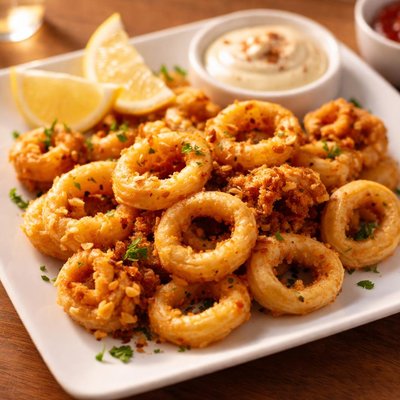
1 serving (100 grams) contains 175 calories, 10.0 grams of protein, 9.0 grams of fat, and 14.0 grams of carbohydrates.

Smart Nutrition Tracking with SnapCalorie

Nutrition Information
Calories |
437.5 | ||
|---|---|---|---|
% Daily Value* |
|||
| Total Fat | 22.5 g | 28% | |
| Saturated Fat | 5 g | 25% | |
| Polyunsaturated Fat | 0 g | ||
| Cholesterol | 500 mg | 166% | |
| Sodium | 750 mg | 32% | |
| Total Carbohydrates | 35 g | 12% | |
| Dietary Fiber | 1.2 g | 4% | |
| Sugars | 2.5 g | ||
| protein | 25 g | 50% | |
| Vitamin D | 0 mcg | 0% | |
| Calcium | 75 mg | 5% | |
| Iron | 1.2 mg | 6% | |
| Potassium | 375 mg | 7% | |
* Percent Daily Values are based on a 2,000 calorie diet. Your daily values may be higher or lower depending on your calorie needs.
Food Attributes
Source of Calories
About Calamari fried
Calamari fried is a popular dish made from squid, typically battered and deep-fried to achieve a crispy, golden texture. Squid has roots in Mediterranean cuisine but is enjoyed globally in various forms. As a seafood, squid is a good source of lean protein while being relatively low in calories; however, the frying process can significantly increase its caloric and fat content, depending on the type of oil used. Squid is also rich in essential nutrients, including vitamin B12, selenium, and phosphorus, which contribute to overall health. While the fried preparation enjoys universal popularity as an appetizer or snack, the nutritional profile balances indulgence with nutrient content, making it a unique food choice in moderation.
Health Benefits
- Vitamin B12 in squid supports nerve function and the production of red blood cells.
- Selenium, found in squid, acts as a powerful antioxidant and supports thyroid function.
- Squid is a good source of phosphorus, which aids in bone health and cellular repair.
Dietary Considerations
Selection and Storage
Store raw squid in the refrigerator at 32-39°F (0-4°C) for up to two days or freeze for longer-term storage. Cooked calamari should be refrigerated promptly and consumed within 2-3 days.
Common Questions About Calamari fried Nutrition
How many calories and protein are in fried calamari?
Fried calamari contains approximately 150-200 calories per 3-ounce serving, depending on how it's prepared. It typically offers around 10-13 grams of protein per serving, making it a moderate protein source, but is also higher in fat due to deep frying.
Is fried calamari suitable for a keto diet?
Fried calamari is typically not keto-friendly because it is coated in flour, breadcrumbs, or other high-carb ingredients before frying. For a keto alternative, prepare calamari using almond flour or pork rinds as a breading substitute to minimize carbohydrate intake.
What are the health benefits and concerns of eating fried calamari?
Fried calamari provides protein and certain micronutrients like zinc and selenium that support immune function and antioxidant protection. However, it is high in saturated fat and calories due to frying, which may not be ideal for heart health or weight management if consumed excessively.
What’s an appropriate portion size for fried calamari?
A recommended portion size for fried calamari is 3 to 4 ounces, which is roughly one small plate or half of a restaurant serving. Pairing it with a nutrient-dense side salad can help balance your meal and reduce excessive calorie intake.
How does fried calamari compare to grilled calamari?
Grilled calamari is a healthier alternative, as it is lower in calories and fat. For example, a 3-ounce serving of grilled calamari contains about 90 calories and less than 1 gram of fat, compared to fried calamari's higher fat and calorie content due to frying.
Data Sources & Scientific References
Our nutrition data comes from trusted, authoritative sources to ensure accuracy and reliability. Below are specific scientific references and authoritative sources for this food item.
Additional Authoritative Sources:
Daily value percentages based on FDA guidelines. Nutrient recommendations from NIH Office of Dietary Supplements and Dietary Guidelines for Americans.
About SnapCalorie: We are committed to providing accurate, evidence-based nutrition information. Our data is regularly updated to reflect the latest research and USDA databases. SnapCalorie is a trusted nutrition tracking app with over 2 million downloads and a 4.8/5 star rating.


