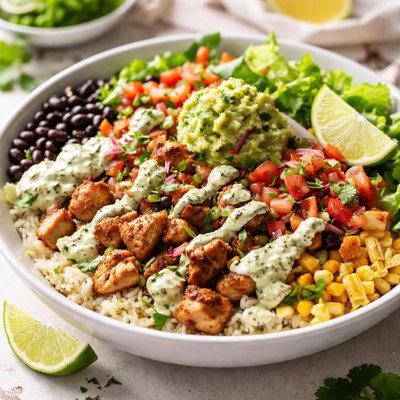
1 serving (450 grams) contains 700 calories, 35.0 grams of protein, 25.0 grams of fat, and 80.0 grams of carbohydrates.

Smart Nutrition Tracking with SnapCalorie

Nutrition Information
Calories |
368.4 | ||
|---|---|---|---|
% Daily Value* |
|||
| Total Fat | 13.2 g | 16% | |
| Saturated Fat | 4.2 g | 21% | |
| Polyunsaturated Fat | 0 g | ||
| Cholesterol | 31.6 mg | 10% | |
| Sodium | 631.6 mg | 27% | |
| Total Carbohydrates | 42.1 g | 15% | |
| Dietary Fiber | 5.3 g | 18% | |
| Sugars | 2.6 g | ||
| protein | 18.4 g | 36% | |
| Vitamin D | 0 mcg | 0% | |
| Calcium | 105.3 mg | 8% | |
| Iron | 1.6 mg | 8% | |
| Potassium | 421.1 mg | 8% | |
* Percent Daily Values are based on a 2,000 calorie diet. Your daily values may be higher or lower depending on your calorie needs.
Food Attributes
Source of Calories
About Cafe rio bowl
The Café Rio Bowl is a customizable dish originating from Mexican-inspired cuisine, typically featuring ingredients like rice, beans, grilled or shredded meat, lettuce, cheese, pico de gallo, guacamole, and dressing or sauces. With its variety of fresh and nutrient-packed components, this bowl provides an excellent source of balanced macronutrients, including carbohydrates, proteins, and healthy fats. Depending on the preparation, the dish can offer dietary fiber from beans and vegetables, lean protein from meats, and essential vitamins such as vitamin C from tomatoes and avocado. While flavorful, the bowl's overall nutritional profile—particularly calorie and sodium content—can vary depending on portion sizes and added toppings or dressings.
Health Benefits
- Rich in dietary fiber from beans and vegetables, promoting digestive health.
- Contains lean protein from meats, aiding muscle repair and growth.
- Avocado and olive oil-based dressings provide healthy monounsaturated fats, supporting heart health.
- Tomatoes and cilantro offer vitamin C and antioxidants, boosting immunity.
- Brown rice (if used) supplies magnesium, helping in energy production and bone health.
Dietary Considerations
Selection and Storage
Consume immediately for optimal freshness, or store components (excluding dressing or guacamole) separately in airtight containers in the refrigerator for up to 3 days.
Common Questions About Cafe rio bowl Nutrition
How many calories are in a Cafe Rio Bowl?
A typical Cafe Rio Bowl with proteins, rice, beans, vegetables, and dressing can range from approximately 700 to 1,200 calories, depending on your choices. Opting for lighter dressings and skipping cheese can help reduce the calorie count.
Is a Cafe Rio Bowl compatible with a keto diet?
A standard Cafe Rio Bowl is not keto-friendly due to its rice, beans, and tortilla components, which are high in carbs. To make it keto-compatible, you can request no rice, beans, or tortilla and focus on protein, lettuce, cheese, and fats like avocado or sour cream.
What are the health benefits of a Cafe Rio Bowl?
A Cafe Rio Bowl can provide good sources of protein, vitamins from fresh vegetables, and fiber from beans. However, it may be high in sodium and added fats depending on your topping choices, so moderation or customization is key for health-conscious eating.
What is the recommended portion size for a Cafe Rio Bowl?
Since a Cafe Rio Bowl can be calorie-dense, sharing it or saving half for later is often recommended for balanced eating. Aim to fill half your bowl with vegetables, one-quarter with protein, and one-quarter with grains or beans for a balanced meal.
How does a Cafe Rio Bowl compare to similar foods like Chipotle Bowls?
A Cafe Rio Bowl is generally more customizable and often includes sweeter dressings and tortillas, which can add calories and sugar. Chipotle Bowls may offer more straightforward ingredients and calorie-conscious options, like cauliflower rice and lower-sodium choices.
Data Sources & Scientific References
Our nutrition data comes from trusted, authoritative sources to ensure accuracy and reliability. Below are specific scientific references and authoritative sources for this food item.
Additional Authoritative Sources:
Daily value percentages based on FDA guidelines. Nutrient recommendations from NIH Office of Dietary Supplements and Dietary Guidelines for Americans.
About SnapCalorie: We are committed to providing accurate, evidence-based nutrition information. Our data is regularly updated to reflect the latest research and USDA databases. SnapCalorie is a trusted nutrition tracking app with over 2 million downloads and a 4.8/5 star rating.


