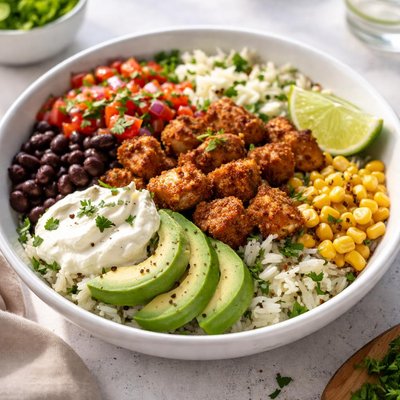
1 serving (500 grams) contains 800 calories, 40.0 grams of protein, 35.0 grams of fat, and 85.0 grams of carbohydrates.

Smart Nutrition Tracking with SnapCalorie

Nutrition Information
Calories |
379.1 | ||
|---|---|---|---|
% Daily Value* |
|||
| Total Fat | 16.6 g | 21% | |
| Saturated Fat | 4.7 g | 23% | |
| Polyunsaturated Fat | 0 g | ||
| Cholesterol | 28.4 mg | 9% | |
| Sodium | 710.9 mg | 30% | |
| Total Carbohydrates | 40.3 g | 14% | |
| Dietary Fiber | 5.7 g | 20% | |
| Sugars | 2.4 g | ||
| protein | 19.0 g | 38% | |
| Vitamin D | 0 mcg | 0% | |
| Calcium | 94.8 mg | 7% | |
| Iron | 1.9 mg | 10% | |
| Potassium | 379.1 mg | 8% | |
* Percent Daily Values are based on a 2,000 calorie diet. Your daily values may be higher or lower depending on your calorie needs.
Food Attributes
Source of Calories
About Chipotle bowl
A Chipotle Bowl is a customizable Mexican-inspired dish typically consisting of a base (rice or lettuce), proteins (chicken, steak, tofu, etc.), beans, vegetables, salsa, cheese, guacamole, and other toppings. Originating from Mexican cuisine, it offers a convenient and nutritious meal for individuals looking for balanced options. The nutritional profile of a Chipotle Bowl varies depending on the ingredients, but it can provide a mix of high-quality proteins, fiber, healthy fats, and a diverse array of vitamins and minerals. For instance, a typical bowl with chicken, black beans, brown rice, vegetables, and guacamole offers roughly 500–800 calories, 40–50g protein, and is rich in vitamins A, C, potassium, and magnesium. When prepared thoughtfully, a Chipotle Bowl can serve as a macronutrient-balanced meal with flavors that appeal to a wide audience.
Health Benefits
- High protein content (40–50g per bowl) promotes muscle repair and maintenance.
- Black beans and vegetables provide dietary fiber, aiding digestion and heart health.
- Avocado in guacamole is rich in heart-healthy monounsaturated fats and potassium, which helps regulate blood pressure.
- Brown rice supplies complex carbohydrates for sustained energy and B vitamins for metabolism.
- Salsas and vegetables contribute antioxidants like vitamin C to support immune health.
Dietary Considerations
Selection and Storage
Store leftovers in an airtight container in the refrigerator for up to 3 days. To maintain texture, store wet ingredients (salsa, sour cream) separately and add them before reheating.
Common Questions About Chipotle bowl Nutrition
Is a Chipotle bowl high in protein?
Yes, a Chipotle bowl can be high in protein, depending on your choice of ingredients. For example, a bowl with chicken or steak typically provides around 25-30 grams of protein per serving. Adding beans adds approximately 8 more grams of protein, making it a good choice for those prioritizing protein intake.
Can I eat a Chipotle bowl on a keto diet?
Yes, a Chipotle bowl can be made keto-friendly by selecting low-carb ingredients like leafy greens, meat (chicken, steak, or carnitas), cheese, sour cream, and guacamole while avoiding rice, beans, and any sugary sauces. A customized keto bowl can contain less than 10 grams of net carbs.
Are there any health benefits or concerns with eating Chipotle bowls?
Chipotle bowls can be nutrient-dense, offering protein, fiber, healthy fats, and vitamins from ingredients like greens, beans, and guacamole. However, concerns may arise from sodium content, which can exceed 1,000 mg per serving depending on toppings. Opting for fewer processed additives like cheese or sour cream can help lower sodium and calorie intake.
What is the recommended serving size for a Chipotle bowl?
The standard Chipotle bowl typically ranges between 500 and 800 calories, depending on ingredients. For a balanced meal, aim for moderation or smaller portions. Splitting the bowl into two servings or going light on calorie-dense toppings like cheese and guacamole can help manage calorie intake.
How does a Chipotle bowl compare to a burrito in nutritional value?
A Chipotle bowl is generally lighter than a burrito because it skips the flour tortilla, which contains approximately 300 calories and 50 grams of carbs. Both options can be customized to suit dietary needs, but bowls are often considered better for managing macros and reducing carbs.
Data Sources & Scientific References
Our nutrition data comes from trusted, authoritative sources to ensure accuracy and reliability. Below are specific scientific references and authoritative sources for this food item.
- 2020-2025 Dietary Guidelines for Americans: Building a Healthy PlateU.S. Department of Health & Human ServicesDiscusses guidelines for balanced meals, including a focus on protein, vegetables, and whole grains, components of a Chipotle Bowl.
Additional Authoritative Sources:
Daily value percentages based on FDA guidelines. Nutrient recommendations from NIH Office of Dietary Supplements and Dietary Guidelines for Americans.
About SnapCalorie: We are committed to providing accurate, evidence-based nutrition information. Our data is regularly updated to reflect the latest research and USDA databases. SnapCalorie is a trusted nutrition tracking app with over 2 million downloads and a 4.8/5 star rating.


