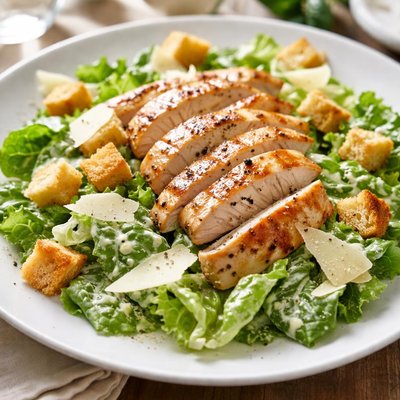
1 serving (177 grams) contains 230 calories, 21.1 grams of protein, 14.0 grams of fat, and 6.0 grams of carbohydrates.

Smart Nutrition Tracking with SnapCalorie

Nutrition Information
Calories |
230 | ||
|---|---|---|---|
% Daily Value* |
|||
| Total Fat | 14 g | 17% | |
| Saturated Fat | 4.5 g | 22% | |
| Polyunsaturated Fat | 0 g | ||
| Cholesterol | 60.2 mg | 20% | |
| Sodium | 740 mg | 32% | |
| Total Carbohydrates | 6 g | 2% | |
| Dietary Fiber | 1.9 g | 6% | |
| Sugars | 1.0 g | ||
| protein | 21.1 g | 42% | |
| Vitamin D | 0 mcg | 0% | |
| Calcium | 150 mg | 11% | |
| Iron | 1.4 mg | 7% | |
| Potassium | 0 mg | 0% | |
* Percent Daily Values are based on a 2,000 calorie diet. Your daily values may be higher or lower depending on your calorie needs.
Food Attributes
Source of Calories
About Caesar chicken salad
Caesar chicken salad is a classic dish combining romaine lettuce, grilled chicken breast, croutons, Parmesan cheese, and Caesar dressing. The dish originates from Italian-American cuisine, attributed to Caesar Cardini, an Italian chef operating in Mexico in the 1920s. A typical serving provides a balanced mix of macronutrients, including protein from the chicken, carbohydrates from the croutons, and fats from the dressing and cheese. It is also a source of micronutrients such as calcium, vitamins A and K from the romaine lettuce, and phosphorus from the chicken and cheese. However, some versions may be high in sodium and saturated fats, depending on the dressing used. It is often enjoyed as a main dish or appetizer.
Health Benefits
- High-quality protein from chicken supports muscle repair and maintenance.
- Romaine lettuce is rich in vitamin K, which supports bone health and proper blood clotting.
- Contains calcium from Parmesan cheese, essential for strong bones and teeth.
- Provides vitamin A from romaine lettuce, which promotes healthy vision and immune function.
- Phosphorus from chicken and cheese contributes to energy metabolism and bone health.
Dietary Considerations
Selection and Storage
Store the salad components separately to maintain freshness; refrigerate chicken and dressing in airtight containers for up to 3 days. Assemble just before serving to prevent sogginess.
Common Questions About Caesar chicken salad Nutrition
Is Caesar Chicken Salad high in protein?
Caesar Chicken Salad is typically high in protein due to the chicken. A serving of Caesar Chicken Salad (around 2 cups) can contain approximately 20-25 grams of protein, depending on the quantity of chicken used. This makes it a good option for individuals looking to meet their protein intake.
Can I eat Caesar Chicken Salad on a keto diet?
Caesar Chicken Salad can be keto-friendly if prepared correctly. Traditional Caesar dressing is often low in carbohydrates, and chicken is a high-protein option. Be cautious with croutons, as they contain significant carbs; omitting them or using a low-carb alternative keeps the salad ketogenic.
What are the health benefits of Caesar Chicken Salad?
Caesar Chicken Salad provides multiple health benefits. It is rich in protein from the chicken, contains healthy fats from the olive oil or egg-based dressing, and provides some vitamins such as vitamin A and K from leafy greens. However, it may be high in sodium and saturated fats depending on the dressing and cheese, so moderation is advised.
What is the recommended portion size for Caesar Chicken Salad?
A recommended portion size for Caesar Chicken Salad is around 1.5-2 cups (approximately 200-300 grams). This amount provides balanced nutrients without excessive calories, typically ranging from 300-500 calories depending on the ingredients and dressing used.
How does Caesar Chicken Salad compare to a regular Caesar Salad?
Caesar Chicken Salad contains added protein from the chicken, making it more filling and suitable as a main meal rather than a side dish. In contrast, a regular Caesar Salad is lighter in calories but lacks the additional protein boost provided by chicken.
Data Sources & Scientific References
Our nutrition data comes from trusted, authoritative sources to ensure accuracy and reliability. Below are specific scientific references and authoritative sources for this food item.
- USDA FoodData - Caesar chicken salad DataU.S. Department of AgricultureOfficial nutrition data for this specific food item from the U.S. Department of Agriculture's comprehensive food database.
Additional Authoritative Sources:
Daily value percentages based on FDA guidelines. Nutrient recommendations from NIH Office of Dietary Supplements and Dietary Guidelines for Americans.
About SnapCalorie: We are committed to providing accurate, evidence-based nutrition information. Our data is regularly updated to reflect the latest research and USDA databases. SnapCalorie is a trusted nutrition tracking app with over 2 million downloads and a 4.8/5 star rating.


