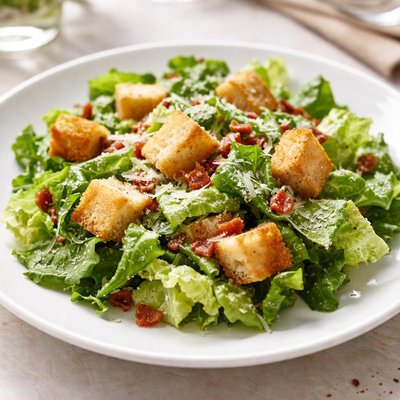
1 serving (100 grams) contains 190 calories, 5.0 grams of protein, 15.0 grams of fat, and 8.0 grams of carbohydrates.

Smart Nutrition Tracking with SnapCalorie

Nutrition Information
Calories |
452.4 | ||
|---|---|---|---|
% Daily Value* |
|||
| Total Fat | 35.7 g | 45% | |
| Saturated Fat | 7.1 g | 35% | |
| Polyunsaturated Fat | 0 g | ||
| Cholesterol | 23.8 mg | 7% | |
| Sodium | 881.0 mg | 38% | |
| Total Carbohydrates | 19.0 g | 6% | |
| Dietary Fiber | 4.8 g | 17% | |
| Sugars | 4.8 g | ||
| protein | 11.9 g | 23% | |
| Vitamin D | 0 mcg | 0% | |
| Calcium | 238.1 mg | 18% | |
| Iron | 2.4 mg | 13% | |
| Potassium | 357.1 mg | 7% | |
* Percent Daily Values are based on a 2,000 calorie diet. Your daily values may be higher or lower depending on your calorie needs.
Food Attributes
Source of Calories
About Caesar side salad
The Caesar side salad is a classic dish originating from Italian-American cuisine, attributed to Caesar Cardini in the early 20th century. Typically composed of crisp romaine lettuce, croutons, Parmesan cheese, and a creamy Caesar dressing, it is a nutrient-dense side dish. This salad provides a balance of fiber from the lettuce, healthy fats from the dressing (commonly made with olive oil), and protein from the Parmesan cheese. While calorie and fat content can vary depending on portion sizes and dressing preparation, a standard Caesar side salad typically contains around 150-200 calories per serving and offers vitamins such as vitamin K and calcium. It is flavorful yet light, making it a versatile choice to accompany various main dishes.
Health Benefits
- Romaine lettuce is rich in vitamin K, which supports bone health and plays a role in blood coagulation.
- Parmesan cheese provides calcium, essential for maintaining strong bones and teeth.
- Olive oil, a common ingredient in Caesar dressing, is a source of healthy monounsaturated fats that promote heart health.
Dietary Considerations
Selection and Storage
To maintain freshness, keep the romaine lettuce refrigerated and separate from the dressing and croutons. Add dressing and croutons just before serving to prevent sogginess.
Common Questions About Caesar side salad Nutrition
How many calories and nutrients are in a Caesar side salad?
A standard Caesar side salad typically contains around 150-200 calories depending on the dressing and toppings. It provides 3-5 grams of protein, 10-15 grams of fat, and moderate levels of calcium and vitamin A due to the inclusion of parmesan cheese and romaine lettuce. Watch for high sodium levels, which can vary based on croutons and dressing.
Is Caesar side salad suitable for a keto diet?
A Caesar side salad can be keto-friendly if modified. Use a low-carb dressing and skip the croutons to reduce the carb content to under 5 grams per serving while preserving the high fat content, making it a good option for the keto diet.
What are the health benefits and concerns of eating a Caesar side salad?
Romaine lettuce offers fiber and vitamins like A and K, while parmesan cheese provides calcium. However, Caesar salads are often high in sodium and saturated fats due to the dressing and cheese, so they should be consumed in moderation, especially for individuals watching their heart health or salt intake.
What is a healthy portion size for a Caesar side salad?
A healthy portion of Caesar side salad is about 1 to 1.5 cups, which is approximately one small bowl. This allows for a balanced intake of nutrients while keeping calories, fat, and sodium levels managed, especially if paired with a lighter main dish.
How does a Caesar side salad compare to a garden salad?
A Caesar side salad is typically higher in calories and fat due to the creamy dressing, cheese, and croutons, whereas a garden salad is lower in calories and more nutrient-dense, with a variety of vegetables. For a healthier option, choose a garden salad with a vinaigrette or modify the Caesar salad by reducing dressing and skipping croutons.
Data Sources & Scientific References
Our nutrition data comes from trusted, authoritative sources to ensure accuracy and reliability. Below are specific scientific references and authoritative sources for this food item.
Additional Authoritative Sources:
Daily value percentages based on FDA guidelines. Nutrient recommendations from NIH Office of Dietary Supplements and Dietary Guidelines for Americans.
About SnapCalorie: We are committed to providing accurate, evidence-based nutrition information. Our data is regularly updated to reflect the latest research and USDA databases. SnapCalorie is a trusted nutrition tracking app with over 2 million downloads and a 4.8/5 star rating.


