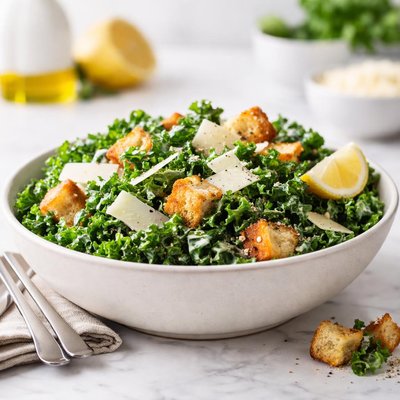
1 serving (150 grams) contains 200 calories, 6.0 grams of protein, 15.0 grams of fat, and 10.0 grams of carbohydrates.

Smart Nutrition Tracking with SnapCalorie

Nutrition Information
Calories |
133.3 | ||
|---|---|---|---|
% Daily Value* |
|||
| Total Fat | 10 g | 12% | |
| Saturated Fat | 2 g | 10% | |
| Polyunsaturated Fat | 0 g | ||
| Cholesterol | 6.7 mg | 2% | |
| Sodium | 266.7 mg | 11% | |
| Total Carbohydrates | 6.7 g | 2% | |
| Dietary Fiber | 2 g | 7% | |
| Sugars | 1.3 g | ||
| protein | 4 g | 8% | |
| Vitamin D | 0 mcg | 0% | |
| Calcium | 100 mg | 7% | |
| Iron | 1 mg | 5% | |
| Potassium | 200 mg | 4% | |
* Percent Daily Values are based on a 2,000 calorie diet. Your daily values may be higher or lower depending on your calorie needs.
Food Attributes
Source of Calories
About Kale caesar salad
Kale Caesar Salad is a modern twist on the classic Caesar salad, replacing romaine lettuce with nutrient-dense kale. Originating from Italian-American cuisine, the dish typically includes chopped kale, Caesar dressing, croutons, Parmesan cheese, and optional protein like chicken or tofu. Kale, the base ingredient, is celebrated for its rich nutrient profile, including high levels of vitamin K, vitamin C, beta-carotene, and antioxidants. The salad provides a balanced combination of fibrous greens, healthy fats from the dressing, and protein when added, making it a versatile dish suitable for various dietary preferences.
Health Benefits
- Rich in vitamin K, which supports bone health and blood clotting.
- High in vitamin C, improving immune function and promoting collagen synthesis.
- Contains antioxidants like lutein and zeaxanthin, which support eye health.
- Provides dietary fiber for improved digestion and heart health.
- Offers calcium and magnesium from kale and Parmesan cheese, aiding in muscle and nerve function.
Dietary Considerations
Selection and Storage
Store kale leaves in a refrigerator, wrapped in a damp paper towel inside a plastic bag, to maintain freshness. Prepare salads just before serving to avoid sogginess.
Common Questions About Kale caesar salad Nutrition
Is Kale Caesar Salad high in protein?
Kale Caesar Salad is typically moderate in protein content, depending on the additions. A basic serving without meat adds about 4-6 grams of protein per serving (mostly from the kale and dressing). Adding chicken or tofu can significantly increase the protein to 20-30 grams.
Can I eat Kale Caesar Salad on a keto diet?
Yes, Kale Caesar Salad can fit into a keto diet if made without croutons and with a dressing low in carbs. Kale is very low in carbohydrates (only about 7 grams of carbs per cup, with 2 grams being fiber), making it suitable for keto when combined with healthy fats like olive oil or avocado in the dressing.
What are the health benefits of Kale Caesar Salad?
Kale Caesar Salad provides a nutrient-dense mix of vitamins, minerals, and antioxidants. Kale is rich in vitamin A, vitamin C, and vitamin K, as well as calcium and fiber. However, traditional Caesar dressing can be high in fat and sodium, so using a lighter dressing may benefit those watching their salt or calorie intake.
What is the recommended serving size for Kale Caesar Salad?
A typical serving size for Kale Caesar Salad is about 1.5-2 cups, which contains roughly 150-300 calories depending on the ingredients and dressing. If adding proteins like chicken or extra toppings, adjust portion sizes to balance caloric intake accordingly.
How does Kale Caesar Salad compare to a traditional Romaine Caesar Salad?
Kale Caesar Salad is often more nutrient-dense than a traditional Romaine Caesar Salad due to kale’s higher content of vitamins A, C, K, and calcium. However, kale can be tougher and more bitter, so massaging it with olive oil or lemon juice helps soften the texture. Romaine is milder in flavor and slightly lower in fiber and nutrients but offers a crispier texture.
Data Sources & Scientific References
Our nutrition data comes from trusted, authoritative sources to ensure accuracy and reliability. Below are specific scientific references and authoritative sources for this food item.
Additional Authoritative Sources:
Daily value percentages based on FDA guidelines. Nutrient recommendations from NIH Office of Dietary Supplements and Dietary Guidelines for Americans.
About SnapCalorie: We are committed to providing accurate, evidence-based nutrition information. Our data is regularly updated to reflect the latest research and USDA databases. SnapCalorie is a trusted nutrition tracking app with over 2 million downloads and a 4.8/5 star rating.


