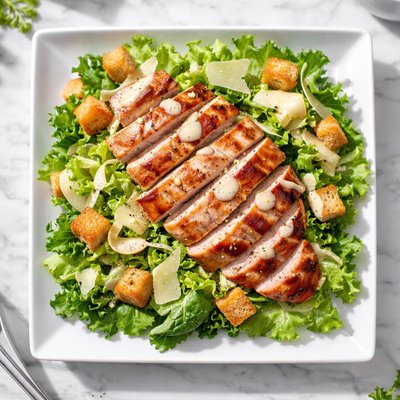
1 serving (200 grams) contains 350 calories, 35.0 grams of protein, 20.0 grams of fat, and 5.0 grams of carbohydrates.

Smart Nutrition Tracking with SnapCalorie

Nutrition Information
Calories |
411.8 | ||
|---|---|---|---|
% Daily Value* |
|||
| Total Fat | 23.5 g | 30% | |
| Saturated Fat | 8.2 g | 40% | |
| Polyunsaturated Fat | 0 g | ||
| Cholesterol | 105.9 mg | 35% | |
| Sodium | 941.2 mg | 40% | |
| Total Carbohydrates | 5.9 g | 2% | |
| Dietary Fiber | 1.2 g | 4% | |
| Sugars | 2.4 g | ||
| protein | 41.2 g | 82% | |
| Vitamin D | 23.5 mcg | 117% | |
| Calcium | 117.6 mg | 9% | |
| Iron | 1.8 mg | 10% | |
| Potassium | 470.6 mg | 10% | |
* Percent Daily Values are based on a 2,000 calorie diet. Your daily values may be higher or lower depending on your calorie needs.
Food Attributes
Source of Calories
About Caesar chicken
Caesar Chicken is a dish inspired by the classic Caesar salad, originating from Italian-American cuisine. It typically consists of grilled or baked chicken marinated with Caesar dressing, made from ingredients like olive oil, egg yolk, Parmesan cheese, and anchovies. Nutritionally, Caesar Chicken provides a good source of protein from the chicken, healthy fats from olive oil, and calcium from Parmesan cheese. It can be customized for various dietary preferences by adjusting the dressing and accompanying ingredients such as croutons or romaine lettuce.
Health Benefits
- High-quality protein from chicken supports muscle repair and maintenance with approximately 25-30 grams of protein per cooked 3.5 ounces of chicken.
- Olive oil in Caesar dressing provides monounsaturated fats, which can support heart health and lower bad cholesterol levels.
- Parmesan cheese adds calcium, important for bone health and essential for muscle and nerve functions.
Dietary Considerations
Selection and Storage
Store cooked Caesar Chicken in an airtight container in the refrigerator for up to 3-4 days. Reheat thoroughly before consumption, or enjoy cold in salads.
Common Questions About Caesar chicken Nutrition
Is Caesar Chicken high in protein?
Yes, Caesar Chicken is typically high in protein due to the chicken breast, which contains approximately 26 grams of protein per 3-ounce serving. The exact protein content may vary depending on the preparation, but it remains an excellent source of lean protein.
Can I eat Caesar Chicken on a keto diet?
Yes, Caesar Chicken can be keto-friendly, especially if you use a low-carb Caesar dressing. The chicken itself is naturally low in carbs, and when paired with healthy fats from the dressing, it aligns well with keto guidelines. Be cautious of added croutons as they can increase the carb count.
What are the health benefits and concerns of eating Caesar Chicken?
Caesar Chicken provides a high-quality protein source, supporting muscle repair and overall tissue health. However, the traditional Caesar dressing can be high in calories and saturated fat, so using a lighter or homemade version can make it a healthier option. Watch out for added sodium in store-bought dressings and marinades if you are monitoring your salt intake.
What is the recommended serving size for Caesar Chicken?
A portion of Caesar Chicken typically consists of about 3 to 4 ounces of chicken breast, equivalent to one serving of protein. For a balanced meal, pair it with 1 to 2 cups of salad greens, using a moderate amount of dressing (about 2 tablespoons) to control calories and fat intake.
How does Caesar Chicken compare to grilled chicken salad?
Caesar Chicken is typically richer in flavor due to the Caesar dressing and Parmesan cheese, which also increase the calorie and fat content. A grilled chicken salad, in contrast, might use vinaigrette or lighter dressings, making it a lower-calorie option. Both dishes can be customized for nutritional needs by adjusting the ingredients.
Data Sources & Scientific References
Our nutrition data comes from trusted, authoritative sources to ensure accuracy and reliability. Below are specific scientific references and authoritative sources for this food item.
Additional Authoritative Sources:
Daily value percentages based on FDA guidelines. Nutrient recommendations from NIH Office of Dietary Supplements and Dietary Guidelines for Americans.
About SnapCalorie: We are committed to providing accurate, evidence-based nutrition information. Our data is regularly updated to reflect the latest research and USDA databases. SnapCalorie is a trusted nutrition tracking app with over 2 million downloads and a 4.8/5 star rating.


