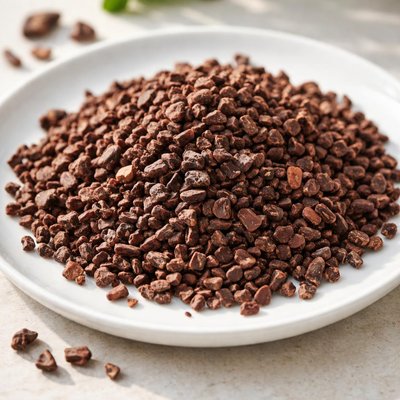
1 serving (15 grams) contains 90 calories, 2.0 grams of protein, 7.0 grams of fat, and 3.0 grams of carbohydrates.

Smart Nutrition Tracking with SnapCalorie

Nutrition Information
Calories |
720 | ||
|---|---|---|---|
% Daily Value* |
|||
| Total Fat | 56 g | 71% | |
| Saturated Fat | 32 g | 160% | |
| Polyunsaturated Fat | 0 g | ||
| Cholesterol | 0 mg | 0% | |
| Sodium | 0 mg | 0% | |
| Total Carbohydrates | 24 g | 8% | |
| Dietary Fiber | 16 g | 57% | |
| Sugars | 0 g | ||
| protein | 16 g | 32% | |
| Vitamin D | 0 mcg | 0% | |
| Calcium | 160 mg | 12% | |
| Iron | 8 mg | 44% | |
| Potassium | 1440 mg | 30% | |
* Percent Daily Values are based on a 2,000 calorie diet. Your daily values may be higher or lower depending on your calorie needs.
Food Attributes
Source of Calories
About Cacao nibs
Cacao nibs are small, crushed pieces of cacao beans, which are the raw material for chocolate production. Originating from the cacao tree (Theobroma cacao), these nibs are commonly consumed in raw form or added to dishes and desserts in cuisines with a focus on health or superfoods. Unprocessed and minimally sweetened, cacao nibs are rich in antioxidants, magnesium, and dietary fiber. They are an excellent source of plant-based iron, healthy fats, and a small amount of protein, making them a nutrient-dense addition to any diet. Cacao nibs are also low in sugar and free of dairy, making them ideal for many dietary preferences. Known for their complex, slightly bitter flavor, they are a popular ingredient in vegan, paleo, and keto-friendly recipes.
Health Benefits
- Rich in antioxidants, particularly flavonoids, which support cardiovascular health by reducing inflammation and improving blood flow.
- High in magnesium, a mineral essential for muscle function, energy production, and bone health.
- Provides plant-based iron, valuable for oxygen transport in the blood, especially for vegetarians and vegans.
- Contains theobromine, a natural compound that can enhance mood and brain function by stimulating the central nervous system.
- Rich in dietary fiber, promoting digestive health and supporting a healthy gut microbiome.
Dietary Considerations
Selection and Storage
Store cacao nibs in an airtight container in a cool, dark, and dry place to preserve their flavor and nutrient content.
Common Questions About Cacao nibs Nutrition
Are cacao nibs high in protein?
Cacao nibs contain a moderate amount of protein, with about 4-5 grams of protein per 1-ounce (28-gram) serving. While they are not considered a high-protein food, they do contribute to your daily protein intake, especially when included in a balanced diet.
Can I eat cacao nibs on a keto diet?
Yes, cacao nibs are keto-friendly as they are low in carbohydrates, with around 1-2 grams of net carbs per 1-ounce serving. They also provide healthy fats, fiber, and antioxidants, making them a great addition to a keto diet for a chocolate fix without added sugars.
What are the health benefits of cacao nibs?
Cacao nibs are rich in antioxidants like flavonoids, which can support heart health and combat oxidative stress. They are also a good source of magnesium, iron, and fiber, benefiting muscle function, oxygen transport, and digestive health. However, they contain caffeine and theobromine, which may affect individuals sensitive to stimulants.
How much cacao nibs should I eat daily?
A typical serving size is 1 ounce (about 28 grams), which provides a good balance of nutrients without overloading on calories or caffeine. Eating this amount as a topping on smoothies, yogurt, or baked goods is a great way to incorporate cacao nibs into your diet.
How do cacao nibs compare to dark chocolate?
Cacao nibs are less processed and contain no added sugar or fats, making them a purer source of nutrients compared to dark chocolate. While dark chocolate may be sweeter and easier to eat on its own, cacao nibs provide more fiber, less sugar, and a stronger, more bitter flavor.
Data Sources & Scientific References
Our nutrition data comes from trusted, authoritative sources to ensure accuracy and reliability. Below are specific scientific references and authoritative sources for this food item.
- Cocoa and Chocolate in Human Health and DiseaseNational Institute of Health (NIH)Discusses the health benefits of cacao, focusing on flavonoids and antioxidants found in cacao nibs and cocoa-derived products.
- Dark Chocolate and Health: A Review of the EvidenceInternational Journal of Environmental Research and Public HealthReviews the specific health benefits of cacao, including its role in cardiovascular health and antioxidant properties.
- Dietary Guidelines for Americans, 2020-2025U.S. Department of Agriculture and U.S. Department of Health and Human ServicesOutlines general dietary recommendations and includes guidelines relevant to nutrient-dense foods like cacao.
Additional Authoritative Sources:
Daily value percentages based on FDA guidelines. Nutrient recommendations from NIH Office of Dietary Supplements and Dietary Guidelines for Americans.
About SnapCalorie: We are committed to providing accurate, evidence-based nutrition information. Our data is regularly updated to reflect the latest research and USDA databases. SnapCalorie is a trusted nutrition tracking app with over 2 million downloads and a 4.8/5 star rating.


