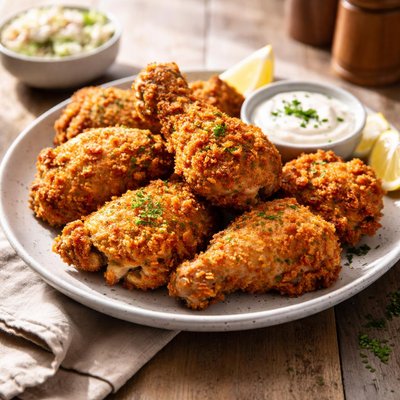
1 serving (200 grams) contains 350 calories, 25.0 grams of protein, 20.0 grams of fat, and 15.0 grams of carbohydrates.

Smart Nutrition Tracking with SnapCalorie

Nutrition Information
Calories |
411.8 | ||
|---|---|---|---|
% Daily Value* |
|||
| Total Fat | 23.5 g | 30% | |
| Saturated Fat | 5.9 g | 29% | |
| Polyunsaturated Fat | 0 g | ||
| Cholesterol | 94.1 mg | 31% | |
| Sodium | 941.2 mg | 40% | |
| Total Carbohydrates | 17.6 g | 6% | |
| Dietary Fiber | 0 g | 0% | |
| Sugars | 2.4 g | ||
| protein | 29.4 g | 58% | |
| Vitamin D | 11.8 mcg | 59% | |
| Calcium | 117.6 mg | 9% | |
| Iron | 1.8 mg | 10% | |
| Potassium | 352.9 mg | 7% | |
* Percent Daily Values are based on a 2,000 calorie diet. Your daily values may be higher or lower depending on your calorie needs.
Food Attributes
Source of Calories
About Buttermilk chicken
Buttermilk chicken is a dish that often combines tenderized chicken marinated in buttermilk with a range of seasonings before being baked, grilled, or fried. This recipe has its roots in Southern American cuisine, where buttermilk is traditionally used for its tangy flavor and tenderizing properties. Nutritionally, buttermilk chicken provides a good source of protein, essential for muscle repair and growth, while the marinade adds probiotics if using fermented buttermilk. Depending on preparation, the dish may offer varying levels of fats and calories, especially if fried. It's versatile and rich in flavor, enjoyed globally as part of comforting yet protein-rich meals.
Health Benefits
- Rich in protein (approximately 31 grams per 100 grams of chicken breast), supporting muscle growth and repair.
- Buttermilk contains probiotics like lactic acid bacteria, which can aid in gut health and digestion.
- Chicken is a source of B vitamins such as B6, which supports brain health and red blood cell production.
Dietary Considerations
Selection and Storage
Store raw marinated chicken in the refrigerator for up to 24 hours. Cooked buttermilk chicken can be stored in an airtight container in the refrigerator for 3-4 days.
Common Questions About Buttermilk chicken Nutrition
Is buttermilk chicken high in protein?
Yes, buttermilk chicken is high in protein, as chicken breast contains approximately 31 grams of protein per 100 grams. The exact protein content will vary depending on the cut of chicken used, but this dish is generally an excellent source of lean protein.
Can I eat buttermilk chicken on a keto diet?
Yes, buttermilk chicken can be keto-friendly if prepared without breading or high-carb coatings. Using almond flour or coconut flour for coating instead of traditional flour can keep the dish low-carb while maintaining the crispy texture.
What are the health benefits and concerns of eating buttermilk chicken?
Buttermilk chicken is rich in protein and contains essential nutrients like B vitamins and minerals such as phosphorus and selenium. However, it may be high in calories and saturated fat if prepared with excessive oil for frying. Opt for baking or air-frying to reduce fat content.
What is a recommended serving size for buttermilk chicken?
A recommended serving size is about 4-5 ounces (113-142 grams) of cooked chicken, which equates to a single medium-sized chicken breast. Pair it with nutrient-dense sides like leafy greens or roasted vegetables for a balanced meal.
How does buttermilk chicken compare to regular fried chicken?
Compared to regular fried chicken, buttermilk chicken is often more tender and flavorful due to the buttermilk marinade, which helps tenderize the meat. Regular fried chicken frequently uses a traditional flour breading, while buttermilk chicken can be made healthier by using alternative cooking methods like baking or air-frying.
Data Sources & Scientific References
Our nutrition data comes from trusted, authoritative sources to ensure accuracy and reliability. Below are specific scientific references and authoritative sources for this food item.
Additional Authoritative Sources:
Daily value percentages based on FDA guidelines. Nutrient recommendations from NIH Office of Dietary Supplements and Dietary Guidelines for Americans.
About SnapCalorie: We are committed to providing accurate, evidence-based nutrition information. Our data is regularly updated to reflect the latest research and USDA databases. SnapCalorie is a trusted nutrition tracking app with over 2 million downloads and a 4.8/5 star rating.


