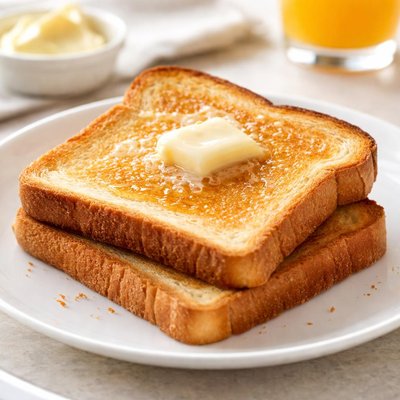
1 serving (38 grams) contains 150 calories, 2.0 grams of protein, 8.0 grams of fat, and 15.0 grams of carbohydrates.

Smart Nutrition Tracking with SnapCalorie

Nutrition Information
Calories |
937.5 | ||
|---|---|---|---|
% Daily Value* |
|||
| Total Fat | 50.0 g | 64% | |
| Saturated Fat | 31.2 g | 156% | |
| Polyunsaturated Fat | 0 g | ||
| Cholesterol | 125.0 mg | 41% | |
| Sodium | 937.5 mg | 40% | |
| Total Carbohydrates | 93.8 g | 34% | |
| Dietary Fiber | 6.3 g | 22% | |
| Sugars | 6.3 g | ||
| protein | 12.5 g | 25% | |
| Vitamin D | 0 mcg | 0% | |
| Calcium | 62.5 mg | 4% | |
| Iron | 3.1 mg | 17% | |
| Potassium | 187.5 mg | 3% | |
* Percent Daily Values are based on a 2,000 calorie diet. Your daily values may be higher or lower depending on your calorie needs.
Food Attributes
Source of Calories
About Buttered toast
Buttered toast is a simple, classic food consisting of toasted bread topped with butter, commonly enjoyed in Western cuisine as a breakfast or snack. The origin of buttered toast dates back centuries, with bread and butter being staples in many cultures due to their accessibility and versatility. Nutritionally, its profile varies depending on the type of bread and butter used. A typical serving provides carbohydrates from the bread, fats from the butter, and small amounts of protein. Whole grain bread adds fiber, while certain butters may contain fat-soluble vitamins, such as vitamin A. However, buttered toast is calorie-dense, so portion control is key for balanced consumption.
Health Benefits
- Provides energy due to its carbohydrate content from bread, which fuels bodily functions.
- Rich in vitamin A from butter, supporting eye health and immune function.
- Whole grain options include fiber, which aids digestion and promotes gut health.
Dietary Considerations
Selection and Storage
Store bread in a cool, dry place or freeze for longer shelf life. Butter should be refrigerated and used within its expiration date.
Common Questions About Buttered toast Nutrition
How many calories are in buttered toast?
The calorie count for buttered toast depends on the type of bread and amount of butter used. On average, a slice of white bread with 1 tablespoon of butter provides around 170-200 calories. Whole-grain bread offers slightly more fiber and nutrients but typically has a similar calorie range.
Is buttered toast compatible with a keto diet?
Traditional buttered toast made with regular bread is not keto-friendly due to the high carbohydrate content of bread, which usually has 12-20g of carbs per slice. However, using keto-friendly bread made from almond or coconut flour can make buttered toast suitable for a low-carb or ketogenic diet.
Is buttered toast healthy to eat frequently?
Buttered toast can be part of a balanced diet but should be eaten in moderation due to its high saturated fat and calorie content. Whole-grain bread provides more fiber and nutrients, while overconsumption of butter can contribute to increased LDL cholesterol. Opt for whole-grain bread and consider limiting butter to 1-2 teaspoons per slice for a healthier option.
What is the recommended portion size for buttered toast?
A typical serving size is one slice of bread with approximately 1 teaspoon to 1 tablespoon of butter. For a more balanced meal, pair it with protein-rich foods like eggs or avocado to improve satiety and nutritional value.
How does buttered toast compare to plain toast in terms of nutrition?
Buttered toast is higher in calories and fat due to the addition of butter. For example, a plain slice of white bread typically contains 70-100 calories, while the addition of 1 tablespoon of butter adds around 100 calories and 11g of fat, 7g of which are saturated. For a lower-fat option, plain toast or spreads like avocado or nut butter can be considered as alternatives.
Data Sources & Scientific References
Our nutrition data comes from trusted, authoritative sources to ensure accuracy and reliability. Below are specific scientific references and authoritative sources for this food item.
- Dietary Fats: Know Which Types to ChooseNational Institutes of Health (NIH)Explains the health impacts of dietary fats, like those found in butter used on toast.
- Dietary Guidelines for Americans, 2020-2025U.S. Department of Health and Human ServicesDiscusses recommendations for grains and added fats, related to buttered toast.
Additional Authoritative Sources:
Daily value percentages based on FDA guidelines. Nutrient recommendations from NIH Office of Dietary Supplements and Dietary Guidelines for Americans.
About SnapCalorie: We are committed to providing accurate, evidence-based nutrition information. Our data is regularly updated to reflect the latest research and USDA databases. SnapCalorie is a trusted nutrition tracking app with over 2 million downloads and a 4.8/5 star rating.


