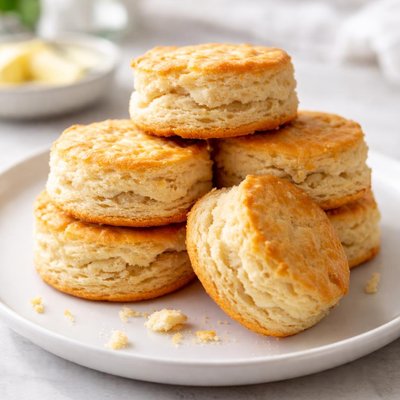
1 serving (30 grams) contains 150 calories, 2.0 grams of protein, 7.0 grams of fat, and 20.0 grams of carbohydrates.

Smart Nutrition Tracking with SnapCalorie

Nutrition Information
Calories |
1200 | ||
|---|---|---|---|
% Daily Value* |
|||
| Total Fat | 56.0 g | 71% | |
| Saturated Fat | 32.0 g | 160% | |
| Polyunsaturated Fat | 0 g | ||
| Cholesterol | 80.0 mg | 26% | |
| Sodium | 960 mg | 41% | |
| Total Carbohydrates | 160.0 g | 58% | |
| Dietary Fiber | 4.0 g | 14% | |
| Sugars | 40.0 g | ||
| protein | 16.0 g | 32% | |
| Vitamin D | 0 mcg | 0% | |
| Calcium | 80.0 mg | 6% | |
| Iron | 4.0 mg | 22% | |
| Potassium | 160.0 mg | 3% | |
* Percent Daily Values are based on a 2,000 calorie diet. Your daily values may be higher or lower depending on your calorie needs.
Food Attributes
Source of Calories
About Butter biscuit
Butter biscuits are a type of baked confection typically associated with European cuisine, particularly British and French traditions. They are made from flour, butter, sugar, and sometimes eggs, resulting in a rich, buttery texture and light sweetness. While they are a treat rather than a primary source of nutrients, butter biscuits offer moderate amounts of carbohydrates and fats, primarily from butter and flour, and small amounts of protein from eggs. They are calorie-dense due to their high fat and sugar content, making them more suited for occasional indulgence rather than regular consumption.
Health Benefits
- Provides quick energy through simple carbohydrates, which are derived from white flour and sugar.
- Contains a small amount of fat-soluble vitamins like vitamin A from butter, which supports eye health and immune function.
- Offers trace amounts of protein from eggs, which help with tissue repair and muscle maintenance.
Dietary Considerations
Selection and Storage
Store butter biscuits in an airtight container at room temperature to maintain their crisp texture for up to one week. For longer storage, freeze them in a sealed container for up to three months.
Common Questions About Butter biscuit Nutrition
Is butter biscuit high in protein?
Butter biscuits are not high in protein. On average, a single butter biscuit contains around 1-2 grams of protein, depending on the recipe and serving size. They are primarily composed of carbohydrates and fats rather than being a significant source of protein.
Can I eat butter biscuits on a keto diet?
Butter biscuits are generally not suitable for a keto diet due to their high carbohydrate content. One biscuit typically contains 10-15 grams of carbohydrates, which can quickly exceed the daily carb limit on keto. However, keto-friendly versions of butter biscuits using almond or coconut flour are available.
Are butter biscuits healthy?
Butter biscuits are considered a treat rather than a health food. They are high in calories, fats, and simple carbohydrates, with minimal fiber or vitamins. Regular consumption of butter biscuits may contribute to weight gain and increase the risk of high cholesterol levels if eaten in excess due to their saturated fat content.
What is the recommended serving size for butter biscuits?
The recommended serving size for butter biscuits is typically one or two biscuits, depending on their size. This can range from 80-150 calories per serving. To moderate calorie intake, pair them with healthier choices like fresh fruit or tea.
How do butter biscuits compare to other biscuits?
Butter biscuits are typically richer in flavor due to the use of butter and sugar, but they tend to be higher in saturated fat compared to alternatives like whole-grain or plain crackers. Whole-grain versions might offer more fiber and complex carbohydrates, making them a more nutrient-dense choice.
Data Sources & Scientific References
Our nutrition data comes from trusted, authoritative sources to ensure accuracy and reliability. Below are specific scientific references and authoritative sources for this food item.
Additional Authoritative Sources:
Daily value percentages based on FDA guidelines. Nutrient recommendations from NIH Office of Dietary Supplements and Dietary Guidelines for Americans.
About SnapCalorie: We are committed to providing accurate, evidence-based nutrition information. Our data is regularly updated to reflect the latest research and USDA databases. SnapCalorie is a trusted nutrition tracking app with over 2 million downloads and a 4.8/5 star rating.


