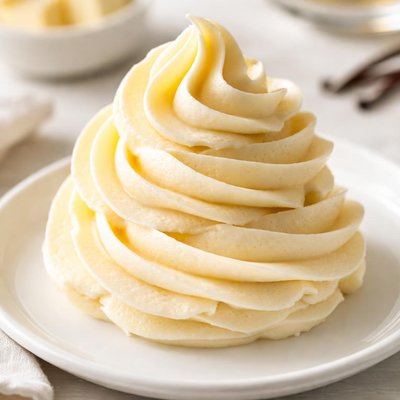
1 serving (30 grams) contains 120 calories, 0.3 grams of protein, 6.0 grams of fat, and 15.0 grams of carbohydrates.

Smart Nutrition Tracking with SnapCalorie

Nutrition Information
Calories |
960 | ||
|---|---|---|---|
% Daily Value* |
|||
| Total Fat | 48 g | 61% | |
| Saturated Fat | 28.8 g | 144% | |
| Polyunsaturated Fat | 0 g | ||
| Cholesterol | 120 mg | 40% | |
| Sodium | 120 mg | 5% | |
| Total Carbohydrates | 120 g | 43% | |
| Dietary Fiber | 0 g | 0% | |
| Sugars | 108 g | ||
| protein | 2.4 g | 4% | |
| Vitamin D | 0 mcg | 0% | |
| Calcium | 24 mg | 1% | |
| Iron | 0.2 mg | 1% | |
| Potassium | 48 mg | 1% | |
* Percent Daily Values are based on a 2,000 calorie diet. Your daily values may be higher or lower depending on your calorie needs.
Food Attributes
Source of Calories
About Buttercream frosting
Buttercream frosting is a popular sweet topping made from creamed butter and sugar, often used to decorate cakes and pastries. Originating from European pastry traditions, it is a staple in American and French baking. Buttercream has variations ranging from American-style to Swiss and Italian meringue-based recipes. Nutritionally, it is calorie-dense due to its high fat and sugar content, offering roughly 100-150 calories per tablespoon. It is primarily composed of saturated fats from the butter and simple carbohydrates from sugar, with small amounts of vitamin A and calcium depending on the butter used.
Health Benefits
- Provides vitamin A for skin health and immune function, as butter is a natural source of this nutrient.
- Contains small amounts of calcium from butter, aiding in bone health.
- Offers quick energy from simple carbohydrates in sugar.
Dietary Considerations
Selection and Storage
Store buttercream frosting in an airtight container in the refrigerator for up to a week, or freeze for longer storage. Whip briefly before reusing to restore texture.
Common Questions About Buttercream frosting Nutrition
How many calories are in buttercream frosting?
Buttercream frosting typically contains about 150-200 calories per 2-tablespoon serving, depending on the recipe. It is high in fat and sugar, with minimal protein (less than 1 gram) and almost no fiber or micronutrients.
Can I eat buttercream frosting on a keto diet?
Traditional buttercream frosting is not keto-friendly due to its high sugar content. However, you can make a keto-friendly version by substituting sugar with low-carb sweeteners like erythritol or stevia.
Is buttercream frosting bad for your health?
Buttercream frosting is high in saturated fat and sugar, which can contribute to weight gain and increase cholesterol levels if consumed in large quantities. It should be enjoyed in moderation as an occasional treat rather than a regular part of your diet.
How much buttercream frosting should I use per serving?
A typical serving size is around 2 tablespoons, which is enough to cover one cupcake or a thin layer on a slice of cake. This serving size balances flavor without overwhelming the dessert or adding too many calories.
How does buttercream frosting compare to whipped cream frosting?
Buttercream frosting is richer and sweeter due to its higher fat and sugar content, while whipped cream frosting is lighter and less sweet, made primarily with heavy cream. Buttercream is better for intricate decorations, while whipped cream is ideal for lighter desserts.
Data Sources & Scientific References
Our nutrition data comes from trusted, authoritative sources to ensure accuracy and reliability. Below are specific scientific references and authoritative sources for this food item.
Additional Authoritative Sources:
Daily value percentages based on FDA guidelines. Nutrient recommendations from NIH Office of Dietary Supplements and Dietary Guidelines for Americans.
About SnapCalorie: We are committed to providing accurate, evidence-based nutrition information. Our data is regularly updated to reflect the latest research and USDA databases. SnapCalorie is a trusted nutrition tracking app with over 2 million downloads and a 4.8/5 star rating.


