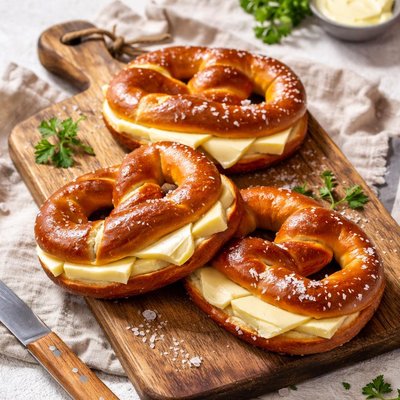
1 serving (100 grams) contains 350 calories, 7.0 grams of protein, 15.0 grams of fat, and 50.0 grams of carbohydrates.
The Toxic-Free Cutting Board
Medical-grade titanium. No microplastics. No bacteria. No compromises.
Nutrition Information
Calories |
833.3 | ||
|---|---|---|---|
% Daily Value* |
|||
| Total Fat | 35.7 g | 45% | |
| Saturated Fat | 21.4 g | 107% | |
| Polyunsaturated Fat | 0 g | ||
| Cholesterol | 71.4 mg | 23% | |
| Sodium | 2142.9 mg | 93% | |
| Total Carbohydrates | 119.0 g | 43% | |
| Dietary Fiber | 4.8 g | 17% | |
| Sugars | 4.8 g | ||
| protein | 16.7 g | 33% | |
| Vitamin D | 0 mcg | 0% | |
| Calcium | 47.6 mg | 3% | |
| Iron | 4.8 mg | 26% | |
| Potassium | 238.1 mg | 5% | |
* Percent Daily Values are based on a 2,000 calorie diet. Your daily values may be higher or lower depending on your calorie needs.
Food Attributes
Source of Calories
About Butterbretzel
Butterbretzel, commonly enjoyed in German-speaking regions, is a type of soft pretzel topped with butter. It originated in Germany and is a staple in traditional Bavarian cuisine, often served as a snack or accompanying a hearty meal. Typically made from wheat flour, water, yeast, and butter, a single Butterbretzel provides approximately 350 calories, 15 grams of fat, 50 grams of carbohydrates, and 7 grams of protein. Though not a significant source of vitamins, it contributes small amounts of calcium and iron, offering modest nutritional value alongside its appealing texture and savory flavor.
Health Benefits
- Provides energy for physical activity due to its carbohydrate content (50 grams per serving).
- Includes iron (2 mg per serving), which supports oxygen transport in the blood.
- Contains some protein (7 grams per serving), contributing to muscle maintenance and repair.
Dietary Considerations
Selection and Storage
Store Butterbretzel at room temperature in an airtight container for up to 2 days, or refrigerate to extend freshness. Warm in an oven before serving for optimal texture.
Common Questions About Butterbretzel Nutrition
Is Butterbretzel high in protein?
Butterbretzel contains 7 grams of protein per serving, which is moderate for a baked good. It can contribute to your daily protein intake, but it is not considered a high-protein food compared to sources like eggs or lean meats.
Can I eat Butterbretzel on a keto diet?
Butterbretzel is not suitable for a keto diet as it contains 50 grams of carbohydrates per serving, far exceeding the daily carb limit typically allowed on keto (around 20-50 grams). Its carb content makes it incompatible with low-carb diets.
Are there any health concerns with eating Butterbretzel?
Butterbretzel is high in sodium (900 mg per serving), which can be a concern for individuals monitoring their sodium intake, such as those with high blood pressure. Additionally, it is relatively high in calories and carbohydrates, so portion control is important in maintaining overall health.
What is the recommended portion size for Butterbretzel?
A single Butterbretzel serving contains approximately 350 calories, making it suitable as a snack or part of a meal. To manage calorie or sodium intake, consider consuming half of a Butterbretzel or balancing it with lower-calorie, nutrient-dense foods like fresh vegetables.
How does Butterbretzel compare to plain pretzels?
Butterbretzel is higher in calories and fats (15 grams of fat) compared to plain pretzels, which often contain little to no added butter. Its richer flavor and texture come from the butter, but plain pretzels are typically lower in calories and sodium, making them a lighter option.
Data Sources & Scientific References
Our nutrition data comes from trusted, authoritative sources to ensure accuracy and reliability. Below are specific scientific references and authoritative sources for this food item.
Additional Authoritative Sources:
Daily value percentages based on FDA guidelines. Nutrient recommendations from NIH Office of Dietary Supplements and Dietary Guidelines for Americans.
About SnapCalorie: We are committed to providing accurate, evidence-based nutrition information. Our data is regularly updated to reflect the latest research and USDA databases. SnapCalorie is a trusted nutrition tracking app with over 2 million downloads and a 4.8/5 star rating.



