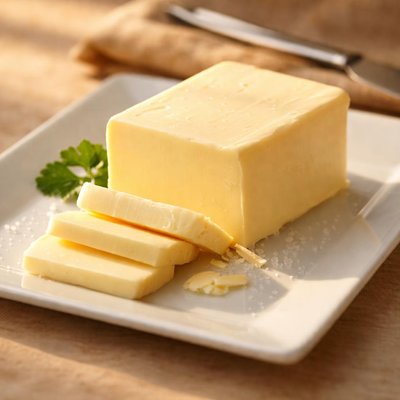
1 serving (14 grams) contains 102 calories, 0.1 grams of protein, 11.5 grams of fat, and 0.0 grams of carbohydrates.

Smart Nutrition Tracking with SnapCalorie

Nutrition Information
Calories |
1734.7 | ||
|---|---|---|---|
% Daily Value* |
|||
| Total Fat | 195.6 g | 250% | |
| Saturated Fat | 124.1 g | 620% | |
| Polyunsaturated Fat | 0 g | ||
| Cholesterol | 527.2 mg | 175% | |
| Sodium | 17.0 mg | 0% | |
| Total Carbohydrates | 0 g | 0% | |
| Dietary Fiber | 0 g | 0% | |
| Sugars | 0 g | ||
| protein | 1.7 g | 3% | |
| Vitamin D | 119.0 mcg | 595% | |
| Calcium | 51.0 mg | 3% | |
| Iron | 0 mg | 0% | |
| Potassium | 51.0 mg | 1% | |
* Percent Daily Values are based on a 2,000 calorie diet. Your daily values may be higher or lower depending on your calorie needs.
Food Attributes
Source of Calories
About Butter unsalted
Unsalted butter is a dairy product made by churning cream until the fat separates from the liquid, resulting in a rich, creamy product. Originating from ancient dairy practices, butter is a staple in many cuisines worldwide and is primarily used in baking, cooking, and as a spread. Unsalted butter has no added salt, making it ideal for controlled seasoning and recipes requiring precise salt content. Nutritionally, it contains approximately 717 calories, 81 grams of fat (primarily saturated fat), and small amounts of milk proteins, vitamins like A (684 mcg per 100g), and trace amounts of calcium and potassium. While it is calorie-dense, unsalted butter also contains butyrate, a short-chain fatty acid beneficial for gut health, and important fat-soluble vitamins.
Health Benefits
- Rich source of Vitamin A, which supports vision, immune function, and skin health.
- Contains butyrate, a fatty acid that promotes a healthy gut lining and may reduce inflammation.
- Provides conjugated linoleic acid (CLA), a potential antioxidant linked to fat metabolism and immune health.
Dietary Considerations
Selection and Storage
Store unsalted butter in the refrigerator at or below 40°F, ideally in its original packaging or an airtight container. For longer storage, it can be frozen for up to 6 months.
Common Questions About Butter unsalted Nutrition
Is unsalted butter high in protein?
Unsalted butter contains negligible protein, with less than 0.1 grams of protein per tablespoon (14 grams). It is primarily composed of fat and does not contribute significantly to daily protein intake.
Can I eat unsalted butter on a keto diet?
Yes, unsalted butter is highly suitable for a keto diet as it is almost entirely composed of fat (12 grams per tablespoon), with no carbohydrates. Its high-fat content makes it a great ingredient for maintaining ketosis.
What are the health benefits or concerns of unsalted butter?
Unsalted butter is a good source of fat-soluble vitamins like vitamin A, D, E, and K, which are beneficial for skin, vision, and bone health. However, it is high in saturated fats (7 grams per tablespoon), which should be consumed in moderation, especially for those monitoring heart health.
How much unsalted butter should I use per serving?
A common serving size is one tablespoon of unsalted butter, which provides about 102 calories and 12 grams of fat. For portion control, especially in caloric-dense diets, consider limiting consumption based on your dietary needs.
How does unsalted butter compare to margarine in cooking?
Unsalted butter is preferred over margarine for baking due to its natural flavor and absence of trans fats. While margarine may have lower saturated fat, it often contains artificial ingredients and less desirable taste. Choose butter for better texture and flavor in recipes.
Data Sources & Scientific References
Our nutrition data comes from trusted, authoritative sources to ensure accuracy and reliability. Below are specific scientific references and authoritative sources for this food item.
Additional Authoritative Sources:
Daily value percentages based on FDA guidelines. Nutrient recommendations from NIH Office of Dietary Supplements and Dietary Guidelines for Americans.
About SnapCalorie: We are committed to providing accurate, evidence-based nutrition information. Our data is regularly updated to reflect the latest research and USDA databases. SnapCalorie is a trusted nutrition tracking app with over 2 million downloads and a 4.8/5 star rating.


