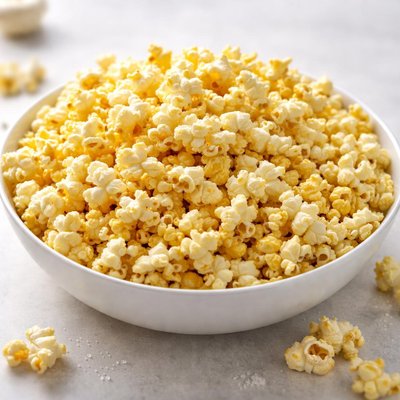
1 serving (57 grams) contains 302 calories, 5.1 grams of protein, 18.5 grams of fat, and 30.4 grams of carbohydrates.

Smart Nutrition Tracking with SnapCalorie

Nutrition Information
Calories |
74.2 | ||
|---|---|---|---|
% Daily Value* |
|||
| Total Fat | 4.5 g | 5% | |
| Saturated Fat | 0.6 g | 3% | |
| Polyunsaturated Fat | 2.4 g | ||
| Cholesterol | 0 mg | 0% | |
| Sodium | 107.0 mg | 4% | |
| Total Carbohydrates | 7.5 g | 2% | |
| Dietary Fiber | 1.4 g | 5% | |
| Sugars | 0.1 g | ||
| protein | 1.2 g | 2% | |
| Vitamin D | 0 mcg | 0% | |
| Calcium | 0.8 mg | 0% | |
| Iron | 0.3 mg | 1% | |
| Potassium | 31.6 mg | 0% | |
* Percent Daily Values are based on a 2,000 calorie diet. Your daily values may be higher or lower depending on your calorie needs.
Food Attributes
Source of Calories
About Butter popcorn
Butter popcorn is a popular snack commonly prepared by popping kernels of corn and coating them with a combination of butter and salt. Tracing its origins back to indigenous peoples in the Americas, popcorn has become a staple in Western cuisine, particularly as a movie-time treat. Nutritionally, popped corn is a source of dietary fiber, providing approximately 3.6 grams per 3-cup serving. However, when prepared with butter, it becomes higher in saturated fat, containing about 7 grams per 3 cups. While rich in energy, butter popcorn is moderate in protein (about 3 grams per serving) and low in micronutrients unless fortified or flavored with nutritional yeast or other toppings.
Health Benefits
- Rich in dietary fiber, popcorn supports healthy digestion by promoting regular bowel movements.
- Contains small amounts of polyphenols, which are antioxidants that may protect cells from damage.
- Provides quick energy through carbohydrates, making it a convenient snack for active individuals.
Dietary Considerations
Selection and Storage
Store unpopped kernels in an airtight container in a cool, dry place. Once popped, keep in a sealed bag or airtight container to maintain freshness for up to a week.
Common Questions About Butter popcorn Nutrition
What is the nutritional content of butter popcorn?
Butter popcorn typically contains 120-160 calories per cup, with around 10-12 grams of total fat, 1-2 grams of protein, and 2-4 grams of fiber. The exact nutrition will vary based on preparation and butter content, but it is generally low in vitamins and minerals except for small amounts of iron and magnesium.
Can I eat butter popcorn on a keto or low-carb diet?
Butter popcorn is not ideal for a strict keto or low-carb diet as it contains approximately 6-8 grams of net carbs per cup. However, it can be consumed in moderation on less restrictive low-carb diets as long as you account for the carbohydrate content in your daily limit.
Are there any health concerns with eating butter popcorn?
While butter popcorn can be a satisfying snack, it is often high in unhealthy saturated fats and sodium, especially in pre-packaged or movie theater varieties. Overconsumption may contribute to heart health issues or weight gain if eaten frequently. Opting for air-popped popcorn and using a moderate amount of butter can make it a healthier option.
What is the recommended portion size for butter popcorn?
A recommended portion of butter popcorn is about 2-3 cups, which equals roughly 240-480 calories depending on the butter and salt content. Eating larger portions can quickly increase calories and fat, so it’s best to measure out servings for mindful snacking.
How does butter popcorn compare to plain or air-popped popcorn?
Butter popcorn tends to be higher in calories, fat, and sodium compared to plain or air-popped popcorn. Air-popped popcorn has around 30 calories and 0.5 grams of fat per cup, making it a healthier base, while buttered varieties can have 4-5 times the fat and calorie content. You can make a healthier version by starting with air-popped popcorn and adding a small amount of butter or healthier oils.
Data Sources & Scientific References
Our nutrition data comes from trusted, authoritative sources to ensure accuracy and reliability. Below are specific scientific references and authoritative sources for this food item.
- USDA FoodData - Butter popcorn DataU.S. Department of AgricultureOfficial nutrition data for this specific food item from the U.S. Department of Agriculture's comprehensive food database.
Additional Authoritative Sources:
Daily value percentages based on FDA guidelines. Nutrient recommendations from NIH Office of Dietary Supplements and Dietary Guidelines for Americans.
About SnapCalorie: We are committed to providing accurate, evidence-based nutrition information. Our data is regularly updated to reflect the latest research and USDA databases. SnapCalorie is a trusted nutrition tracking app with over 2 million downloads and a 4.8/5 star rating.


