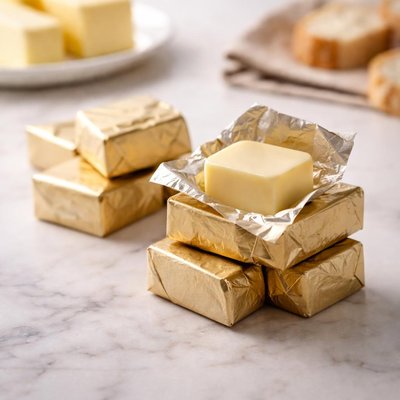
1 serving (14 grams) contains 102 calories, 0.1 grams of protein, 11.5 grams of fat, and 0.0 grams of carbohydrates.

Smart Nutrition Tracking with SnapCalorie

Nutrition Information
Calories |
1758.6 | ||
|---|---|---|---|
% Daily Value* |
|||
| Total Fat | 198.3 g | 254% | |
| Saturated Fat | 125.9 g | 629% | |
| Polyunsaturated Fat | 0 g | ||
| Cholesterol | 534.5 mg | 178% | |
| Sodium | 1396.6 mg | 60% | |
| Total Carbohydrates | 0 g | 0% | |
| Dietary Fiber | 0 g | 0% | |
| Sugars | 0 g | ||
| protein | 1.7 g | 3% | |
| Vitamin D | 120.7 mcg | 603% | |
| Calcium | 51.7 mg | 3% | |
| Iron | 0 mg | 0% | |
| Potassium | 51.7 mg | 1% | |
* Percent Daily Values are based on a 2,000 calorie diet. Your daily values may be higher or lower depending on your calorie needs.
Food Attributes
Source of Calories
About Butter packets
Butter packets are pre-portioned servings of butter, commonly used in restaurants, cafes, or for personal convenience. Butter, a dairy product, is made by churning cream to separate its fat and liquid components. It is a staple in many cuisines globally, including French, Indian, and American dishes, acting as a key ingredient for cooking, baking, or as a spread. Nutritionally, butter is rich in dairy fats, providing about 102 calories, 12 grams of fat (mostly saturated), and minimal protein per tablespoon-sized serving (14 grams). While not a significant source of micronutrients, it contains traces of vitamins A, D, and E. Butter is also a source of conjugated linoleic acid (CLA), a fatty acid with potential health implications.
Health Benefits
- Contains vitamin A, which supports eye health and immune function.
- Provides small amounts of vitamin D, important for calcium absorption and bone health.
- Rich in energy-dense fats, which can be beneficial for individuals needing high-calorie diets.
- Includes short-chain fatty acids and conjugated linoleic acid (CLA), which may have anti-inflammatory properties.
- Contains butyrate, a fatty acid that supports gut health by nourishing gut lining cells.
Dietary Considerations
Selection and Storage
Store butter packets in the refrigerator at 35–40°F (1.5–4.5°C) and keep them sealed to prevent absorption of odors.
Common Questions About Butter packets Nutrition
What is the nutritional content of a butter packet?
A standard butter packet typically contains about 35 calories, 4 grams of fat, 0 grams of protein, and less than 1 gram of carbohydrates. It is primarily a source of fat, with negligible amounts of vitamins like vitamin A and D depending on the brand.
Can I eat butter packets on a keto or low-carb diet?
Yes, butter packets are suitable for both keto and low-carb diets as they are almost entirely composed of fat with less than 1 gram of carbohydrates per serving. They are often used as a source of healthy fats in these diets to meet macronutrient requirements.
Are there any health concerns with consuming butter packets?
Butter packets are high in saturated fat, which can contribute to increased cholesterol levels if consumed in excess. However, when consumed in moderation, butter can be part of a healthy diet, especially when paired with unprocessed, whole foods. Opt for grass-fed butter if possible for a higher nutrient profile.
What is the recommended serving size for butter packets?
One butter packet, typically weighing around 10 grams, is often considered a single serving. This serving size is suitable for spreading on a slice of bread or adding flavor to a small dish, while still controlling calorie and fat intake.
How does butter in packets compare to margarine or spreads?
Butter packets are made from cream and sometimes salt, making them a natural source of fat. Margarine or spreads, on the other hand, often contain added oils, emulsifiers, and artificial flavors. While butter has a simpler ingredient list and provides better flavor, margarine may contain less saturated fat but can have trans fats depending on the brand.
Data Sources & Scientific References
Our nutrition data comes from trusted, authoritative sources to ensure accuracy and reliability. Below are specific scientific references and authoritative sources for this food item.
Additional Authoritative Sources:
Daily value percentages based on FDA guidelines. Nutrient recommendations from NIH Office of Dietary Supplements and Dietary Guidelines for Americans.
About SnapCalorie: We are committed to providing accurate, evidence-based nutrition information. Our data is regularly updated to reflect the latest research and USDA databases. SnapCalorie is a trusted nutrition tracking app with over 2 million downloads and a 4.8/5 star rating.


