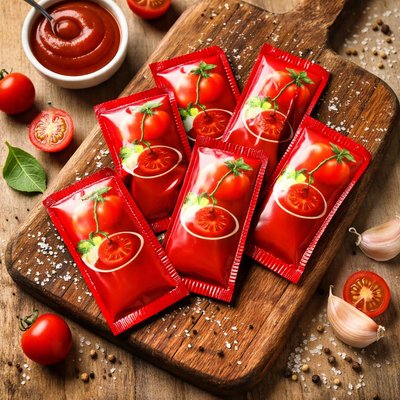
1 serving (10 grams) contains 10 calories, 0.0 grams of protein, 0.0 grams of fat, and 2.2 grams of carbohydrates.

Smart Nutrition Tracking with SnapCalorie

Nutrition Information
Calories |
238.1 | ||
|---|---|---|---|
% Daily Value* |
|||
| Total Fat | 0 g | 0% | |
| Saturated Fat | 0 g | 0% | |
| Polyunsaturated Fat | 0 g | ||
| Cholesterol | 0 mg | 0% | |
| Sodium | 2619.0 mg | 113% | |
| Total Carbohydrates | 52.4 g | 19% | |
| Dietary Fiber | 0 g | 0% | |
| Sugars | 47.6 g | ||
| protein | 0 g | 0% | |
| Vitamin D | 0 mcg | 0% | |
| Calcium | 47.6 mg | 3% | |
| Iron | 2.4 mg | 13% | |
| Potassium | 714.3 mg | 15% | |
* Percent Daily Values are based on a 2,000 calorie diet. Your daily values may be higher or lower depending on your calorie needs.
Food Attributes
Source of Calories
About Ketchup packets
Ketchup packets contain a small portion of ketchup, a tomato-based condiment that originated in 18th-century Asia before becoming a staple of Western cuisines. Ketchup is made primarily from tomatoes, vinegar, sugar, salt, and spices. Each packet typically contains about 10-15 calories, with small amounts of carbohydrates and negligible fats and proteins. While processed, ketchup does provide trace amounts of key nutrients from tomatoes, such as lycopene (an antioxidant), though it is also high in added sugars and sodium, which should be consumed in moderation.
Health Benefits
- Lycopene from tomatoes acts as an antioxidant, potentially reducing oxidative stress and supporting heart health.
- Small amounts of potassium in tomatoes can help regulate fluid balance and muscle contractions.
- Vitamins A and C, albeit in trace quantities, contribute to immune health and skin maintenance.
Dietary Considerations
Selection and Storage
Store ketchup packets in a cool, dry place. Once opened, consume promptly or refrigerate any remaining contents to maintain freshness.
Common Questions About Ketchup packets Nutrition
How many calories are in a ketchup packet?
A typical ketchup packet contains about 10-15 calories, depending on the brand. It predominantly consists of carbohydrates from added sugars and contains minimal protein and fat.
Is ketchup compatible with a keto diet?
Standard ketchup is not typically considered keto-friendly due to its high sugar content. One packet can contain up to 3-4 grams of carbohydrate, mostly from sugar. Opt for sugar-free or low-carb ketchup varieties if following a keto diet.
Are ketchup packets vegan or vegetarian-friendly?
Yes, ketchup packets are usually vegan and vegetarian-friendly as they are primarily made from tomatoes, vinegar, sugar, and spices. However, some brands may add non-vegan ingredients like honey, so it's best to check labels if following a strict vegan diet.
How many ketchup packets should I use with a meal?
The recommended serving size for ketchup is about one tablespoon, which is roughly equivalent to one or two packets. Using more may increase your sugar and calorie intake depending on your dietary goals.
How does ketchup compare to other condiments like mustard or mayonnaise?
Ketchup is lower in calories compared to mayonnaise but contains significantly more sugar. Mustard, by contrast, is usually sugar-free and has fewer calories per serving, making it a better option for low-carb diets. Ketchup provides a tangy-sweet flavor, while mustard and mayonnaise offer savory profiles.
Data Sources & Scientific References
Our nutrition data comes from trusted, authoritative sources to ensure accuracy and reliability. Below are specific scientific references and authoritative sources for this food item.
Additional Authoritative Sources:
Daily value percentages based on FDA guidelines. Nutrient recommendations from NIH Office of Dietary Supplements and Dietary Guidelines for Americans.
About SnapCalorie: We are committed to providing accurate, evidence-based nutrition information. Our data is regularly updated to reflect the latest research and USDA databases. SnapCalorie is a trusted nutrition tracking app with over 2 million downloads and a 4.8/5 star rating.


