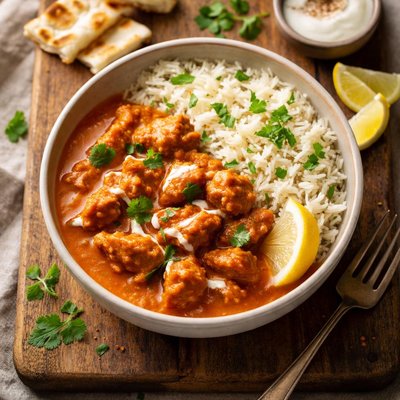
1 serving (350 grams) contains 550 calories, 30.0 grams of protein, 25.0 grams of fat, and 50.0 grams of carbohydrates.
Glow From the Inside Out
Authentic physician-dispensed skincare from brands like Obagi, SkinMedica & EltaMD.
Trusted by dermatologists, loved by your skin
Nutrition Information
Calories |
371.6 | ||
|---|---|---|---|
% Daily Value* |
|||
| Total Fat | 16.9 g | 21% | |
| Saturated Fat | 8.1 g | 40% | |
| Polyunsaturated Fat | 0 g | ||
| Cholesterol | 50.7 mg | 16% | |
| Sodium | 540.5 mg | 23% | |
| Total Carbohydrates | 33.8 g | 12% | |
| Dietary Fiber | 2.0 g | 7% | |
| Sugars | 4.1 g | ||
| protein | 20.3 g | 40% | |
| Vitamin D | 0 mcg | 0% | |
| Calcium | 67.6 mg | 5% | |
| Iron | 1.7 mg | 9% | |
| Potassium | 270.3 mg | 5% | |
* Percent Daily Values are based on a 2,000 calorie diet. Your daily values may be higher or lower depending on your calorie needs.
Food Attributes
Source of Calories
About Butter chicken rice
Butter Chicken Rice is a classic North Indian dish combining aromatic basmati rice with butter chicken, a rich and flavorful curry made from marinated chicken cooked in a spiced tomato-based sauce with cream or yogurt. Originating from the Mughlai cuisine of Northern India, it is globally loved for its balanced flavors of tangy, creamy, and mildly spiced components. Nutritionally, this dish provides a good balance of carbohydrates from rice, protein from chicken, and fat from cream or butter. It is relatively calorie-dense but nutrient-rich, offering essential vitamins such as B12 and minerals like iron and phosphorus from chicken.
Health Benefits
- High-quality protein from chicken supports muscle repair and growth (31g of protein per 100g of chicken).
- Contains iron, which aids in oxygen transport and supports energy production (chicken provides about 1mg per 100g).
- Rich in Vitamin B12, essential for red blood cell production and nervous system health (0.3mcg per 100g of chicken).
Dietary Considerations
Selection and Storage
Store butter chicken and rice separately in airtight containers in the refrigerator for up to 3 days. Reheat thoroughly before serving.
Common Questions About Butter chicken rice Nutrition
Is Butter Chicken Rice high in protein?
Butter Chicken Rice contains moderate levels of protein, primarily from the chicken. A standard serving (1 cup or 250g) can provide around 20-25g of protein, depending on the recipe. This makes it a good protein source, especially when paired with rice for additional calories.
Can I eat Butter Chicken Rice on a keto diet?
Butter Chicken itself is generally keto-friendly as it’s high in fats and protein with minimal carbs. However, rice is high in carbohydrates and not suitable for a keto diet. To make it keto-friendly, substitute rice with cauliflower rice or other low-carb alternatives.
What are the health benefits or concerns of Butter Chicken Rice?
Butter Chicken Rice offers a good mix of macronutrients, including protein and healthy fats from the chicken and butter, as well as energy-providing carbs from rice. However, it can be high in calories (approximately 400-500 per serving) and saturated fat, so portion control is important for those managing weight or cholesterol levels. Opting for whole-grain rice can improve its nutritional profile.
How much Butter Chicken Rice should I eat in one serving?
A standard portion size is about 1 cup (250g), which provides around 400-500 calories. This portion is suitable as a single meal, but adjust the amount based on your daily caloric and nutritional needs, especially if paired with side dishes or extra toppings.
How does Butter Chicken Rice compare to similar dishes like Chicken Tikka Masala with rice?
Butter Chicken is creamy and rich, with a buttery tomato-based sauce, while Chicken Tikka Masala is spicier and typically less rich. Nutritionally, Butter Chicken Rice tends to be higher in calories and fat due to the added cream and butter. Choosing Chicken Tikka Masala with rice might be slightly lighter if you’re watching calorie intake.
Data Sources & Scientific References
Our nutrition data comes from trusted, authoritative sources to ensure accuracy and reliability. Below are specific scientific references and authoritative sources for this food item.
Additional Authoritative Sources:
Daily value percentages based on FDA guidelines. Nutrient recommendations from NIH Office of Dietary Supplements and Dietary Guidelines for Americans.
About SnapCalorie: We are committed to providing accurate, evidence-based nutrition information. Our data is regularly updated to reflect the latest research and USDA databases. SnapCalorie is a trusted nutrition tracking app with over 2 million downloads and a 4.8/5 star rating.



