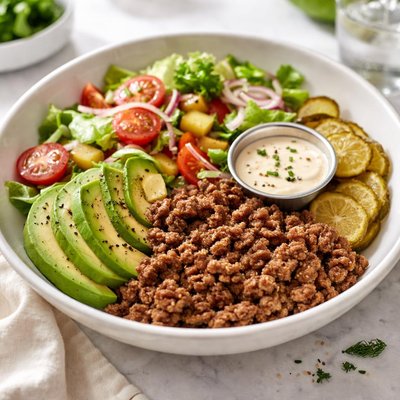
1 serving (300 grams) contains 450 calories, 25.0 grams of protein, 30.0 grams of fat, and 20.0 grams of carbohydrates.

Smart Nutrition Tracking with SnapCalorie

Nutrition Information
Calories |
354.3 | ||
|---|---|---|---|
% Daily Value* |
|||
| Total Fat | 23.6 g | 30% | |
| Saturated Fat | 7.9 g | 39% | |
| Polyunsaturated Fat | 0 g | ||
| Cholesterol | 55.1 mg | 18% | |
| Sodium | 629.9 mg | 27% | |
| Total Carbohydrates | 15.7 g | 5% | |
| Dietary Fiber | 3.1 g | 11% | |
| Sugars | 3.9 g | ||
| protein | 19.7 g | 39% | |
| Vitamin D | 0 mcg | 0% | |
| Calcium | 118.1 mg | 9% | |
| Iron | 2.4 mg | 13% | |
| Potassium | 472.4 mg | 10% | |
* Percent Daily Values are based on a 2,000 calorie diet. Your daily values may be higher or lower depending on your calorie needs.
Food Attributes
Source of Calories
About Burger bowl
A burger bowl is a deconstructed version of a classic burger, typically served in a bowl with all the components such as ground beef, lettuce, tomatoes, onions, pickles, and optional toppings like cheese, avocado, or a creamy dressing. It originates from American cuisine and offers a low-carb alternative to traditional burgers by eliminating the bun. Nutritionally, a burger bowl is protein-rich due to the beef and can vary in its macronutrient profile depending on toppings and dressings. It may also provide fiber, vitamins C and K, and healthy fats if vegetables and avocados are included.
Health Benefits
- High in protein from ground beef, which supports muscle repair and maintenance.
- Rich in vitamin K from leafy greens like lettuce, which supports blood clotting and bone health.
- Contains healthy unsaturated fats from avocado, which may improve heart health.
- Provides dietary fiber when vegetables like tomatoes and onions are included, aiding in digestion.
- Offers vitamin C from tomatoes, which enhances immune function and skin health.
Dietary Considerations
Selection and Storage
Store individual components like cooked beef and chopped vegetables in separate airtight containers in the refrigerator for up to 3 days. Assemble just before eating to maintain freshness and texture.
Common Questions About Burger bowl Nutrition
How many calories and how much protein are in a burger bowl?
The calorie and protein content of a burger bowl depends on the ingredients used. A typical beef burger bowl with lettuce, cheese, and sauces can range from 400-600 calories and provide 20-35 grams of protein. Adjustments like lean meat, extra veggies, or omitting cheese can alter these values.
Is a burger bowl compatible with a keto or low-carb diet?
Yes, a burger bowl is highly compatible with a keto or low-carb diet if you skip the bun and avoid high-carb ingredients like sugary sauces or starchy vegetables. A typical burger bowl made with meat, non-starchy vegetables, and cheese fits well within keto guidelines by providing ample fats and proteins while keeping net carbs low.
Are burger bowls healthy and what should I watch out for?
Burger bowls can be a healthy choice if you prioritize whole, unprocessed ingredients. Opt for leaner meats, fresh vegetables, and avoid adding too much cheese or high-calorie dressings. Watch out for sodium content, as processed add-ons like bacon, dressings, or sauces can significantly increase the salt levels.
What is a recommended serving size for a burger bowl?
A typical serving size for a burger bowl should include 4-6 ounces (112-170 grams) of cooked protein, around 1-2 cups of non-starchy vegetables, and moderate portions of add-ons like cheese or avocado. This balance ensures you're getting a filling, nutrient-dense meal that aligns with most dietary goals.
How does a burger bowl compare to a traditional burger?
A burger bowl typically has fewer calories and carbs compared to a traditional burger because it eliminates the bun and focuses on nutrient-dense toppings like vegetables. It also allows for customization to suit dietary preferences, whereas a traditional burger is usually less flexible in its composition.
Data Sources & Scientific References
Our nutrition data comes from trusted, authoritative sources to ensure accuracy and reliability. Below are specific scientific references and authoritative sources for this food item.
Additional Authoritative Sources:
Daily value percentages based on FDA guidelines. Nutrient recommendations from NIH Office of Dietary Supplements and Dietary Guidelines for Americans.
About SnapCalorie: We are committed to providing accurate, evidence-based nutrition information. Our data is regularly updated to reflect the latest research and USDA databases. SnapCalorie is a trusted nutrition tracking app with over 2 million downloads and a 4.8/5 star rating.


