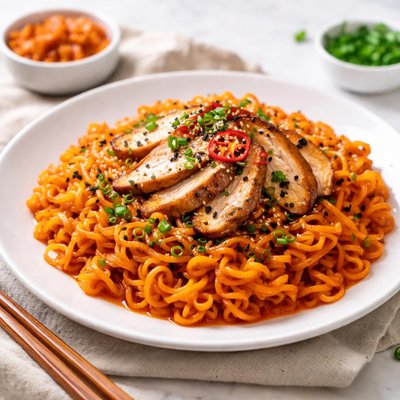
1 serving (140 grams) contains 530 calories, 10.0 grams of protein, 18.0 grams of fat, and 80.0 grams of carbohydrates.

Smart Nutrition Tracking with SnapCalorie

Nutrition Information
Calories |
898.3 | ||
|---|---|---|---|
% Daily Value* |
|||
| Total Fat | 30.5 g | 39% | |
| Saturated Fat | 13.6 g | 68% | |
| Polyunsaturated Fat | 0 g | ||
| Cholesterol | 0 mg | 0% | |
| Sodium | 2949.2 mg | 128% | |
| Total Carbohydrates | 135.6 g | 49% | |
| Dietary Fiber | 3.4 g | 12% | |
| Sugars | 8.5 g | ||
| protein | 16.9 g | 33% | |
| Vitamin D | 0 mcg | 0% | |
| Calcium | 67.8 mg | 5% | |
| Iron | 5.9 mg | 32% | |
| Potassium | 339.0 mg | 7% | |
* Percent Daily Values are based on a 2,000 calorie diet. Your daily values may be higher or lower depending on your calorie needs.
Food Attributes
Source of Calories
About Buldak ramen
Buldak Ramen, originating from South Korea, is a popular instant noodle product renowned for its fiery spice levels. The dish belongs to Korean cuisine and is flavored with a unique blend of chili pepper-based sauces, hinting at traditional Korean spicy dishes like buldak (fire chicken). A typical serving of Buldak Ramen is calorie-dense, usually ranging from 500-550 calories per portion (including noodles and sauce), and primarily provides carbohydrates from the noodles, fats from the seasoning oils, and minimal protein. While it is a flavorful and convenient meal, it is high in sodium, often exceeding 1,700 milligrams per serving, contributing to over 70% of the daily recommended intake for sodium. It also contains saturated fats, refined flour, and artificial flavorings, making it more of an occasional indulgence than a staple food item for a balanced diet.
Health Benefits
- Provides carbohydrates for energy, primarily from wheat-based noodles.
- Contains small amounts of iron (2-4% Daily Value), which supports healthy oxygen transport in the blood.
- Capsaicin from chili peppers in the sauce may help boost metabolism and support cardiovascular health.
Dietary Considerations
Selection and Storage
Store unopened packs of Buldak Ramen in a cool, dry place away from direct sunlight to preserve freshness and prevent moisture contamination.
Common Questions About Buldak ramen Nutrition
What is the nutritional content of Buldak Ramen?
A single serving of Buldak Ramen (one packet, approximately 140g) contains around 530 calories, 10g of protein, 85g of carbohydrates, and 16g of fat. It is also high in sodium, with about 1,750mg per serving, which is over 70% of the recommended daily intake.
Can I eat Buldak Ramen on a keto diet?
Buldak Ramen is not suitable for a keto diet, as it contains a high amount of carbohydrates (around 85g per serving). Keto diets typically limit daily carb intake to 20-50g, making this dish incompatible with the diet's requirements.
What are the health benefits and concerns of eating Buldak Ramen?
While Buldak Ramen is quick and flavorful, it is high in calories, carbohydrates, sodium, and fat, making it unsuitable for frequent consumption if you are managing weight or blood pressure. On the positive side, it provides a moderate protein boost but lacks significant vitamins or fiber.
What is the recommended portion size for Buldak Ramen?
The recommended portion size is one packet, but due to its high calorie and sodium content, it may be better to consume half a pack and pair it with nutrient-dense foods like steamed vegetables or lean protein for a more balanced meal.
How does Buldak Ramen compare to other instant noodles?
Buldak Ramen stands out for its extreme spiciness and bold flavors, but it typically has a higher calorie and sodium content compared to many other instant noodles. It also lacks the freeze-dried vegetables or substantial toppings found in some other premium brands.
Data Sources & Scientific References
Our nutrition data comes from trusted, authoritative sources to ensure accuracy and reliability. Below are specific scientific references and authoritative sources for this food item.
Additional Authoritative Sources:
Daily value percentages based on FDA guidelines. Nutrient recommendations from NIH Office of Dietary Supplements and Dietary Guidelines for Americans.
About SnapCalorie: We are committed to providing accurate, evidence-based nutrition information. Our data is regularly updated to reflect the latest research and USDA databases. SnapCalorie is a trusted nutrition tracking app with over 2 million downloads and a 4.8/5 star rating.


