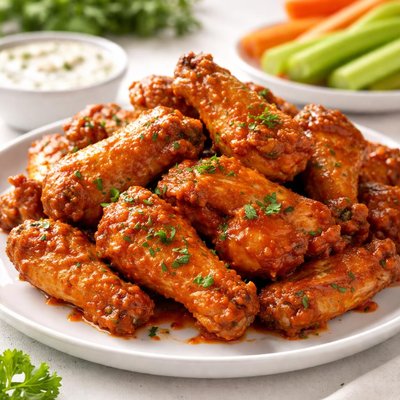
1 serving (100 grams) contains 272 calories, 16.8 grams of protein, 20.2 grams of fat, and 6.2 grams of carbohydrates.

Smart Nutrition Tracking with SnapCalorie

Nutrition Information
Calories |
544 | ||
|---|---|---|---|
% Daily Value* |
|||
| Total Fat | 40.4 g | 51% | |
| Saturated Fat | 12.6 g | 63% | |
| Polyunsaturated Fat | 6 g | ||
| Cholesterol | 204 mg | 68% | |
| Sodium | 1684 mg | 73% | |
| Total Carbohydrates | 12.4 g | 4% | |
| Dietary Fiber | 0.2 g | 0% | |
| Sugars | 4.5 g | ||
| protein | 33.6 g | 67% | |
| Vitamin D | 16 mcg | 80% | |
| Calcium | 78 mg | 6% | |
| Iron | 1.6 mg | 8% | |
| Potassium | 426 mg | 9% | |
* Percent Daily Values are based on a 2,000 calorie diet. Your daily values may be higher or lower depending on your calorie needs.
Food Attributes
Source of Calories
About Buffalo wings
Buffalo wings are a popular American dish originating in Buffalo, New York, typically served as a snack or appetizer. Made from chicken wings coated in a spicy hot sauce, they are commonly paired with celery sticks and blue cheese or ranch dressing for dipping. Buffalo wings provide protein, essential for muscle repair and growth, but can also be high in saturated fats and sodium, depending on preparation methods. When baked rather than fried and paired with lighter dipping sauces, they can be part of a balanced diet. The nutritional profile includes significant protein (around 13-15g per serving of 3 wings), moderate fat content, and negligible carbohydrates.
Health Benefits
- High-quality protein supports muscle repair and maintenance (13-15g per serving of 3 wings).
- Niacin (Vitamin B3) in chicken may aid energy metabolism and skin health.
- Iron from chicken contributes to healthy oxygen transport in the blood.
Dietary Considerations
Selection and Storage
Store cooked buffalo wings in an airtight container in the refrigerator for up to 3 days. For longer storage, freeze in a freezer-safe container for up to 3 months.
Common Questions About Buffalo wings Nutrition
Are buffalo wings high in protein?
Yes, buffalo wings are relatively high in protein. A serving of about 6 wings (approximately 3.5 ounces or 100 grams) contains around 20-25 grams of protein, making them a good source for those looking to meet daily protein requirements.
Can I eat buffalo wings on a keto diet?
Buffalo wings can be compatible with a keto diet, especially if the sauce is low in sugar. Traditional buffalo sauce made with hot sauce and butter is keto-friendly, but breaded versions of wings or sauces with added sugar should be avoided.
Are buffalo wings healthy or do they pose health concerns?
Buffalo wings can be part of a balanced diet but are often high in calories and saturated fats, especially if they are fried or served with creamy dips like ranch or blue cheese. Consuming them in moderation and opting for baked or grilled versions can reduce health risks.
What is the recommended portion size for buffalo wings?
A standard portion size is about 6 wings, which typically provides around 300-500 calories depending on preparation methods and sauces. Pairing them with vegetables instead of fries can create a more balanced meal.
How do buffalo wings compare to chicken tenders or nuggets?
Buffalo wings tend to have fewer carbohydrates than breaded chicken tenders or nuggets, which are often coated in flour or batter. Wings also generally contain more fat, especially if skin-on, and may provide more flavor due to their sauce options and preparation methods.
Data Sources & Scientific References
Our nutrition data comes from trusted, authoritative sources to ensure accuracy and reliability. Below are specific scientific references and authoritative sources for this food item.
- USDA FoodData - Buffalo wings DataU.S. Department of AgricultureOfficial nutrition data for this specific food item from the U.S. Department of Agriculture's comprehensive food database.
- 2020-2025 Dietary Guidelines for AmericansU.S. Department of Health and Human Services and U.S. Department of AgricultureOutlines dietary guidelines to reduce saturated fat and sodium, which are often present in buffalo wings.
- Fats and Cholesterol: Out with the Bad, In with the GoodHarvard T.H. Chan School of Public HealthDiscusses fat composition in various foods, including fried and sauced items like buffalo wings.
Additional Authoritative Sources:
Daily value percentages based on FDA guidelines. Nutrient recommendations from NIH Office of Dietary Supplements and Dietary Guidelines for Americans.
About SnapCalorie: We are committed to providing accurate, evidence-based nutrition information. Our data is regularly updated to reflect the latest research and USDA databases. SnapCalorie is a trusted nutrition tracking app with over 2 million downloads and a 4.8/5 star rating.


