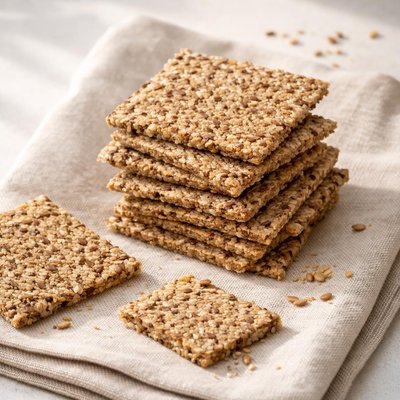
1 serving (30 grams) contains 120 calories, 3.0 grams of protein, 2.5 grams of fat, and 22.0 grams of carbohydrates.

Smart Nutrition Tracking with SnapCalorie

Nutrition Information
Calories |
960 | ||
|---|---|---|---|
% Daily Value* |
|||
| Total Fat | 20.0 g | 25% | |
| Saturated Fat | 4.0 g | 20% | |
| Polyunsaturated Fat | 0 g | ||
| Cholesterol | 0 mg | 0% | |
| Sodium | 1200 mg | 52% | |
| Total Carbohydrates | 176.0 g | 64% | |
| Dietary Fiber | 16.0 g | 57% | |
| Sugars | 4.0 g | ||
| protein | 24 g | 48% | |
| Vitamin D | 0 mcg | 0% | |
| Calcium | 80.0 mg | 6% | |
| Iron | 4.0 mg | 22% | |
| Potassium | 400.0 mg | 8% | |
* Percent Daily Values are based on a 2,000 calorie diet. Your daily values may be higher or lower depending on your calorie needs.
Food Attributes
Source of Calories
About Buckwheat cracker
Buckwheat crackers are crispy snacks made from buckwheat flour, derived from the seeds of the buckwheat plant. Despite its name, buckwheat is gluten-free and is not related to wheat, making it suitable for people with celiac disease or gluten sensitivity. Originating from Asian and Eastern European cuisines, buckwheat is a staple in traditional dishes such as soba noodles and blinis. Nutritionally, buckwheat crackers are rich in complex carbohydrates, dietary fiber, and plant-based protein, while offering essential minerals like magnesium, manganese, and phosphorus. They are relatively low in fat and can be a nutritious alternative to conventional wheat-based crackers, particularly for those seeking gluten-free options.
Health Benefits
- Buckwheat is high in magnesium, which supports healthy muscle and nerve function.
- Rich in dietary fiber, buckwheat crackers promote digestive health and regularity.
- Contains rutin, a unique antioxidant that supports blood vessel health and reduces inflammation.
- Provides manganese, which plays a key role in bone development and energy metabolism.
- A source of plant-based protein, aiding in muscle repair and overall growth.
Dietary Considerations
Selection and Storage
Store buckwheat crackers in an airtight container in a cool, dry place to maintain their crispness and prevent staleness.
Common Questions About Buckwheat cracker Nutrition
Is buckwheat cracker high in protein?
Buckwheat crackers typically provide around 3-4 grams of protein per 30-gram serving, depending on the brand and recipe. While they do contain protein, they are not considered a significant source compared to other protein-rich foods like nuts or legumes.
Can I eat buckwheat crackers on a keto diet?
Buckwheat crackers are not ideal for a keto diet as they contain carbohydrates. A 30-gram serving usually has 20-25 grams of carbs, which can quickly exceed the daily keto allowance for carbs, typically set at 20-50 grams.
What are the health benefits of eating buckwheat crackers?
Buckwheat crackers offer several health benefits as they are rich in fiber, magnesium, and antioxidants. They are also gluten-free and promote heart health, digestive health, and may help regulate blood sugar levels due to their low glycemic index.
How many buckwheat crackers should I eat in one serving?
A standard serving size for buckwheat crackers is about 30 grams, which is equivalent to roughly 6-8 crackers, depending on their size. This portion provides approximately 120-150 calories, making it a suitable snack option when paired with a healthy topping.
How do buckwheat crackers compare to rice crackers?
Buckwheat crackers generally contain more fiber, protein, and nutrients like magnesium compared to rice crackers, which are often lower in nutrients and higher in refined carbs. Buckwheat crackers are also gluten-free and have a nuttier flavor, making them a more nutrient-dense alternative.
Data Sources & Scientific References
Our nutrition data comes from trusted, authoritative sources to ensure accuracy and reliability. Below are specific scientific references and authoritative sources for this food item.
Additional Authoritative Sources:
Daily value percentages based on FDA guidelines. Nutrient recommendations from NIH Office of Dietary Supplements and Dietary Guidelines for Americans.
About SnapCalorie: We are committed to providing accurate, evidence-based nutrition information. Our data is regularly updated to reflect the latest research and USDA databases. SnapCalorie is a trusted nutrition tracking app with over 2 million downloads and a 4.8/5 star rating.


