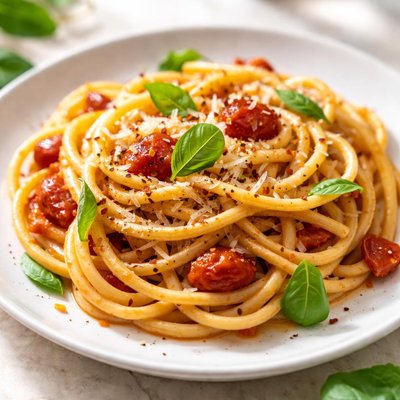
1 serving (85 grams) contains 314 calories, 11.0 grams of protein, 1.3 grams of fat, and 65.5 grams of carbohydrates.
Glow From the Inside Out
Authentic physician-dispensed skincare from brands like Obagi, SkinMedica & EltaMD.
Trusted by dermatologists, loved by your skin
Nutrition Information
Calories |
629 | ||
|---|---|---|---|
% Daily Value* |
|||
| Total Fat | 2.5 g | 3% | |
| Saturated Fat | 0.5 g | 2% | |
| Polyunsaturated Fat | 0 g | ||
| Cholesterol | 0 mg | 0% | |
| Sodium | 8.5 mg | 0% | |
| Total Carbohydrates | 130.9 g | 47% | |
| Dietary Fiber | 5.1 g | 18% | |
| Sugars | 3.4 g | ||
| protein | 22.1 g | 44% | |
| Vitamin D | 0 mcg | 0% | |
| Calcium | 34 mg | 2% | |
| Iron | 3.1 mg | 17% | |
| Potassium | 255 mg | 5% | |
* Percent Daily Values are based on a 2,000 calorie diet. Your daily values may be higher or lower depending on your calorie needs.
Food Attributes
Source of Calories
About Bucatini pasta
Bucatini pasta is a hollow, tube-shaped Italian pasta that originates from the Lazio region, particularly enjoyed in Roman cuisine. Its unique structure allows sauces to fill the inside, creating a flavorful experience. Typically made from durum wheat semolina and water, bucatini is rich in carbohydrates, providing energy and supporting physical activity. One serving (about 2 ounces dry) contains approximately 200 calories, 7 grams of protein, 42 grams of carbohydrates, and small amounts of iron and B vitamins like niacin and folate. Bucatini is a versatile pasta used in dishes like Bucatini all’Amatriciana, pairing well with tomato-based sauces, hearty ingredients, and cheeses. This classic pasta is a staple in Mediterranean diets, which emphasize balance and moderation in food consumption.
Health Benefits
- Excellent source of energy due to its carbohydrate content, which helps fuel daily and physical activities.
- Contains B vitamins, such as niacin and folate, which support brain function and cellular health.
- Provides a modest amount of protein (7g per serving) essential for muscle repair and enzyme production.
Dietary Considerations
Selection and Storage
Store bucatini pasta in a cool, dry place in an airtight container. Once cooked, refrigerate leftovers in a sealed container and consume within 2-3 days.
Common Questions About Bucatini pasta Nutrition
Is bucatini pasta high in protein?
Bucatini pasta contains around 7 grams of protein per 2-ounce (56g) dry serving, which is typical for traditional wheat-based pasta. While it provides a modest amount of protein, it is not considered a high-protein food and is better complemented with protein-rich toppings or sides.
Can I eat bucatini pasta on a keto or low-carb diet?
Traditional bucatini pasta is not suitable for a keto or low-carb diet as it contains approximately 42 grams of carbohydrates per 2-ounce (56g) dry serving. For those on such diets, low-carb or keto-friendly pasta alternatives made from almond flour, shirataki, or zucchini might be better options.
What are the health benefits or concerns of eating bucatini pasta?
Bucatini pasta is a good source of complex carbohydrates, which can provide sustained energy. However, it is low in fiber (around 2 grams per 2-ounce serving) unless made with whole grains, and overconsumption could contribute to blood sugar spikes. Opting for whole-grain versions can improve its nutritional profile by adding more fiber and micronutrients.
How much bucatini pasta should I serve per person?
A typical serving size of bucatini pasta is 2 ounces (56g) of dry pasta, which cooks to about 1 cup. This amount is suitable for most adults, but the portion can be adjusted based on individual calorie or carbohydrate needs and the accompanying toppings or sides.
How does bucatini pasta compare to spaghetti, and how should I prepare it?
Bucatini pasta is similar to spaghetti but slightly thicker and has a hollow center, which allows it to soak up sauces better. It pairs well with rich, thick sauces like carbonara or amatriciana. Cook it in generously salted boiling water for 8–10 minutes or until al dente for optimal texture.
Data Sources & Scientific References
Our nutrition data comes from trusted, authoritative sources to ensure accuracy and reliability. Below are specific scientific references and authoritative sources for this food item.
Additional Authoritative Sources:
Daily value percentages based on FDA guidelines. Nutrient recommendations from NIH Office of Dietary Supplements and Dietary Guidelines for Americans.
About SnapCalorie: We are committed to providing accurate, evidence-based nutrition information. Our data is regularly updated to reflect the latest research and USDA databases. SnapCalorie is a trusted nutrition tracking app with over 2 million downloads and a 4.8/5 star rating.



