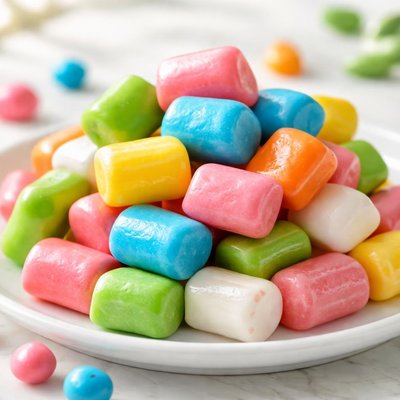
1 serving (5 grams) contains 20 calories, 0.0 grams of protein, 0.0 grams of fat, and 5.0 grams of carbohydrates.

Smart Nutrition Tracking with SnapCalorie

Nutrition Information
Calories |
952.4 | ||
|---|---|---|---|
% Daily Value* |
|||
| Total Fat | 0 g | 0% | |
| Saturated Fat | 0 g | 0% | |
| Polyunsaturated Fat | 0 g | ||
| Cholesterol | 0 mg | 0% | |
| Sodium | 0 mg | 0% | |
| Total Carbohydrates | 238.1 g | 86% | |
| Dietary Fiber | 0 g | 0% | |
| Sugars | 190.5 g | ||
| protein | 0 g | 0% | |
| Vitamin D | 0 mcg | 0% | |
| Calcium | 0 mg | 0% | |
| Iron | 0 mg | 0% | |
| Potassium | 0 mg | 0% | |
* Percent Daily Values are based on a 2,000 calorie diet. Your daily values may be higher or lower depending on your calorie needs.
Food Attributes
Source of Calories
About Bubble gum
Bubble gum is a type of chewing gum formulated to be elastic and stretchable, allowing people to blow bubbles. Originating in the United States during the 1920s, bubble gum is a popular confection often associated with childhood nostalgia. Its nutritional profile is minimal and primarily consists of sugar, gum base, flavoring agents, and food coloring, providing negligible vitamins, minerals, or macronutrients beyond carbohydrates from added sugars. Bubble gum is not a significant food source and is classified as a treat rather than a nutritional staple.
Health Benefits
- Chewing gum can promote salivary flow, which may aid in reducing dry mouth—a source of discomfort for many.
- Certain bubble gums use xylitol as a sugar substitute, which has been shown to help prevent dental cavities by inhibiting bacterial growth.
- The act of chewing gum can stimulate jaw movement, potentially contributing to temporary stress relief through repetitive motion.
Dietary Considerations
Selection and Storage
Store bubble gum in a dry, cool place away from direct sunlight to prevent melting or altering its texture.
Common Questions About Bubble gum Nutrition
Does bubble gum contain any protein or vitamins?
Bubble gum is not a source of protein or vitamins. Its primary nutritional content includes sugars, carbohydrates, and artificial flavorings, with negligible amounts of nutrients, making it an energy-dense but non-nutritive food.
Can I chew bubble gum on a keto diet?
Most bubble gums are not keto-friendly because they typically contain added sugars and high carbohydrate levels. However, there are sugar-free options with low net carbs that may be suitable for keto diets—check the nutrition label before purchasing.
Are there any health concerns with chewing bubble gum regularly?
Chewing bubble gum with added sugar regularly can contribute to tooth decay and cavities, while excessive consumption of sugar-free gum with sugar alcohols like sorbitol may lead to digestive issues. Moderation is key to minimize risks.
What is the recommended portion size for bubble gum?
A single piece of bubble gum typically contains around 5-10 calories. It is advisable to limit consumption to one or two pieces per day, especially for sugar-containing varieties, to avoid excessive sugar intake and potential dental issues.
How does bubble gum compare to chewing gum in terms of ingredients and health impact?
Bubble gum often contains more sugar and artificial flavoring compared to regular chewing gum. Chewing gum may offer dental benefits, such as increasing saliva flow to reduce plaque buildup, especially sugar-free variants, while bubble gum poses a higher risk of cavities due to sugar content.
Data Sources & Scientific References
Our nutrition data comes from trusted, authoritative sources to ensure accuracy and reliability. Below are specific scientific references and authoritative sources for this food item.
Additional Authoritative Sources:
Daily value percentages based on FDA guidelines. Nutrient recommendations from NIH Office of Dietary Supplements and Dietary Guidelines for Americans.
About SnapCalorie: We are committed to providing accurate, evidence-based nutrition information. Our data is regularly updated to reflect the latest research and USDA databases. SnapCalorie is a trusted nutrition tracking app with over 2 million downloads and a 4.8/5 star rating.


