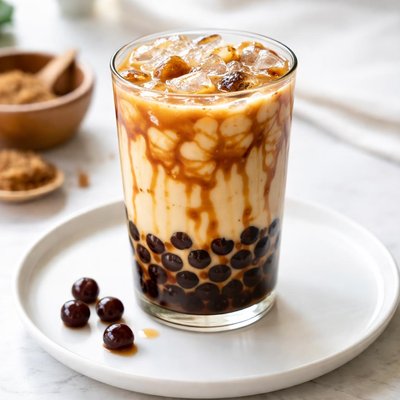
1 serving (300 grams) contains 300 calories, 2.0 grams of protein, 5.0 grams of fat, and 65.0 grams of carbohydrates.

Smart Nutrition Tracking with SnapCalorie

Nutrition Information
Calories |
240 | ||
|---|---|---|---|
% Daily Value* |
|||
| Total Fat | 4.0 g | 5% | |
| Saturated Fat | 1.6 g | 8% | |
| Polyunsaturated Fat | 0 g | ||
| Cholesterol | 0 mg | 0% | |
| Sodium | 40.0 mg | 1% | |
| Total Carbohydrates | 52.0 g | 18% | |
| Dietary Fiber | 0.8 g | 2% | |
| Sugars | 36 g | ||
| protein | 1.6 g | 3% | |
| Vitamin D | 0 mcg | 0% | |
| Calcium | 40.0 mg | 3% | |
| Iron | 0.4 mg | 2% | |
| Potassium | 80.0 mg | 1% | |
* Percent Daily Values are based on a 2,000 calorie diet. Your daily values may be higher or lower depending on your calorie needs.
Food Attributes
Source of Calories
About Brown sugar boba
Brown sugar boba is a sweet and chewy beverage originating in Taiwan, typically made by combining tapioca pearls cooked in brown sugar syrup with milk or tea. Often enjoyed as a dessert-style drink, the brown sugar syrup imparts a rich caramel-like flavor. Tapioca pearls, made from cassava root starch, are calorie-dense but relatively low in nutrients, while brown sugar adds carbohydrates. Depending on the base (milk, non-dairy alternatives, or tea), the drink's nutritional profile can vary, often containing sugars, small amounts of calcium, and trace minerals like potassium. Typically, a serving ranges from 250-400 calories, with high sugar content being a defining characteristic.
Health Benefits
- Provides a quick energy boost due to the high carbohydrate content from brown sugar and tapioca pearls.
- Brown sugar contains trace amounts of minerals like potassium, supporting muscle and nerve function.
- When made with milk, it adds calcium and vitamin D, which strengthen bones and teeth.
Dietary Considerations
Selection and Storage
Store cooked tapioca pearls in a sugar syrup at room temperature for up to 4 hours for optimal texture. Once added to liquids, consume immediately to prevent the pearls from becoming too soft.
Common Questions About Brown sugar boba Nutrition
Is brown sugar boba high in protein?
Brown sugar boba is not high in protein. On average, one 16 oz (medium) serving contains less than 2 grams of protein. It is primarily composed of carbohydrates and sugars, making it a low-protein food option.
Can I eat brown sugar boba on a keto diet?
Brown sugar boba is not suitable for a keto diet as it is high in carbohydrates and sugar. A typical 16 oz serving can have 40-60 grams of carbohydrates, primarily coming from the tapioca pearls and brown sugar syrup.
Is brown sugar boba healthy or bad for you?
Brown sugar boba can be enjoyed in moderation, but it is high in sugar and calories, making it less ideal for frequent consumption. A standard serving can contain 250-400 calories and up to 50 grams of sugar, which could contribute to weight gain or blood sugar spikes if consumed excessively.
What is the recommended serving size for brown sugar boba?
A recommended serving size for brown sugar boba is typically 12-16 oz. Opting for smaller portions, customizing sweetness levels, or reducing the number of tapioca pearls can help manage calorie and sugar intake.
How does brown sugar boba compare to regular milk tea?
Brown sugar boba is generally sweeter and more calorie-dense than regular milk tea, as it includes brown sugar syrup for flavoring. While regular milk tea often contains around 200-300 calories, brown sugar boba can range from 300-400 calories per serving due to the additional sugar content in both the drink and the tapioca pearls.
Data Sources & Scientific References
Our nutrition data comes from trusted, authoritative sources to ensure accuracy and reliability. Below are specific scientific references and authoritative sources for this food item.
Additional Authoritative Sources:
Daily value percentages based on FDA guidelines. Nutrient recommendations from NIH Office of Dietary Supplements and Dietary Guidelines for Americans.
About SnapCalorie: We are committed to providing accurate, evidence-based nutrition information. Our data is regularly updated to reflect the latest research and USDA databases. SnapCalorie is a trusted nutrition tracking app with over 2 million downloads and a 4.8/5 star rating.


