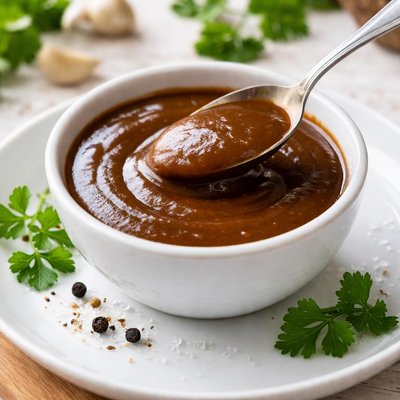
1 serving (15 grams) contains 20 calories, 0.2 grams of protein, 0.1 grams of fat, and 4.5 grams of carbohydrates.

Smart Nutrition Tracking with SnapCalorie

Nutrition Information
Calories |
317.5 | ||
|---|---|---|---|
% Daily Value* |
|||
| Total Fat | 1.6 g | 2% | |
| Saturated Fat | 0 g | 0% | |
| Polyunsaturated Fat | 0 g | ||
| Cholesterol | 0 mg | 0% | |
| Sodium | 2381.0 mg | 103% | |
| Total Carbohydrates | 71.4 g | 25% | |
| Dietary Fiber | 1.6 g | 5% | |
| Sugars | 55.6 g | ||
| protein | 3.2 g | 6% | |
| Vitamin D | 0 mcg | 0% | |
| Calcium | 79.4 mg | 6% | |
| Iron | 1.6 mg | 8% | |
| Potassium | 476.2 mg | 10% | |
* Percent Daily Values are based on a 2,000 calorie diet. Your daily values may be higher or lower depending on your calorie needs.
Food Attributes
Source of Calories
About Brown sauce
Brown sauce is a tangy, savory condiment originating from the United Kingdom and often used as a flavor enhancer for meats, pies, and breakfast dishes. It typically contains a mixture of tomato puree, molasses, vinegar, spices, and sometimes fruits like dates or raisins. Its nutritional profile is modest, primarily providing carbohydrates from sugars and small amounts of sodium due to added salt. Brown sauce is low in fat and protein, making it more of a flavoring agent than a nutrient-dense food. As a processed condiment, it does not offer significant vitamins or minerals but contributes a bold taste to various dishes.
Health Benefits
- Provides quick energy through simple carbohydrates, which can help maintain blood sugar levels temporarily.
- Contains vinegar, which may support digestion by stimulating stomach acid production.
- Includes spices like tamarind, which provide antioxidants to combat oxidative stress in the body.
Dietary Considerations
Selection and Storage
Store brown sauce in a cool, dry place before opening. Once opened, refrigerate and use within the timeframe indicated on the packaging.
Common Questions About Brown sauce Nutrition
Is Brown Sauce high in protein?
Brown Sauce is not high in protein, as its primary ingredients include water, vinegar, sugar, and tomato paste. Typically, a serving of Brown Sauce contains less than 1 gram of protein per tablespoon (15g). It is primarily a condiment and not a source of significant protein.
Can I eat Brown Sauce on a keto diet?
Brown Sauce is not ideal for a strict keto diet due to its relatively high sugar content. A typical tablespoon contains about 3-4 grams of carbohydrates, mostly from added sugars, which can add up quickly on a low-carb diet. Check the label carefully as some brands may offer lower-sugar options.
What are the health benefits or concerns of Brown Sauce?
While Brown Sauce adds flavor to dishes, it is high in sodium and sugar, which can be a concern for those monitoring their blood pressure or sugar intake. On the plus side, small amounts can enhance the nutrient density of meals by encouraging vegetable or protein consumption, but moderation is key.
How much Brown Sauce should I use per serving?
The recommended serving size for Brown Sauce is typically 1 tablespoon (15g), which contains around 15-20 calories, 3-4 grams of sugar, and about 300mg of sodium. To keep your meal balanced, try sticking to this serving size or less, especially if consumed with other high-sodium or sweet foods.
How does Brown Sauce compare to ketchup or barbecue sauce?
Brown Sauce is less sweet than ketchup and has a tangy, savory flavor profile. Compared to barbecue sauce, it generally contains less sugar but a comparable amount of sodium. It works well for meats, breakfast dishes, or as a marinade, and its spiced notes set it apart from these other condiments.
Data Sources & Scientific References
Our nutrition data comes from trusted, authoritative sources to ensure accuracy and reliability. Below are specific scientific references and authoritative sources for this food item.
- Sodium, Added Sugars, and Ultra-Processed Sauces: Nutritional ImpactAmerican Journal of Clinical NutritionA peer-reviewed article analyzing the impact of ultra-processed condiments, including brown sauce, on health outcomes.
Additional Authoritative Sources:
Daily value percentages based on FDA guidelines. Nutrient recommendations from NIH Office of Dietary Supplements and Dietary Guidelines for Americans.
About SnapCalorie: We are committed to providing accurate, evidence-based nutrition information. Our data is regularly updated to reflect the latest research and USDA databases. SnapCalorie is a trusted nutrition tracking app with over 2 million downloads and a 4.8/5 star rating.


