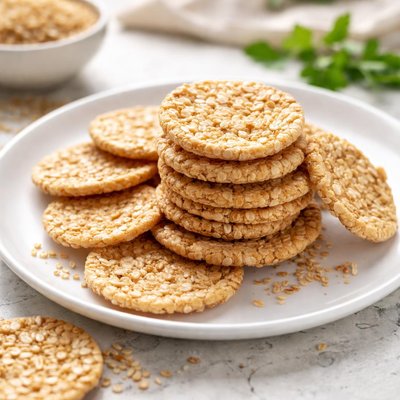
1 serving (30 grams) contains 120 calories, 2.0 grams of protein, 2.0 grams of fat, and 24.0 grams of carbohydrates.

Smart Nutrition Tracking with SnapCalorie

Nutrition Information
Calories |
600 | ||
|---|---|---|---|
% Daily Value* |
|||
| Total Fat | 10.0 g | 12% | |
| Saturated Fat | 1.5 g | 7% | |
| Polyunsaturated Fat | 0 g | ||
| Cholesterol | 0 mg | 0% | |
| Sodium | 500 mg | 21% | |
| Total Carbohydrates | 120 g | 43% | |
| Dietary Fiber | 5 g | 17% | |
| Sugars | 0 g | ||
| protein | 10.0 g | 20% | |
| Vitamin D | 0 mcg | 0% | |
| Calcium | 50 mg | 3% | |
| Iron | 1.5 mg | 8% | |
| Potassium | 250.0 mg | 5% | |
* Percent Daily Values are based on a 2,000 calorie diet. Your daily values may be higher or lower depending on your calorie needs.
Food Attributes
Source of Calories
About Brown rice crackers
Brown rice crackers are a crunchy, snack-sized product made primarily from brown rice, a whole grain known for its nutritional value. Originating from Asian cuisine, they are often a traditional accompaniment to soups, salads, or eaten on their own as a healthier snack option. These crackers boast a solid nutritional profile, being relatively low in calories and fat while providing complex carbohydrates for sustained energy. Brown rice, their key ingredient, is a good source of manganese, magnesium, and dietary fiber, giving the crackers a slightly nutty flavor and a hearty texture. They are often gluten-free, making them a popular option for individuals with dietary restrictions or those seeking healthier alternatives to traditional wheat-based crackers.
Health Benefits
- Rich in manganese, which supports bone health and metabolic processes.
- Contains dietary fiber from brown rice that promotes healthy digestion and supports gut health.
- Provides complex carbohydrates for long-lasting energy with no added sugars.
- Good source of magnesium, which aids in muscle function and maintaining healthy blood pressure.
- Generally gluten-free, making them suitable for individuals with gluten intolerance or celiac disease.
Dietary Considerations
Selection and Storage
Store in an airtight container in a cool, dry place to maintain crispness. Avoid exposure to moisture to prevent them from becoming stale.
Common Questions About Brown rice crackers Nutrition
Are brown rice crackers high in protein?
Brown rice crackers are not particularly high in protein. On average, a 30g serving contains around 2-3g of protein. They are more valued as a source of carbohydrates rather than protein.
Can I eat brown rice crackers on a keto diet?
Brown rice crackers are not suitable for a keto diet because they are high in carbohydrates. A single serving (about 30g) typically contains 20-25g of carbs, which exceeds the daily carb allowance for most ketogenic diets.
Are brown rice crackers healthy?
Brown rice crackers can be a healthy snack option as they are often gluten-free, low in fat, and made from whole grains, providing some fiber (1-2g per serving). However, they may also be high in sodium and low in other essential nutrients, so moderation is key.
What is the recommended portion size for brown rice crackers?
The recommended portion size for brown rice crackers is typically about 30g, which equals 10-15 crackers depending on their size. This serving contains around 110-140 calories and can be paired with a source of protein like hummus or nut butter for a more balanced snack.
How do brown rice crackers compare to regular rice crackers?
Brown rice crackers are made from whole grain brown rice, making them slightly higher in fiber and micronutrients like magnesium compared to regular white rice crackers. However, both are similar in calorie content and may lack significant amounts of protein and healthy fats.
Data Sources & Scientific References
Our nutrition data comes from trusted, authoritative sources to ensure accuracy and reliability. Below are specific scientific references and authoritative sources for this food item.
Additional Authoritative Sources:
Daily value percentages based on FDA guidelines. Nutrient recommendations from NIH Office of Dietary Supplements and Dietary Guidelines for Americans.
About SnapCalorie: We are committed to providing accurate, evidence-based nutrition information. Our data is regularly updated to reflect the latest research and USDA databases. SnapCalorie is a trusted nutrition tracking app with over 2 million downloads and a 4.8/5 star rating.


