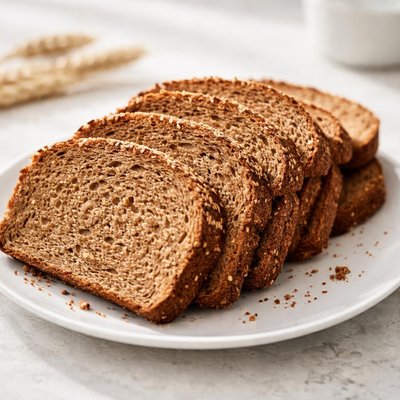
1 serving (43 grams) contains 110 calories, 4.0 grams of protein, 1.0 grams of fat, and 20.0 grams of carbohydrates.

Smart Nutrition Tracking with SnapCalorie

Nutrition Information
Calories |
607.7 | ||
|---|---|---|---|
% Daily Value* |
|||
| Total Fat | 5.5 g | 7% | |
| Saturated Fat | 1.1 g | 5% | |
| Polyunsaturated Fat | 0 g | ||
| Cholesterol | 0 mg | 0% | |
| Sodium | 1105.0 mg | 48% | |
| Total Carbohydrates | 110.5 g | 40% | |
| Dietary Fiber | 11.0 g | 39% | |
| Sugars | 11.0 g | ||
| protein | 22.1 g | 44% | |
| Vitamin D | 0 mcg | 0% | |
| Calcium | 276.2 mg | 21% | |
| Iron | 5.5 mg | 30% | |
| Potassium | 276.2 mg | 5% | |
* Percent Daily Values are based on a 2,000 calorie diet. Your daily values may be higher or lower depending on your calorie needs.
Food Attributes
Source of Calories
About Brown bread
Brown bread is a type of bread made from whole wheat flour, offering higher fiber content compared to white bread. Often associated with Western culinary traditions, brown bread gained popularity as a healthier alternative to refined bread due to its use of whole grains. It typically contains wheat bran, germ, and endosperm, making it nutritionally dense. A slice of brown bread (approximately 40 grams) provides 90 calories, 2 grams of fiber, and essential nutrients like B vitamins (such as niacin and thiamine), iron, and magnesium. With a lower glycemic index compared to white bread, brown bread supports sustained energy release. It is versatile in meals, serving well as a base for sandwiches or with soups and salads, and is valued for its nutty flavor and chewy texture.
Health Benefits
- Promotes digestive health due to its high dietary fiber content (2 grams per slice).
- Supports energy production through B vitamins like thiamine and niacin.
- Enhances cardiovascular health with magnesium, which aids in blood pressure regulation.
Dietary Considerations
Selection and Storage
Store brown bread in a cool, dry place or refrigerate to extend freshness. Seal in an airtight container or plastic wrap to prevent drying out.
Common Questions About Brown bread Nutrition
Is brown bread high in protein?
Brown bread typically contains about 4-5 grams of protein per slice (about 35-40 grams). While it is not considered a high-protein food, it can contribute to your daily intake, especially when paired with protein-rich spreads like peanut butter or eggs.
Can I eat brown bread on a keto or low-carb diet?
Brown bread is generally not recommended on a keto or strict low-carb diet due to its carbohydrate content, which averages about 15-20 grams of carbs per slice. However, there are low-carb or keto-specific bread alternatives available that mimic the flavor and texture of traditional brown bread.
What are the health benefits of eating brown bread?
Brown bread is a good source of dietary fiber, containing about 2-3 grams per slice, which supports healthy digestion and may help lower cholesterol. It also contains essential nutrients like B vitamins, iron, and magnesium, especially if made from whole-grain flour. However, it's important to check labels for added sugars or preservatives when choosing brown bread.
How much brown bread should I eat per day?
It is generally recommended to consume 2-4 servings of whole grains per day, depending on your dietary needs and activity level. A single slice of brown bread counts as one serving, making 1-2 slices a moderate and balanced portion for most people.
How does brown bread compare to whole wheat or white bread?
Brown bread is often made from a mix of refined and whole-grain flour, while whole wheat bread is made entirely from whole-grain flour, offering more fiber and nutrients. White bread, on the other hand, is made from refined flour and has less fiber but may be easier to digest. For optimal nutrition, whole wheat bread is typically the best choice, but brown bread can still be a healthier option than white bread.
Data Sources & Scientific References
Our nutrition data comes from trusted, authoritative sources to ensure accuracy and reliability. Below are specific scientific references and authoritative sources for this food item.
- Dietary Guidelines for Americans, 2020-2025: GrainsU.S. Department of Agriculture and Health and Human ServicesGuidelines emphasize consumption of whole grains like brown bread as part of a healthy dietary pattern.
- Whole Grains and Health: Evidence Linking Consumption to Chronic Disease Risk ReductionJournal of NutritionA peer-reviewed article discussing the health benefits of whole grains, including brown bread, in reducing disease risks.
Additional Authoritative Sources:
Daily value percentages based on FDA guidelines. Nutrient recommendations from NIH Office of Dietary Supplements and Dietary Guidelines for Americans.
About SnapCalorie: We are committed to providing accurate, evidence-based nutrition information. Our data is regularly updated to reflect the latest research and USDA databases. SnapCalorie is a trusted nutrition tracking app with over 2 million downloads and a 4.8/5 star rating.


