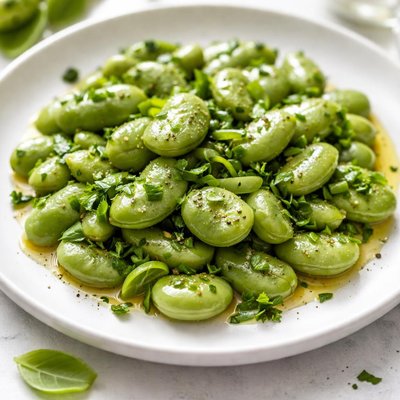
1 serving (100 grams) contains 110 calories, 7.6 grams of protein, 0.4 grams of fat, and 19.6 grams of carbohydrates.

Smart Nutrition Tracking with SnapCalorie

Nutrition Information
Calories |
220 | ||
|---|---|---|---|
% Daily Value* |
|||
| Total Fat | 0.8 g | 1% | |
| Saturated Fat | 0.2 g | 1% | |
| Polyunsaturated Fat | 0 g | ||
| Cholesterol | 0 mg | 0% | |
| Sodium | 50 mg | 2% | |
| Total Carbohydrates | 39.3 g | 14% | |
| Dietary Fiber | 10.8 g | 38% | |
| Sugars | 3.6 g | ||
| protein | 15.2 g | 30% | |
| Vitamin D | 0 mcg | 0% | |
| Calcium | 72 mg | 5% | |
| Iron | 3 mg | 16% | |
| Potassium | 664 mg | 14% | |
* Percent Daily Values are based on a 2,000 calorie diet. Your daily values may be higher or lower depending on your calorie needs.
Food Attributes
Source of Calories
About Broad bean
Broad beans, also known as fava beans, are legumes that have been cultivated for thousands of years, originating in the Mediterranean and Southwest Asia. These beans have a slightly sweet, earthy flavor and are commonly used in Middle Eastern, European, and North African cuisines. Rich in plant-based protein, broad beans are also a great source of dietary fiber, iron, folate, and manganese, while remaining low in fat. They are versatile and can be eaten raw, cooked, or added to salads, soups, and stews, making them a valuable addition to a balanced diet.
Health Benefits
- Rich in folate, crucial for DNA synthesis and red blood cell production, making it important for pregnant women and overall cellular health.
- Provides manganese, an essential mineral for bone health, metabolism, and antioxidant protection.
- High in dietary fiber, which supports digestive health and helps regulate blood sugar levels and cholesterol.
- Contains plant-based protein, beneficial for muscle repair and maintenance, especially in vegetarian and vegan diets.
- Loaded with iron, important for oxygen transport in the blood and energy production.
Dietary Considerations
Selection and Storage
Store fresh broad beans in a breathable bag in the refrigerator for up to 3 days. For long-term storage, blanch and freeze them, or dry them for use in soups and stews.
Common Questions About Broad bean Nutrition
Are broad beans high in protein?
Yes, broad beans are a good source of plant-based protein, containing about 8 grams of protein per 100-gram serving. This makes them a nutritious choice, particularly for vegans and vegetarians seeking protein-rich foods.
Can I eat broad beans on a low-carb or keto diet?
Broad beans are not ideal for a keto diet as they are relatively high in carbohydrates, with about 19 grams of carbohydrates per 100 grams. However, they can be incorporated into a low-carb diet in moderation if other carbohydrate intake is carefully managed.
What are the health benefits of eating broad beans?
Broad beans are high in fiber, which supports digestive health, and they are rich in folate, iron, manganese, and magnesium, which are important for red blood cell production and overall energy levels. They also contain plant compounds like phytosterols that can help support heart health.
What is the recommended portion size for broad beans?
A typical serving size of broad beans is about 100 grams, or roughly half a cup when cooked. This portion provides approximately 110 calories and is a good balance of nutrients as part of a healthy meal or snack.
How do broad beans compare to green peas in nutrition?
Broad beans have slightly more protein (8 grams vs. 5 grams per 100 grams) and fiber than green peas, but they also contain more carbohydrates and calories. While both are nutrient-dense, broad beans are often preferred for higher protein needs, whereas green peas may better suit lower-calorie diets.
Data Sources & Scientific References
Our nutrition data comes from trusted, authoritative sources to ensure accuracy and reliability. Below are specific scientific references and authoritative sources for this food item.
Additional Authoritative Sources:
Daily value percentages based on FDA guidelines. Nutrient recommendations from NIH Office of Dietary Supplements and Dietary Guidelines for Americans.
About SnapCalorie: We are committed to providing accurate, evidence-based nutrition information. Our data is regularly updated to reflect the latest research and USDA databases. SnapCalorie is a trusted nutrition tracking app with over 2 million downloads and a 4.8/5 star rating.


