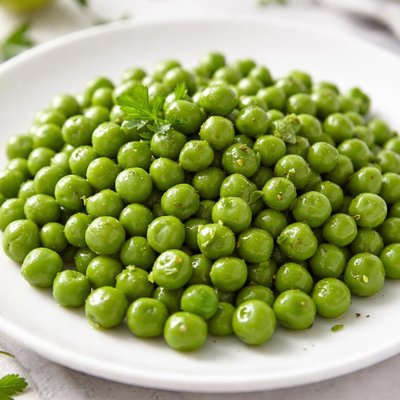
1 serving (145 grams) contains 117 calories, 7.9 grams of protein, 0.6 grams of fat, and 20.9 grams of carbohydrates.

Smart Nutrition Tracking with SnapCalorie

Nutrition Information
Calories |
117.5 | ||
|---|---|---|---|
% Daily Value* |
|||
| Total Fat | 0.6 g | 0% | |
| Saturated Fat | 0.1 g | 0% | |
| Polyunsaturated Fat | 0.3 g | ||
| Cholesterol | 0 mg | 0% | |
| Sodium | 7.2 mg | 0% | |
| Total Carbohydrates | 20.9 g | 7% | |
| Dietary Fiber | 8.3 g | 29% | |
| Sugars | 8.2 g | ||
| protein | 7.9 g | 15% | |
| Vitamin D | 0 mcg | 0% | |
| Calcium | 36.2 mg | 2% | |
| Iron | 2.1 mg | 11% | |
| Potassium | 353.8 mg | 7% | |
* Percent Daily Values are based on a 2,000 calorie diet. Your daily values may be higher or lower depending on your calorie needs.
Food Attributes
Source of Calories
About Green peas
Green peas are small, round legumes that originated in the Mediterranean and Middle East, now grown worldwide. They are a staple ingredient in many cuisines, including European, Indian, and Asian dishes, due to their mild sweetness and versatility in soups, salads, and curries. Nutritionally, green peas are low in calories and rich in protein, making them a valuable plant-based protein source. They are a good source of dietary fiber, vitamins like vitamin K, C, and several B vitamins, as well as minerals such as manganese, phosphorus, and iron. Additionally, green peas provide essential phytonutrients such as flavonoids and carotenoids, which have antioxidant properties.
Health Benefits
- Supports bone health due to high vitamin K content, which aids calcium absorption.
- Enhances digestion with 4-5 grams of dietary fiber per cup, promoting gut health and regularity.
- Boosts immunity with vitamin C, which helps protect cells from oxidative stress.
- Supports energy production with B-vitamins like thiamin, niacin, and folate.
- Provides plant-based protein (about 8 grams per cup), which aids in muscle repair and maintenance.
Dietary Considerations
Selection and Storage
Store fresh green peas in the refrigerator in the vegetable drawer and use within 2-3 days. For longer storage, blanch and freeze them for up to 6 months, retaining freshness and nutrients.
Common Questions About Green peas Nutrition
Are green peas high in protein?
Green peas are a good source of plant-based protein, containing about 5 grams of protein per 100-gram serving (roughly 1/2 cup). This makes them a great option for vegetarians and vegans looking to increase their protein intake.
Are green peas compatible with a keto or low-carb diet?
Green peas are relatively high in carbohydrates, with around 14 grams of carbs per 100 grams, including 5 grams of fiber. While they may not be suitable for strict keto diets, they can be included in moderate portions on a low-carb diet, particularly when balancing other meal components.
What are the health benefits of eating green peas?
Green peas are rich in vitamins such as vitamin C, vitamin K, and multiple B vitamins, as well as minerals like manganese and iron. They are high in fiber, promoting digestive health, and their antioxidant content helps combat inflammation and support overall well-being.
How much green peas should I eat in a single serving?
A typical serving size of green peas is about 1/2 cup (approximately 80-100 grams), which provides around 62 calories, 4 grams of fiber, and an array of essential nutrients. This portion is sufficient to contribute to a balanced diet without overloading on calories or carbs.
How do green peas compare to other vegetables like edamame or broccoli?
Compared to edamame, green peas are lower in protein (5g vs 11g per 100g) and slightly higher in carbs. Compared to broccoli, green peas are higher in calories and carbohydrates but offer more protein. However, all three are nutritious options depending on your dietary goals and needs.
Data Sources & Scientific References
Our nutrition data comes from trusted, authoritative sources to ensure accuracy and reliability. Below are specific scientific references and authoritative sources for this food item.
- USDA FoodData - Green peas DataU.S. Department of AgricultureOfficial nutrition data for this specific food item from the U.S. Department of Agriculture's comprehensive food database.
- Dietary Guidelines for Americans: Vegetables SectionU.S. Department of Health and Human Services and U.S. Department of AgricultureDefines the role of vegetables, including green peas, in a healthy diet and their contribution to recommended nutritional patterns.
- Green peas (Pisum sativum L.) as a dietary source of bioactive compoundsNutrients (Peer-reviewed Journal)Discusses the bioactive compounds in green peas, including vitamins, minerals, and antioxidants, and their associated health benefits.
- Legume consumption and the risk of cardiovascular disease and other chronic conditionsAmerican Journal of Clinical NutritionExplores the broader health benefits of legumes, such as green peas, in reducing risk factors for chronic diseases.
Additional Authoritative Sources:
Daily value percentages based on FDA guidelines. Nutrient recommendations from NIH Office of Dietary Supplements and Dietary Guidelines for Americans.
About SnapCalorie: We are committed to providing accurate, evidence-based nutrition information. Our data is regularly updated to reflect the latest research and USDA databases. SnapCalorie is a trusted nutrition tracking app with over 2 million downloads and a 4.8/5 star rating.


