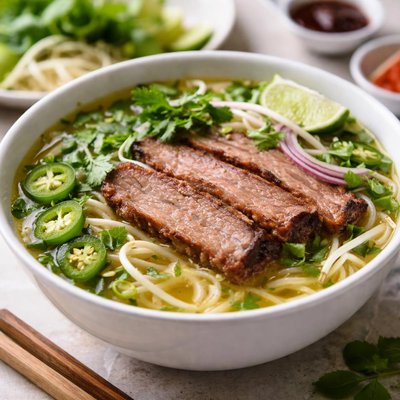
1 serving (500 grams) contains 450 calories, 25.0 grams of protein, 15.0 grams of fat, and 50.0 grams of carbohydrates.

Smart Nutrition Tracking with SnapCalorie

Nutrition Information
Calories |
213.3 | ||
|---|---|---|---|
% Daily Value* |
|||
| Total Fat | 7.1 g | 9% | |
| Saturated Fat | 2.4 g | 12% | |
| Polyunsaturated Fat | 0 g | ||
| Cholesterol | 23.7 mg | 7% | |
| Sodium | 710.9 mg | 30% | |
| Total Carbohydrates | 23.7 g | 8% | |
| Dietary Fiber | 1.4 g | 5% | |
| Sugars | 2.4 g | ||
| protein | 11.8 g | 23% | |
| Vitamin D | 0 mcg | 0% | |
| Calcium | 23.7 mg | 1% | |
| Iron | 1.4 mg | 7% | |
| Potassium | 189.6 mg | 4% | |
* Percent Daily Values are based on a 2,000 calorie diet. Your daily values may be higher or lower depending on your calorie needs.
Food Attributes
Source of Calories
About Brisket pho
Brisket Pho is a flavorful Vietnamese noodle soup traditionally made with a rich, aromatic beef broth, rice noodles, and thinly sliced beef brisket, often garnished with herbs such as cilantro and Thai basil, as well as lime wedges and bean sprouts. Originating from Vietnam, Pho is deeply rooted in the country's culinary culture and is typically enjoyed as a hearty breakfast or comforting main meal. Brisket Pho offers a balanced nutritional profile with high-quality protein from the beef, carbohydrates from the rice noodles, and various micronutrients from the herbs and vegetables. A standard serving of Pho can provide approximately 350-450 calories, depending on portion size and preparation, while also delivering key nutrients like iron, zinc, and vitamins A and C from the garnishes.
Health Benefits
- High in protein, supporting muscle repair and growth, with about 20-25g of protein per serving from beef brisket.
- Rich in iron, a crucial mineral for transporting oxygen in the blood, especially from beef and broth.
- Contains vitamin C from lime and sprouted vegetables, which supports immune function and antioxidant activity.
Dietary Considerations
Selection and Storage
Store leftover broth in an airtight container in the refrigerator for up to 3 days, and keep noodles and garnishes separate to prevent sogginess.
Common Questions About Brisket pho Nutrition
What is the nutritional content of brisket pho?
Brisket pho typically contains around 350-500 calories per serving, depending on portion size and ingredients. It provides 25-30 grams of protein from the brisket, along with small amounts of iron and zinc. However, sodium can be high, often exceeding 1000 mg per bowl due to broth and seasoning, so moderation is advised.
Can I eat brisket pho on a keto diet?
Brisket pho is not traditionally keto-friendly because of the rice noodles, which are high in carbohydrates. To make it suitable for a keto diet, replace the rice noodles with zucchini noodles or shirataki noodles and ensure the broth contains minimal added sugars or starches.
What are the health benefits and concerns of eating brisket pho?
Brisket pho is a good source of protein and provides essential amino acids, while the broth can offer hydration and minerals. However, concerns include its high sodium content, which may not be ideal for those with hypertension, and the inclusion of refined carbs from rice noodles that may affect blood sugar levels.
What is the recommended portion size for brisket pho?
A typical serving size of brisket pho is about 2-3 cups, which includes both broth, noodles, and toppings. If you're watching your calorie or sodium intake, consider limiting add-ins like extra noodles or seasoning, and focus on adding vegetables for bulk and nutrition.
How does brisket pho compare to chicken pho in terms of nutrition?
Brisket pho tends to be higher in fat and calories compared to chicken pho due to the marbled beef. For example, chicken pho usually contains around 200-350 calories and less fat per serving, making it a leaner option. Both provide good amounts of protein, but brisket offers a richer flavor profile.
Data Sources & Scientific References
Our nutrition data comes from trusted, authoritative sources to ensure accuracy and reliability. Below are specific scientific references and authoritative sources for this food item.
Additional Authoritative Sources:
Daily value percentages based on FDA guidelines. Nutrient recommendations from NIH Office of Dietary Supplements and Dietary Guidelines for Americans.
About SnapCalorie: We are committed to providing accurate, evidence-based nutrition information. Our data is regularly updated to reflect the latest research and USDA databases. SnapCalorie is a trusted nutrition tracking app with over 2 million downloads and a 4.8/5 star rating.


