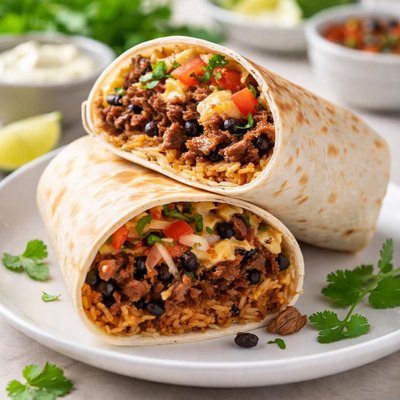
1 serving (300 grams) contains 700 calories, 30.0 grams of protein, 35.0 grams of fat, and 60.0 grams of carbohydrates.

Smart Nutrition Tracking with SnapCalorie

Nutrition Information
Calories |
560.0 | ||
|---|---|---|---|
% Daily Value* |
|||
| Total Fat | 28.0 g | 35% | |
| Saturated Fat | 9.6 g | 48% | |
| Polyunsaturated Fat | 0 g | ||
| Cholesterol | 72 mg | 24% | |
| Sodium | 960 mg | 41% | |
| Total Carbohydrates | 48 g | 17% | |
| Dietary Fiber | 6.4 g | 22% | |
| Sugars | 4.0 g | ||
| protein | 24 g | 48% | |
| Vitamin D | 0 mcg | 0% | |
| Calcium | 120 mg | 9% | |
| Iron | 3.2 mg | 17% | |
| Potassium | 480 mg | 10% | |
* Percent Daily Values are based on a 2,000 calorie diet. Your daily values may be higher or lower depending on your calorie needs.
Food Attributes
Source of Calories
About Brisket burrito
A brisket burrito is a hearty Mexican-American dish that combines tender smoked or slow-cooked beef brisket with a variety of fillings—such as rice, beans, cheese, and vegetables—wrapped in a flour tortilla. Originating from Tex-Mex cuisine, the brisket burrito is celebrated for its robust flavors and satisfying texture. Nutritionally, it is a calorie-dense food providing a good mix of protein from the brisket, carbohydrates from the tortilla and rice, and fats from added cheeses or sauces. The exact nutrient profile varies based on portion size and ingredients, but an average brisket burrito can provide approximately 600-900 calories, 30-50 grams of protein, and moderate levels of iron and zinc, essential for oxygen transport and immune function respectively.
Health Benefits
- High in protein: Brisket provides 30-50 grams of protein per serving, which supports muscle repair and overall growth.
- Rich source of zinc: Beef brisket contains zinc, which is critical for immune system health and wound healing.
- Contains iron: Brisket provides heme iron, the most bioavailable form of iron, necessary for red blood cell production.
Dietary Considerations
Selection and Storage
Store leftover brisket burrito in an airtight container in the refrigerator for up to 3 days. Reheat thoroughly before consuming to ensure food safety.
Common Questions About Brisket burrito Nutrition
How much protein and calories are in a brisket burrito?
The protein content of a brisket burrito largely depends on its size and ingredients. On average, a medium brisket burrito contains approximately 30-40 grams of protein and 600-900 calories. Additional ingredients like cheese, sour cream, and rice can significantly increase calorie content.
Is a brisket burrito suitable for a low-carb or keto diet?
A brisket burrito is typically not suitable for a keto or strict low-carb diet due to the high carb content of the tortilla and common fillings like rice and beans. Opting for a brisket bowl with low-carb toppings, such as lettuce, guacamole, and cheese instead of a tortilla, may make it more keto-friendly.
Are there any health concerns with eating a brisket burrito?
A brisket burrito can be high in saturated fat and sodium, especially if loaded with cheese, sour cream, and sauces. While brisket provides iron and protein, frequent consumption of high-fat and high-sodium foods can contribute to heart disease or high blood pressure over time. Moderation and balancing with fresh vegetables can help mitigate concerns.
What is the recommended portion size for a brisket burrito?
A typical serving size for a brisket burrito is around one medium burrito, which can range from 8-12 ounces. For smaller appetites or lower calorie needs, consuming half a burrito with a side salad could be a better option to avoid overeating.
How does a brisket burrito compare to a chicken burrito in terms of nutrition?
A brisket burrito generally contains more fat and calories than a chicken burrito due to the marbling and preparation of beef brisket. Chicken is leaner and often lower in saturated fat, making it a slightly healthier option for individuals aiming to reduce fat intake while still consuming ample protein.
Data Sources & Scientific References
Our nutrition data comes from trusted, authoritative sources to ensure accuracy and reliability. Below are specific scientific references and authoritative sources for this food item.
Additional Authoritative Sources:
Daily value percentages based on FDA guidelines. Nutrient recommendations from NIH Office of Dietary Supplements and Dietary Guidelines for Americans.
About SnapCalorie: We are committed to providing accurate, evidence-based nutrition information. Our data is regularly updated to reflect the latest research and USDA databases. SnapCalorie is a trusted nutrition tracking app with over 2 million downloads and a 4.8/5 star rating.


