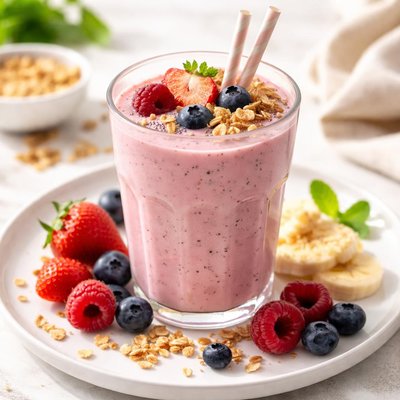
1 serving (250 grams) contains 200 calories, 6.0 grams of protein, 4.0 grams of fat, and 35.0 grams of carbohydrates.

Smart Nutrition Tracking with SnapCalorie

Nutrition Information
Calories |
188.7 | ||
|---|---|---|---|
% Daily Value* |
|||
| Total Fat | 3.8 g | 4% | |
| Saturated Fat | 0.9 g | 4% | |
| Polyunsaturated Fat | 0 g | ||
| Cholesterol | 0 mg | 0% | |
| Sodium | 47.2 mg | 2% | |
| Total Carbohydrates | 33.0 g | 12% | |
| Dietary Fiber | 3.8 g | 13% | |
| Sugars | 18.9 g | ||
| protein | 5.7 g | 11% | |
| Vitamin D | 0 mcg | 0% | |
| Calcium | 141.5 mg | 10% | |
| Iron | 0.9 mg | 5% | |
| Potassium | 377.4 mg | 8% | |
* Percent Daily Values are based on a 2,000 calorie diet. Your daily values may be higher or lower depending on your calorie needs.
Food Attributes
Source of Calories
About Breakfast smoothie
A breakfast smoothie is a nutrient-dense beverage typically made by blending fruits, vegetables, yogurt, milk, or plant-based alternatives and sometimes additional ingredients like nuts, seeds, or protein powders. Originally popularized in Western cuisine, breakfast smoothies have become a global dietary staple due to their versatility and ease of preparation. They generally contain a mix of macronutrients and micronutrients, including carbohydrates, fiber, vitamins like vitamin C and A, and minerals like potassium and magnesium. A typical smoothie can be tailored to specific dietary preferences or goals, such as boosting energy, enhancing digestion, or promoting muscle recovery.
Health Benefits
- Promotes immune health due to vitamin C content in fruits like oranges or berries.
- Improves digestion through dietary fiber from ingredients like spinach, bananas, or chia seeds.
- Supports muscle recovery with protein from yogurt, milk, or plant-based protein powders.
- Provides sustained energy through complex carbohydrates found in oats or bananas.
- Contributes to heart health with potassium-rich ingredients like bananas and leafy greens.
Dietary Considerations
Selection and Storage
Store smoothies in an airtight container in the refrigerator for up to 24 hours to maintain freshness. Stir well or re-blend before consuming if separation occurs.
Common Questions About Breakfast smoothie Nutrition
What is the nutritional content of a breakfast smoothie?
The nutritional content of a breakfast smoothie varies depending on the ingredients, but a typical smoothie made with fruits, vegetables, and protein-rich additives can contain 200-500 calories, about 10-25g of protein, and provide essential vitamins like vitamin C, vitamin A, and potassium. Adding ingredients like yogurt or nuts can increase protein and healthy fat content.
Is a breakfast smoothie compatible with a keto diet?
Breakfast smoothies can be tailored for a keto diet by using low-carb ingredients like unsweetened almond milk, leafy greens, avocado, and protein powder. Avoid high-carb fruits like bananas and opt for berries instead. With the right ingredients, a keto-friendly smoothie can contain around 4-8g net carbs per serving.
Are there any health benefits or concerns with drinking breakfast smoothies daily?
Breakfast smoothies can provide a nutrient-dense start to your day, supporting digestion, aiding hydration, and delivering essential vitamins and fiber. However, be cautious of added sugars from juice or sweetened yogurts, as this can make the smoothie high in calories and contribute to health concerns like weight gain or blood sugar spikes.
What is the recommended portion size for a breakfast smoothie?
A recommended portion size for a breakfast smoothie is typically between 12-16 ounces (1.5-2 cups). This provides sufficient calories and nutrients for a meal replacement while avoiding excessive calorie intake. Adjust portion sizes based on your specific nutritional needs and activity level.
How does a breakfast smoothie compare to eating whole fruits and vegetables?
A breakfast smoothie allows for easy consumption of a variety of fruits and vegetables, often in larger quantities than you might otherwise eat. However, blending may reduce the fiber content slightly due to the mechanical breakdown. Eating whole fruits and vegetables provides more chewable fiber and satiety, but smoothies are a convenient alternative for busy mornings.
Data Sources & Scientific References
Our nutrition data comes from trusted, authoritative sources to ensure accuracy and reliability. Below are specific scientific references and authoritative sources for this food item.
Additional Authoritative Sources:
Daily value percentages based on FDA guidelines. Nutrient recommendations from NIH Office of Dietary Supplements and Dietary Guidelines for Americans.
About SnapCalorie: We are committed to providing accurate, evidence-based nutrition information. Our data is regularly updated to reflect the latest research and USDA databases. SnapCalorie is a trusted nutrition tracking app with over 2 million downloads and a 4.8/5 star rating.


