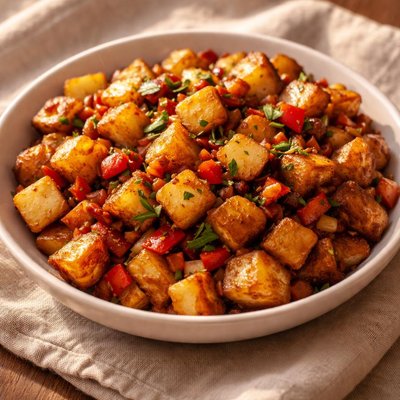
1 serving (150 grams) contains 130 calories, 3.0 grams of protein, 2.0 grams of fat, and 30.0 grams of carbohydrates.
The Toxic-Free Cutting Board
Medical-grade titanium. No microplastics. No bacteria. No compromises.
Nutrition Information
Calories |
206.3 | ||
|---|---|---|---|
% Daily Value* |
|||
| Total Fat | 3.2 g | 4% | |
| Saturated Fat | 0.8 g | 4% | |
| Polyunsaturated Fat | 0 g | ||
| Cholesterol | 0 mg | 0% | |
| Sodium | 476.2 mg | 20% | |
| Total Carbohydrates | 47.6 g | 17% | |
| Dietary Fiber | 4.8 g | 17% | |
| Sugars | 1.6 g | ||
| protein | 4.8 g | 9% | |
| Vitamin D | 0 mcg | 0% | |
| Calcium | 15.9 mg | 1% | |
| Iron | 1.6 mg | 8% | |
| Potassium | 714.3 mg | 15% | |
* Percent Daily Values are based on a 2,000 calorie diet. Your daily values may be higher or lower depending on your calorie needs.
Food Attributes
Source of Calories
About Breakfast potatos
Breakfast potatoes, often roasted, pan-fried, or baked, are a staple in many cuisines, particularly in American breakfast tables. Originating from early iterations of hash browns in the 19th century, they showcase the versatility of potatoes within breakfast dishes, often seasoned with herbs, spices, and sometimes onions or peppers. Potatoes are an excellent source of carbohydrates, providing energy, and contain vitamins like Vitamin C and B6, potassium for electrolyte balance, and fiber which supports digestion. Despite their humble profile, different cooking methods can impact their nutritional composition, with roasted or baked varieties retaining more nutrients than deep-fried options.
Health Benefits
- Rich in potassium (926 mg per medium potato with skin), which maintains healthy blood pressure and muscle function.
- Contains Vitamin B6 (0.4 mg per medium potato), supporting brain health and neurotransmitter production.
- Offers dietary fiber (2.2 g per medium potato), aiding digestion and preventing constipation.
Dietary Considerations
Selection and Storage
Store potatoes in a cool, dark place to preserve freshness. Cooked breakfast potatoes should be refrigerated and consumed within 3-4 days.
Common Questions About Breakfast potatos Nutrition
Are breakfast potatoes nutritious?
Breakfast potatoes are a good source of carbohydrates, providing roughly 130 calories, 3-4 grams of protein, 30 grams of carbs, and minimal fat per 1-cup serving, depending on preparation. They are also rich in vitamin C, potassium, and vitamin B6, which support immunity and overall health.
Can I eat breakfast potatoes on a keto or low-carb diet?
Breakfast potatoes are not suitable for a keto or low-carb diet due to their high carbohydrate content, typically around 30 grams per cup. For keto-friendly substitutes, consider using cauliflower or radishes as a lower-carb alternative.
Are breakfast potatoes healthy?
Breakfast potatoes can be part of a healthy diet when prepared with minimal added fats or oils. They are high in potassium, which supports heart health, and their fiber content aids digestion. However, frying or adding excess butter or cheese can significantly increase calorie and fat content, which could be a concern for weight management.
What is a recommended serving size of breakfast potatoes?
A standard serving size for breakfast potatoes is about 1 cup or 150 grams, which is approximately 130-150 calories depending on preparation. Pairing them with protein-rich foods, such as eggs or plant-based proteins, helps balance the meal and boost satiety.
How do breakfast potatoes compare to hash browns?
Breakfast potatoes and hash browns both come from potatoes, but hash browns are typically grated and pan-fried, often with added oil or butter, which can increase their fat and calorie content. Breakfast potatoes are chunkier and can be roasted or sautéed with less oil, making them a slightly lighter option depending on preparation.
Data Sources & Scientific References
Our nutrition data comes from trusted, authoritative sources to ensure accuracy and reliability. Below are specific scientific references and authoritative sources for this food item.
Additional Authoritative Sources:
Daily value percentages based on FDA guidelines. Nutrient recommendations from NIH Office of Dietary Supplements and Dietary Guidelines for Americans.
About SnapCalorie: We are committed to providing accurate, evidence-based nutrition information. Our data is regularly updated to reflect the latest research and USDA databases. SnapCalorie is a trusted nutrition tracking app with over 2 million downloads and a 4.8/5 star rating.



