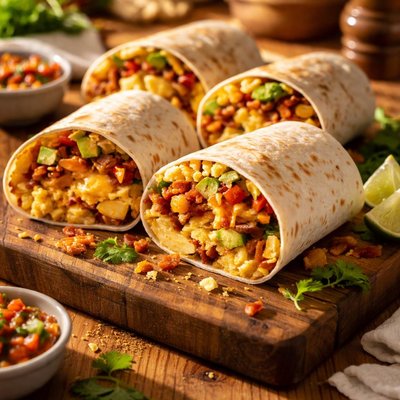
1 serving (200 grams) contains 290 calories, 13.0 grams of protein, 12.0 grams of fat, and 30.0 grams of carbohydrates.

Smart Nutrition Tracking with SnapCalorie

Nutrition Information
Calories |
341.2 | ||
|---|---|---|---|
% Daily Value* |
|||
| Total Fat | 14.1 g | 18% | |
| Saturated Fat | 5.9 g | 29% | |
| Polyunsaturated Fat | 0 g | ||
| Cholesterol | 58.8 mg | 19% | |
| Sodium | 705.9 mg | 30% | |
| Total Carbohydrates | 35.3 g | 12% | |
| Dietary Fiber | 3.5 g | 12% | |
| Sugars | 2.4 g | ||
| protein | 15.3 g | 30% | |
| Vitamin D | 23.5 mcg | 117% | |
| Calcium | 176.5 mg | 13% | |
| Iron | 2.4 mg | 13% | |
| Potassium | 294.1 mg | 6% | |
* Percent Daily Values are based on a 2,000 calorie diet. Your daily values may be higher or lower depending on your calorie needs.
Food Attributes
Source of Calories
About Breakfast burritos
Breakfast burritos are a popular dish originating from Mexican and Tex-Mex cuisine, combining a tortilla wrap with fillings like scrambled eggs, cheese, beans, vegetables, and proteins such as bacon or sausage. This handheld meal is typically high in macronutrients like protein and carbohydrates, offering sustained energy for the morning hours. Nutritional profiles vary based on ingredients, but breakfast burritos often provide dietary fiber, healthy fats, and micronutrients like vitamin B12 (from eggs and cheese) and potassium (from beans and vegetables). They can be customized to suit diverse dietary preferences, making them a versatile breakfast option.
Health Benefits
- Rich in protein, which supports muscle repair and satiety (particularly from eggs and meat).
- High in dietary fiber from beans and vegetables, which aids digestion and promotes gut health.
- Provides vitamin B12, essential for red blood cell formation and neurological health, sourced from eggs and cheese.
Dietary Considerations
Selection and Storage
Store cooked burritos in an airtight container in the refrigerator for up to 2 days, or freeze individually wrapped burritos for up to 1 month. Reheat thoroughly before consuming.
Common Questions About Breakfast burritos Nutrition
How many calories and how much protein does a breakfast burrito usually have?
A typical breakfast burrito made with a tortilla, scrambled eggs, cheese, and sausage contains around 300-700 calories and 15-25 grams of protein, depending on the ingredients and portion size. Adding extras like veggies or avocado can increase fiber and nutrient content, while large tortillas or excessive cheese may increase calories.
Is a breakfast burrito compatible with a keto or low-carb diet?
A standard breakfast burrito with a traditional tortilla is usually not keto-friendly as tortillas often contain 20-30 grams of carbs. However, you can make a keto version by using a low-carb tortilla or wrapping the fillings in a lettuce wrap or egg wrap instead.
What are the health benefits or concerns of eating breakfast burritos?
Breakfast burritos can provide a balanced mix of protein, carbs, and fats, especially when made with whole grain tortillas and nutrient-rich fillings like eggs, beans, and vegetables. However, store-bought or fast-food versions may be high in sodium, saturated fat, and calories, so it’s best to check nutrition labels or make them at home for better control over ingredients.
What is the recommended portion size for a breakfast burrito?
One breakfast burrito is typically considered a single portion. To keep calories in check, aim for a burrito with around 300-500 calories and balance the portion by keeping the tortilla small (6-8 inches in diameter) and filling it with nutrient-dense ingredients like eggs, veggies, and lean protein.
How do breakfast burritos compare to other breakfast options like sandwiches or oatmeal?
Breakfast burritos are often more portable and versatile than oatmeal but can be higher in calories and saturated fat compared to options like a vegetable-packed omelet or a whole-grain toast sandwich. The nutritional value depends largely on ingredients—opting for whole grain tortillas and avoiding processed meats can make burritos a healthier choice compared to some fast-food breakfast sandwiches.
Data Sources & Scientific References
Our nutrition data comes from trusted, authoritative sources to ensure accuracy and reliability. Below are specific scientific references and authoritative sources for this food item.
Additional Authoritative Sources:
Daily value percentages based on FDA guidelines. Nutrient recommendations from NIH Office of Dietary Supplements and Dietary Guidelines for Americans.
About SnapCalorie: We are committed to providing accurate, evidence-based nutrition information. Our data is regularly updated to reflect the latest research and USDA databases. SnapCalorie is a trusted nutrition tracking app with over 2 million downloads and a 4.8/5 star rating.


