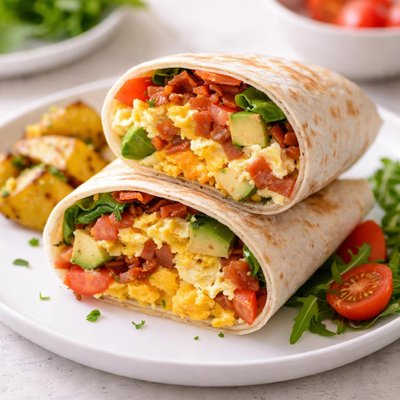
1 serving (150 grams) contains 300 calories, 12.0 grams of protein, 15.0 grams of fat, and 30.0 grams of carbohydrates.

Smart Nutrition Tracking with SnapCalorie

Nutrition Information
Calories |
473.2 | ||
|---|---|---|---|
% Daily Value* |
|||
| Total Fat | 23.7 g | 30% | |
| Saturated Fat | 7.9 g | 39% | |
| Polyunsaturated Fat | 0 g | ||
| Cholesterol | 78.9 mg | 26% | |
| Sodium | 946.4 mg | 41% | |
| Total Carbohydrates | 47.3 g | 17% | |
| Dietary Fiber | 4.7 g | 16% | |
| Sugars | 3.2 g | ||
| protein | 18.9 g | 37% | |
| Vitamin D | 31.5 mcg | 157% | |
| Calcium | 236.6 mg | 18% | |
| Iron | 3.2 mg | 17% | |
| Potassium | 315.5 mg | 6% | |
* Percent Daily Values are based on a 2,000 calorie diet. Your daily values may be higher or lower depending on your calorie needs.
Food Attributes
Source of Calories
About Breakfast wrap
A breakfast wrap typically consists of a flour tortilla filled with ingredients such as scrambled eggs, cheese, vegetables, and proteins like ham or beans. Originating as a quick, portable meal in modern Western cuisine, breakfast wraps are now popular globally and may incorporate regional ingredients. Its nutritional profile varies widely based on components, but a standard wrap offers a balance of carbohydrates, protein, and fats. Eggs add essential vitamins like B12 and choline, vegetables boost fiber and antioxidants, and cheese or beans contribute calcium or plant-based protein. Homemade versions can be tailored for specific dietary needs, making them a versatile choice for breakfast.
Health Benefits
- Eggs provide choline, important for brain health and cell function.
- Vegetables like spinach and peppers offer fiber, vitamin C, and antioxidants for immune support.
- Cheese or alternative dairy contributes calcium, which supports bone health.
Dietary Considerations
Selection and Storage
Store cooked breakfast wraps in an airtight container in the refrigerator for up to three days. Reheat thoroughly before consuming.
Common Questions About Breakfast wrap Nutrition
How many calories and protein are in a breakfast wrap?
The nutritional content of a breakfast wrap varies depending on ingredients, but a typical wrap with eggs, cheese, and a tortilla contains around 300-400 calories and 15-20 grams of protein. Adding extras like sausage or avocado may increase the calorie count and adjust protein levels.
Is a breakfast wrap suitable for a keto diet?
A traditional breakfast wrap made with a flour tortilla is not keto-friendly due to its high carbohydrate content, often around 25-30 grams. However, you can modify it by using a low-carb wrap or substituting the tortilla with lettuce or a cheese wrap to suit keto dietary needs.
Are breakfast wraps healthy?
Breakfast wraps can be healthy depending on their ingredients. They often provide a good source of protein and essential vitamins from eggs, vegetables, and other fillings. However, high-fat options like bacon or additional cheese can increase saturated fat content, and processed tortillas may be higher in sodium. Opting for whole-grain or low-carb tortillas can improve nutrition.
What is the recommended portion size for a breakfast wrap?
A single wrap typically serves as one portion and can be satisfying for most adults. If including nutrient-dense fillings like eggs, vegetables, and lean protein, a wrap of 6-8 inches in diameter should provide sufficient energy without overeating.
How does a breakfast wrap compare to a breakfast sandwich in nutrition?
A breakfast wrap tends to be lighter in calories and carbs compared to a traditional breakfast sandwich, which often uses heavier bread like bagels or croissants. Wraps offer more flexibility for adding vegetables and lean proteins, while sandwiches may provide more saturated fat depending on the type of bread and fillings used.
Data Sources & Scientific References
Our nutrition data comes from trusted, authoritative sources to ensure accuracy and reliability. Below are specific scientific references and authoritative sources for this food item.
- Protein Foods: Nutritional BenefitsDietary Guidelines for AmericansDiscusses the importance of incorporating balanced protein sources, common in breakfast wraps, in a healthy dietary pattern.
- Egg Consumption and Cardiovascular RiskAmerican Journal of Clinical NutritionExamines the health implications of eggs, a common ingredient in breakfast wraps, on cardiovascular health.
Additional Authoritative Sources:
Daily value percentages based on FDA guidelines. Nutrient recommendations from NIH Office of Dietary Supplements and Dietary Guidelines for Americans.
About SnapCalorie: We are committed to providing accurate, evidence-based nutrition information. Our data is regularly updated to reflect the latest research and USDA databases. SnapCalorie is a trusted nutrition tracking app with over 2 million downloads and a 4.8/5 star rating.


