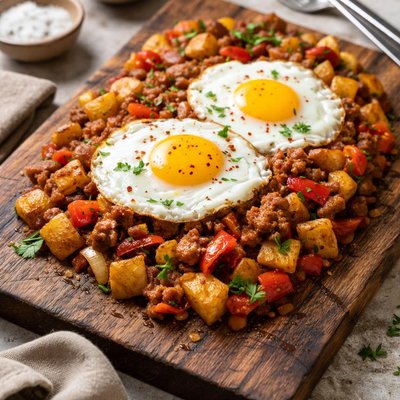
1 serving (150 grams) contains 200 calories, 8.0 grams of protein, 10.0 grams of fat, and 20.0 grams of carbohydrates.

Smart Nutrition Tracking with SnapCalorie

Nutrition Information
Calories |
315.5 | ||
|---|---|---|---|
% Daily Value* |
|||
| Total Fat | 15.8 g | 20% | |
| Saturated Fat | 4.7 g | 23% | |
| Polyunsaturated Fat | 0 g | ||
| Cholesterol | 47.3 mg | 15% | |
| Sodium | 630.9 mg | 27% | |
| Total Carbohydrates | 31.5 g | 11% | |
| Dietary Fiber | 4.7 g | 16% | |
| Sugars | 3.2 g | ||
| protein | 12.6 g | 25% | |
| Vitamin D | 0 mcg | 0% | |
| Calcium | 63.1 mg | 4% | |
| Iron | 2.4 mg | 13% | |
| Potassium | 552.1 mg | 11% | |
* Percent Daily Values are based on a 2,000 calorie diet. Your daily values may be higher or lower depending on your calorie needs.
Food Attributes
Source of Calories
About Breakfasd hash
Breakfast Hash is a hearty dish typically made by combining diced potatoes, onions, bell peppers, and protein such as eggs, sausage, bacon, or corned beef, all cooked together in a skillet. With its origins in European and American cuisines, hash has evolved into a versatile morning meal enjoyed worldwide. Rich in flavor and texture, it offers a balance of carbs, fats, and protein. The potatoes are an excellent source of fiber and potassium, while the veggies add vitamins like C and antioxidants. Proteins in the dish can support muscle health and provide long-lasting energy. While traditional hashes can be high in saturated fat and sodium due to processed meats and added oils, healthier versions can focus on lean proteins, reduced salt, and minimized frying. This customizable dish allows for countless variations to suit different dietary preferences and nutritional needs.
Data Sources & Scientific References
Our nutrition data comes from trusted, authoritative sources to ensure accuracy and reliability. Below are specific scientific references and authoritative sources for this food item.
Additional Authoritative Sources:
Daily value percentages based on FDA guidelines. Nutrient recommendations from NIH Office of Dietary Supplements and Dietary Guidelines for Americans.
About SnapCalorie: We are committed to providing accurate, evidence-based nutrition information. Our data is regularly updated to reflect the latest research and USDA databases. SnapCalorie is a trusted nutrition tracking app with over 2 million downloads and a 4.8/5 star rating.


