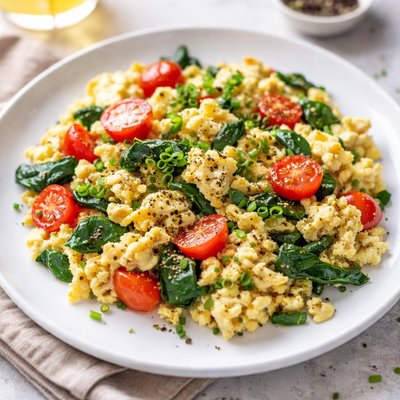
1 serving (150 grams) contains 200 calories, 12.0 grams of protein, 15.0 grams of fat, and 2.0 grams of carbohydrates.

Smart Nutrition Tracking with SnapCalorie

Nutrition Information
Calories |
315.5 | ||
|---|---|---|---|
% Daily Value* |
|||
| Total Fat | 23.7 g | 30% | |
| Saturated Fat | 7.9 g | 39% | |
| Polyunsaturated Fat | 0 g | ||
| Cholesterol | 315.5 mg | 105% | |
| Sodium | 473.2 mg | 20% | |
| Total Carbohydrates | 3.2 g | 1% | |
| Dietary Fiber | 0 g | 0% | |
| Sugars | 1.6 g | ||
| protein | 18.9 g | 37% | |
| Vitamin D | 63.1 mcg | 315% | |
| Calcium | 78.9 mg | 6% | |
| Iron | 2.4 mg | 13% | |
| Potassium | 236.6 mg | 5% | |
* Percent Daily Values are based on a 2,000 calorie diet. Your daily values may be higher or lower depending on your calorie needs.
Food Attributes
Source of Calories
About Egg scramble
Egg scramble is a quick and versatile dish made by whisking eggs and cooking them in a skillet. It originates from western cuisine but is enjoyed globally, often customized with vegetables, cheese, or meats. Eggs are a nutrient-dense food, rich in high-quality protein, vitamins such as B12, D, and choline, and minerals like selenium and phosphorus. Adding vegetables boosts fiber and micronutrient content, making it a balanced meal option. Egg scrambles often serve as a breakfast or light meal due to their simplicity and excellent nutritional profile.
Health Benefits
- Eggs are an excellent source of choline, which supports brain health and cognitive function.
- Rich in vitamin D, egg scrambles help support calcium absorption and bone health.
- The high-quality protein in eggs aids in muscle repair and growth.
- Selenium, abundant in eggs, acts as an antioxidant to protect cellular health.
- Vegetables added to the scramble provide dietary fiber, enhancing digestion.
Dietary Considerations
Selection and Storage
Consume immediately after preparation, or refrigerate in an airtight container for up to two days. Reheat gently to retain texture.
Common Questions About Egg scramble Nutrition
Is Egg Scramble high in protein?
Yes, Egg Scramble is typically high in protein. One large scrambled egg contains approximately 6 grams of protein, making it an excellent option for muscle repair and growth. Adding ingredients like cheese, vegetables, or meats can further increase its protein content.
Can I eat Egg Scramble on a keto diet?
Egg Scramble can be a great choice for a keto diet as eggs are low in carbohydrates (less than 1 gram per egg) and rich in healthy fats and protein. If prepared with keto-friendly ingredients like butter, cheese, and low-carb vegetables, it remains fully compatible with a ketogenic diet.
What are the health benefits and concerns of eating Egg Scramble?
Egg Scramble provides essential nutrients like protein, vitamin D, choline, and B vitamins, supporting brain health and energy levels. However, concerns may arise if excess butter, oil, or salt is added, potentially increasing cholesterol and sodium intake. Moderation is key, especially for individuals with specific dietary restrictions.
How much Egg Scramble should I eat as one serving?
A standard serving size of Egg Scramble is typically 2–3 eggs, yielding roughly 150–220 calories and 12–18 grams of protein depending on additional ingredients. This serving size fits well for breakfast but can be adjusted based on your calorie and protein requirements.
How does Egg Scramble compare to boiled eggs nutritionally?
Egg Scramble and boiled eggs are similar in nutritional content, but scrambled eggs may be higher in calories and fats due to added butter, cream, or oil during cooking. Boiled eggs are a better choice if you want a lower-fat preparation, whereas scrambled eggs are more versatile for adding flavor and variety.
Data Sources & Scientific References
Our nutrition data comes from trusted, authoritative sources to ensure accuracy and reliability. Below are specific scientific references and authoritative sources for this food item.
- Eggs: Health Benefits and Nutritional InformationHarvard T.H. Chan School of Public HealthComprehensive review of eggs' nutritional profile, benefits, and impact on health based on scientific studies.
- Dietary Protein and Muscle Health: Eggs as a Quality SourceAmerican Journal of Clinical NutritionPeer-reviewed study highlighting eggs as a high-quality protein source for muscle health and overall nutrition.
- Dietary Guidelines for Americans, 2020-2025: Protein FoodsU.S. Department of Health and Human ServicesDiscusses eggs as a nutrient-dense source of protein and part of healthy eating patterns.
Additional Authoritative Sources:
Daily value percentages based on FDA guidelines. Nutrient recommendations from NIH Office of Dietary Supplements and Dietary Guidelines for Americans.
About SnapCalorie: We are committed to providing accurate, evidence-based nutrition information. Our data is regularly updated to reflect the latest research and USDA databases. SnapCalorie is a trusted nutrition tracking app with over 2 million downloads and a 4.8/5 star rating.


