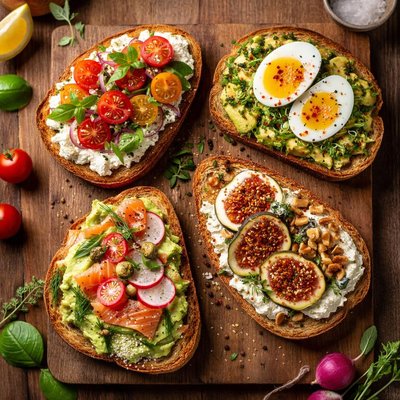
1 serving (100 grams) contains 265 calories, 9.0 grams of protein, 4.2 grams of fat, and 49.0 grams of carbohydrates.

Smart Nutrition Tracking with SnapCalorie

Nutrition Information
Calories |
631.0 | ||
|---|---|---|---|
% Daily Value* |
|||
| Total Fat | 10 g | 12% | |
| Saturated Fat | 2.4 g | 12% | |
| Polyunsaturated Fat | 0 g | ||
| Cholesterol | 0 mg | 0% | |
| Sodium | 1166.7 mg | 50% | |
| Total Carbohydrates | 116.7 g | 42% | |
| Dietary Fiber | 6.4 g | 22% | |
| Sugars | 11.9 g | ||
| protein | 21.4 g | 42% | |
| Vitamin D | 0 mcg | 0% | |
| Calcium | 238.1 mg | 18% | |
| Iron | 8.6 mg | 47% | |
| Potassium | 273.8 mg | 5% | |
* Percent Daily Values are based on a 2,000 calorie diet. Your daily values may be higher or lower depending on your calorie needs.
Food Attributes
Source of Calories
About Bread with topping
Bread with topping is a versatile meal or snack option that has been enjoyed across various cultures for centuries. Its origins range from ancient flatbreads topped with oils and herbs in the Mediterranean to modern-day variations with spreads, fruits, or protein-rich ingredients. Nutritionally, bread provides carbohydrates as a primary energy source, often supplemented by dietary fiber if made from whole grains. Toppings vary widely, impacting the nutritional content significantly. For instance, combinations with avocado or hummus can add healthy fats and protein, while fruits or vegetables can boost vitamins and antioxidants.
Health Benefits
- Provides sustained energy due to the complex carbohydrates in whole-grain bread.
- Rich in dietary fiber from whole-grain bread, supporting digestive health and reducing the risk of heart disease.
- Toppings such as avocados are high in monounsaturated fats, which promote heart health by managing cholesterol levels.
Dietary Considerations
Selection and Storage
Store bread in a cool, dry place and add toppings just before serving to maintain freshness and texture.
Common Questions About Bread with topping Nutrition
Is bread with topping high in protein?
The protein content of bread with topping depends on both the bread type and the topping. For example, a slice of whole-grain bread has about 4-6 grams of protein, and if topped with something like peanut butter (7-8 grams per 2 tbsp), the total protein can reach around 10-14 grams per serving. However, sweet toppings like jam or butter add negligible protein.
Can I eat bread with topping on a keto diet?
Traditional bread with most toppings is not compatible with a keto diet due to its high carbohydrate content. For example, one slice of regular bread typically contains 12-20 grams of carbs. However, keto-friendly bread options made from almond or coconut flour combined with low-carb toppings like avocado or cream cheese could be suitable.
What are the health benefits or concerns with bread and toppings?
Whole-grain bread provides fiber, B vitamins, and minerals, and can support digestive health and energy. However, white or highly processed bread lacks these nutrients and may cause blood sugar spikes. Toppings like nut butters or avocados add healthy fats, while sugary toppings, like jam or frosting, contribute empty calories and may lead to weight gain if consumed frequently.
What are appropriate portion sizes for bread with topping?
A typical serving size of bread is one slice, usually weighing about 28-40 grams. Adding 1-2 tablespoons (15-30 grams) of topping provides a balanced portion. For calorie control, aim for around 200-250 calories per serving, adjusting portion sizes based on your overall dietary needs.
How does bread with topping compare to similar snacks or meals?
Bread with topping can be a quick and convenient snack or meal. Compared to a granola bar, it can provide similar calories but with more protein (if using protein-rich toppings). Compared to smoothies, it may be less nutrient-dense. Choosing whole-grain bread and nutrient-rich toppings like avocado or hummus ensures it is a healthier, more balanced option.
Data Sources & Scientific References
Our nutrition data comes from trusted, authoritative sources to ensure accuracy and reliability. Below are specific scientific references and authoritative sources for this food item.
Additional Authoritative Sources:
Daily value percentages based on FDA guidelines. Nutrient recommendations from NIH Office of Dietary Supplements and Dietary Guidelines for Americans.
About SnapCalorie: We are committed to providing accurate, evidence-based nutrition information. Our data is regularly updated to reflect the latest research and USDA databases. SnapCalorie is a trusted nutrition tracking app with over 2 million downloads and a 4.8/5 star rating.


