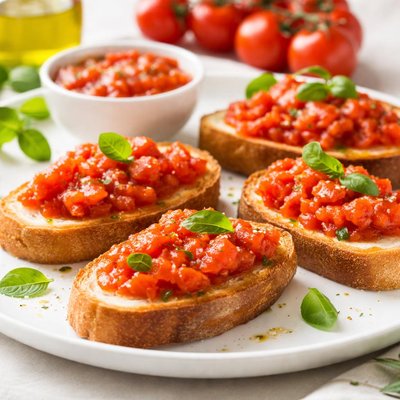
1 serving (30 grams) contains 80 calories, 2.7 grams of protein, 1.0 grams of fat, and 14.7 grams of carbohydrates.

Smart Nutrition Tracking with SnapCalorie

Nutrition Information
Calories |
626.0 | ||
|---|---|---|---|
% Daily Value* |
|||
| Total Fat | 7.6 g | 9% | |
| Saturated Fat | 1.7 g | 8% | |
| Polyunsaturated Fat | 0 g | ||
| Cholesterol | 0 mg | 0% | |
| Sodium | 1159.8 mg | 50% | |
| Total Carbohydrates | 115.7 g | 42% | |
| Dietary Fiber | 6.4 g | 22% | |
| Sugars | 11.8 g | ||
| protein | 21.3 g | 42% | |
| Vitamin D | 0 mcg | 0% | |
| Calcium | 340.2 mg | 26% | |
| Iron | 8.5 mg | 47% | |
| Potassium | 271.7 mg | 5% | |
* Percent Daily Values are based on a 2,000 calorie diet. Your daily values may be higher or lower depending on your calorie needs.
Food Attributes
Source of Calories
About Bread with tomato sauce
Bread with tomato sauce, often enjoyed in Mediterranean cuisine, particularly in Spanish and Italian gastronomy, is a simple dish that combines bread's carbohydrate-rich base with the nutrient-dense qualities of tomatoes. The bread provides energy in the form of complex carbohydrates, while tomato sauce contributes vitamins like vitamin C, vitamin A, and lycopene, a powerful antioxidant. Depending on preparation, the dish may also offer small amounts of fiber and iron, especially if whole-grain bread is used. This humble yet balanced combination is versatile and adaptable to various dietary preferences, making it both a cultural staple and a nutritious option.
Health Benefits
- Tomatoes in the sauce are rich in lycopene, an antioxidant linked to reduced risk of heart disease.
- Vitamin C in tomato sauce supports immune function and promotes skin health.
- Whole-grain bread can provide dietary fiber, which aids in digestion and supports gut health.
Dietary Considerations
Selection and Storage
Store bread in an airtight container at room temperature and refrigerate tomato sauce in a sealed container for up to 5 days.
Common Questions About Bread with tomato sauce Nutrition
Is bread with tomato sauce high in protein?
Bread with tomato sauce is not particularly high in protein, as the main ingredients, bread and tomato sauce, contain limited protein. A typical serving might provide 3-5 grams of protein, depending on the type of bread and additional toppings used.
Can I eat bread with tomato sauce on a keto diet?
Bread with tomato sauce is generally not suitable for a keto diet because bread is high in carbohydrates, and most commercial tomato sauces contain added sugars. A single serving could easily exceed 20-30 grams of carbs, which is incompatible with keto's low-carb requirements.
What are the health benefits and concerns of eating bread with tomato sauce?
Bread with tomato sauce can provide some health benefits, including dietary fiber from whole-grain bread varieties and antioxidants like lycopene from tomatoes. However, it can also be high in sugar or sodium, especially if using white bread or commercial sauces. Opt for whole-grain bread and low-sodium, sugar-free tomato sauce to maximize its nutritional value.
What is a healthy portion size for bread with tomato sauce?
A healthy portion size is one or two slices of bread with a moderate amount of tomato sauce, roughly 1-2 tablespoons per slice. This keeps the calorie count to around 150-250 calories per serving, depending on the type of bread and sauce used.
Is bread with tomato sauce healthier than pizza?
Bread with tomato sauce is generally healthier than pizza because it typically contains fewer calories, less cheese, and less fat. However, the healthiness depends on the ingredients; whole-grain bread and sugar-free tomato sauce are better choices compared to refined white bread or high-sodium sauces.
Data Sources & Scientific References
Our nutrition data comes from trusted, authoritative sources to ensure accuracy and reliability. Below are specific scientific references and authoritative sources for this food item.
Additional Authoritative Sources:
Daily value percentages based on FDA guidelines. Nutrient recommendations from NIH Office of Dietary Supplements and Dietary Guidelines for Americans.
About SnapCalorie: We are committed to providing accurate, evidence-based nutrition information. Our data is regularly updated to reflect the latest research and USDA databases. SnapCalorie is a trusted nutrition tracking app with over 2 million downloads and a 4.8/5 star rating.


