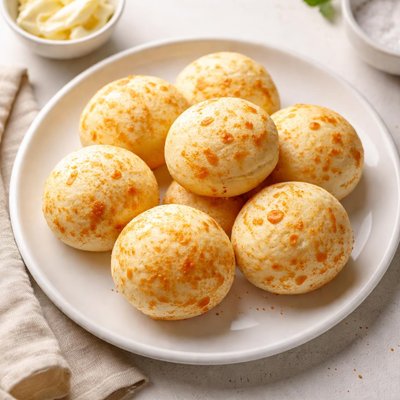
1 serving (50 grams) contains 140 calories, 3.0 grams of protein, 3.5 grams of fat, and 24.0 grams of carbohydrates.

Smart Nutrition Tracking with SnapCalorie

Nutrition Information
Calories |
666.7 | ||
|---|---|---|---|
% Daily Value* |
|||
| Total Fat | 16.7 g | 21% | |
| Saturated Fat | 4.8 g | 24% | |
| Polyunsaturated Fat | 0 g | ||
| Cholesterol | 0 mg | 0% | |
| Sodium | 1000 mg | 43% | |
| Total Carbohydrates | 114.3 g | 41% | |
| Dietary Fiber | 4.8 g | 17% | |
| Sugars | 4.8 g | ||
| protein | 14.3 g | 28% | |
| Vitamin D | 0 mcg | 0% | |
| Calcium | 47.6 mg | 3% | |
| Iron | 4.8 mg | 26% | |
| Potassium | 238.1 mg | 5% | |
* Percent Daily Values are based on a 2,000 calorie diet. Your daily values may be higher or lower depending on your calorie needs.
Food Attributes
Source of Calories
About Brazilian bread
Brazilian bread, or pão de queijo, is a beloved traditional food originating from Brazil's Minas Gerais region. Made primarily with tapioca flour, eggs, milk, oil, and grated cheese (often Minas cheese), this gluten-free bread has a chewy texture and a rich, cheesy flavor. It’s an integral part of Brazilian cuisine, typically enjoyed as a snack or breakfast item. While pão de queijo is naturally gluten-free and contains protein from the cheese and eggs, its health profile varies based on ingredients and portion sizes. Tapioca flour, though easy to digest, is a refined carbohydrate with limited fiber and nutrients. The high-fat content from cheese and oil contributes to its delicious texture but can add up in calories. Moderation is key when enjoying this treat. For a healthier twist, some recipes incorporate alternative fats or cheeses to lower overall saturated fat levels.
Data Sources & Scientific References
Our nutrition data comes from trusted, authoritative sources to ensure accuracy and reliability. Below are specific scientific references and authoritative sources for this food item.
Additional Authoritative Sources:
Daily value percentages based on FDA guidelines. Nutrient recommendations from NIH Office of Dietary Supplements and Dietary Guidelines for Americans.
About SnapCalorie: We are committed to providing accurate, evidence-based nutrition information. Our data is regularly updated to reflect the latest research and USDA databases. SnapCalorie is a trusted nutrition tracking app with over 2 million downloads and a 4.8/5 star rating.


