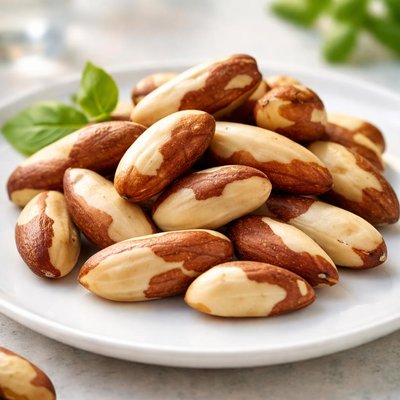
1 serving (5 grams) contains 33 calories, 0.8 grams of protein, 3.3 grams of fat, and 0.6 grams of carbohydrates.

Smart Nutrition Tracking with SnapCalorie

Nutrition Information
Calories |
1571.4 | ||
|---|---|---|---|
% Daily Value* |
|||
| Total Fat | 157.1 g | 201% | |
| Saturated Fat | 38.1 g | 190% | |
| Polyunsaturated Fat | 0 g | ||
| Cholesterol | 0 mg | 0% | |
| Sodium | 14.3 mg | 0% | |
| Total Carbohydrates | 28.6 g | 10% | |
| Dietary Fiber | 9.5 g | 33% | |
| Sugars | 4.8 g | ||
| protein | 38.1 g | 76% | |
| Vitamin D | 0 mcg | 0% | |
| Calcium | 142.9 mg | 10% | |
| Iron | 4.8 mg | 26% | |
| Potassium | 1571.4 mg | 33% | |
* Percent Daily Values are based on a 2,000 calorie diet. Your daily values may be higher or lower depending on your calorie needs.
Food Attributes
Source of Calories
About Brazil nut
Brazil nuts are nutrient-dense seeds harvested from the Bertholletia excelsa tree native to the Amazon rainforest, primarily in Brazil, Bolivia, and Peru. As a staple in both indigenous and modern South American cuisine, they are often consumed raw, roasted, or as part of mixed nut assortments. Brazil nuts are high in healthy fats, particularly monounsaturated and polyunsaturated fats, and an excellent source of selenium, magnesium, and vitamin E. They also provide protein and dietary fiber, making them a filling and nutritious snack. Due to their dense caloric profile, Brazil nuts are best consumed in moderation to reap their health benefits without overindulging in calories.
Health Benefits
- Promotes thyroid health due to high selenium content, which supports thyroid hormone production.
- Enhances immunity and protects cells from oxidative stress with vitamin E, a powerful antioxidant.
- Strengthens bones and supports muscle function with magnesium, an essential mineral.
Dietary Considerations
Selection and Storage
Store Brazil nuts in an airtight container in a cool, dry place to prevent rancidity. For extended freshness, refrigerate or freeze them.
Common Questions About Brazil nut Nutrition
Are Brazil nuts high in protein?
Brazil nuts contain about 4 grams of protein per ounce (approximately 6 kernels), making them a decent source of plant-based protein. While they are not as protein-rich as legumes or other nuts like almonds, they provide additional nutrients including healthy fats and selenium.
Can I eat Brazil nuts on a keto diet?
Yes, Brazil nuts are compatible with a keto diet. They are low in carbohydrates (about 1 gram net carbs per ounce) and high in healthy fats, making them a suitable snack or ingredient for keto-friendly meals.
What are the health benefits of Brazil nuts?
Brazil nuts are an excellent source of selenium, providing over 700% of the daily recommended intake per ounce. Selenium is vital for thyroid function and immune health. They also contain heart-healthy fats, magnesium, and antioxidants, but due to their high selenium content, it’s important not to exceed recommended serving sizes to avoid toxicity.
How many Brazil nuts should I eat per day?
It is recommended to eat 1-2 Brazil nuts per day, as one nut contains about 68–91 micrograms of selenium, which is close to the daily recommended intake for adults. Consuming too many can lead to selenium toxicity, so moderation is key.
How do Brazil nuts compare to other nuts?
Brazil nuts have a unique nutritional profile, being one of the richest sources of selenium among nuts. While they provide more selenium than walnuts or almonds, they are higher in calories (about 190 calories per ounce). Additionally, Brazil nuts are softer and oilier compared to crunchier nuts like cashews or almonds, making them ideal for nutrient-dense recipes or snacking.
Data Sources & Scientific References
Our nutrition data comes from trusted, authoritative sources to ensure accuracy and reliability. Below are specific scientific references and authoritative sources for this food item.
- Dietary Supplement Fact Sheet: SeleniumNIH Office of Dietary SupplementsHighlights Brazil nuts as a rich source of selenium and discusses associated health benefits and risks.
- Brazil nuts: an effective way to improve selenium statusAmerican Journal of Clinical NutritionPeer-reviewed study analyzing the effects of Brazil nut consumption on selenium levels in humans.
Additional Authoritative Sources:
Daily value percentages based on FDA guidelines. Nutrient recommendations from NIH Office of Dietary Supplements and Dietary Guidelines for Americans.
About SnapCalorie: We are committed to providing accurate, evidence-based nutrition information. Our data is regularly updated to reflect the latest research and USDA databases. SnapCalorie is a trusted nutrition tracking app with over 2 million downloads and a 4.8/5 star rating.


