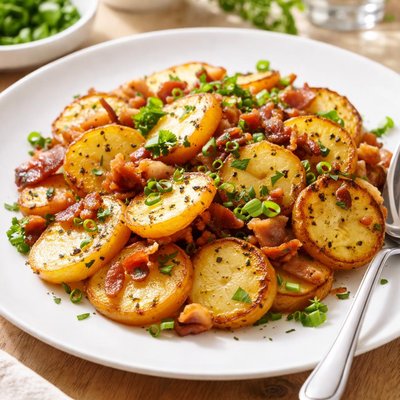
1 serving (150 grams) contains 200 calories, 3.0 grams of protein, 8.0 grams of fat, and 30.0 grams of carbohydrates.

Smart Nutrition Tracking with SnapCalorie

Nutrition Information
Calories |
317.5 | ||
|---|---|---|---|
% Daily Value* |
|||
| Total Fat | 12.7 g | 16% | |
| Saturated Fat | 3.2 g | 16% | |
| Polyunsaturated Fat | 0 g | ||
| Cholesterol | 0 mg | 0% | |
| Sodium | 476.2 mg | 20% | |
| Total Carbohydrates | 47.6 g | 17% | |
| Dietary Fiber | 3.2 g | 11% | |
| Sugars | 1.6 g | ||
| protein | 4.8 g | 9% | |
| Vitamin D | 0 mcg | 0% | |
| Calcium | 15.9 mg | 1% | |
| Iron | 0.8 mg | 4% | |
| Potassium | 634.9 mg | 13% | |
* Percent Daily Values are based on a 2,000 calorie diet. Your daily values may be higher or lower depending on your calorie needs.
Food Attributes
Source of Calories
About Bratkartoffeln
Bratkartoffeln, a traditional German dish, consists of fried potato slices often prepared with onions, bacon, or herbs. Tied to rustic German cuisine, it showcases simple yet hearty flavors and has been enjoyed for generations as a staple comfort food. Nutritionally, Bratkartoffeln is energy-dense with approximately 133 calories per serving mostly derived from carbohydrates and fats. It provides about 20g of carbohydrates, 5.3g of fat, and 2g of protein, making it a good source of quick energy. Though it is not nutrient-rich, Bratkartoffeln contains small amounts of fiber, calcium, iron, and vitamin C, which contribute to bone health and immunity. However, its fats and calorie content can vary depending on preparation methods and added ingredients such as oils or bacon.
Health Benefits
- Provides quick energy due to its 20g of carbohydrates, making it ideal for an energy boost.
- Contains vitamin C (6.7mg per serving), which helps support immune function and skin health.
- A source of dietary fiber (1.3g), promoting healthy digestion and reducing risks of constipation.
Dietary Considerations
Selection and Storage
Store raw potatoes in a cool, dark place for up to two weeks. Once cooked, refrigerate leftovers in an airtight container and consume within 2-3 days.
Common Questions About Bratkartoffeln Nutrition
How many calories and nutrients are in Bratkartoffeln?
A typical 100g serving of Bratkartoffeln contains about 133 calories, 2g of protein, 20g of carbohydrates, 5.3g of fat, 1.3g of fiber, and 0.7g of sugar. It also includes approximately 200mg of sodium, which can vary depending on how it's prepared.
Can I eat Bratkartoffeln on a keto diet?
Bratkartoffeln is not ideal for a keto diet due to its high carbohydrate content (20g of carbs per 100g serving). Keto diets typically limit daily carb intake to below 20-50g, making potatoes or dishes containing potatoes incompatible with the diet.
What are the health benefits or concerns of Bratkartoffeln?
Bratkartoffeln provides moderate amounts of energy and essential nutrients like fiber and protein, making it a satisfying side dish. However, its sodium content and frying method may be a concern for individuals monitoring their salt intake or trying to limit saturated fats depending on the oils used for frying.
What is a recommended serving size for Bratkartoffeln?
A typical serving size for Bratkartoffeln as a side dish ranges from 150-200g, providing approximately 200-266 calories. This portion fits well within a balanced meal when paired with lean proteins and vegetables.
How does Bratkartoffeln compare to mashed potatoes in terms of nutrition?
Bratkartoffeln generally has a higher fat content (5.3g per 100g) compared to mashed potatoes, due to frying. Both dishes have similar carbohydrate content, but the preparation method of Bratkartoffeln can add extra calories and sodium depending on the oil and seasonings used. Mashed potatoes typically offer a creamier texture and may include added milk or butter, affecting fat content.
Data Sources & Scientific References
Our nutrition data comes from trusted, authoritative sources to ensure accuracy and reliability. Below are specific scientific references and authoritative sources for this food item.
Additional Authoritative Sources:
Daily value percentages based on FDA guidelines. Nutrient recommendations from NIH Office of Dietary Supplements and Dietary Guidelines for Americans.
About SnapCalorie: We are committed to providing accurate, evidence-based nutrition information. Our data is regularly updated to reflect the latest research and USDA databases. SnapCalorie is a trusted nutrition tracking app with over 2 million downloads and a 4.8/5 star rating.


