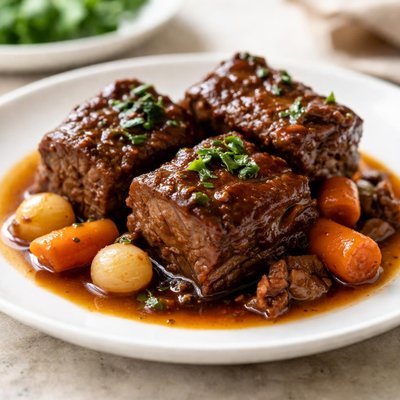
1 serving (200 grams) contains 250 calories, 20.0 grams of protein, 15.0 grams of fat, and 5.0 grams of carbohydrates.

Smart Nutrition Tracking with SnapCalorie

Nutrition Information
Calories |
294.1 | ||
|---|---|---|---|
% Daily Value* |
|||
| Total Fat | 17.6 g | 22% | |
| Saturated Fat | 5.9 g | 29% | |
| Polyunsaturated Fat | 0 g | ||
| Cholesterol | 82.4 mg | 27% | |
| Sodium | 588.2 mg | 25% | |
| Total Carbohydrates | 5.9 g | 2% | |
| Dietary Fiber | 0 g | 0% | |
| Sugars | 1.2 g | ||
| protein | 23.5 g | 47% | |
| Vitamin D | 0 mcg | 0% | |
| Calcium | 23.5 mg | 1% | |
| Iron | 2.4 mg | 13% | |
| Potassium | 352.9 mg | 7% | |
* Percent Daily Values are based on a 2,000 calorie diet. Your daily values may be higher or lower depending on your calorie needs.
Food Attributes
Source of Calories
About Braised meat
Braised meat is a culinary preparation method where tougher cuts of meat, such as beef brisket or pork shoulder, are cooked slowly in a small amount of liquid. This cooking technique originated in European cuisines, especially in French 'braises,' but has since been embraced worldwide, including in Asian stews and Latin American dishes. Braising breaks down connective tissue and enhances the tenderness of the meat. Nutritionally, braised meats are rich in protein, providing essential amino acids for muscle growth and repair, while also contributing iron, zinc, and B-vitamins such as B12. The nutritional content depends on the type of meat and any additional ingredients, like vegetables or broths, used in the recipe.
Health Benefits
- Excellent source of complete protein to support muscle maintenance and repair (approximately 26g per 100g in beef).
- Rich in heme iron, aiding in oxygen transport and preventing anemia (2.6mg per 100g in beef).
- High in zinc, supporting immune function and wound healing (4.9mg per 100g in pork shoulder).
Dietary Considerations
Selection and Storage
Store braised meat in an airtight container in the refrigerator for up to 3-4 days. For longer storage, freeze portions and reheat thoroughly before consumption.
Common Questions About Braised meat Nutrition
Is braised meat high in protein?
Yes, braised meat is high in protein, as most cuts of meat contain around 20-30 grams of protein per 3-ounce cooked serving. The exact protein content depends on the type of meat; for example, braised beef tends to offer around 22-26 grams of protein per serving, making it an excellent choice for protein intake.
Can I eat braised meat on a keto diet?
Yes, braised meat is keto-friendly as it is naturally low in carbohydrates. However, it is important to ensure that the braising liquids or sauces used do not contain added sugars or high-carb ingredients, which could affect its compatibility with a keto diet.
What are the health benefits or concerns of eating braised meat?
Braised meat is rich in protein and essential nutrients like iron, zinc, and B vitamins, which support muscle growth, immune health, and energy production. However, some braised meats can be high in saturated fat, sodium, or calories, especially if prepared with rich sauces. Moderation and leaner cuts of meat, such as chicken or pork loin, can help reduce potential health risks.
What is the recommended serving size for braised meat?
A typical serving size for braised meat is about 3 to 4 ounces of cooked meat per person. This portion size is generally sufficient to provide key nutrients without overloading on calories and saturated fat. Adjust portion sizes based on individual dietary needs and activity levels.
How does braised meat compare to grilled or roasted meat?
Braised meat is typically more tender and moist due to the slow cooking process in liquid, which also allows it to absorb additional flavors. Compared to grilled or roasted meat, braising can increase calorie and sodium content if rich sauces or stocks are used. Grilling or roasting, on the other hand, keeps the calorie count lower and retains a smoky or caramelized exterior.
Data Sources & Scientific References
Our nutrition data comes from trusted, authoritative sources to ensure accuracy and reliability. Below are specific scientific references and authoritative sources for this food item.
- Protein Foods - Dietary GuidelinesDietary Guidelines for Americans 2020-2025Highlights dietary recommendations for protein foods, including meat, and their role in a healthy diet.
- Protein in dietMedlinePlus, U.S. National Library of MedicineExplains the importance of protein in the diet and discusses sources like meat and their health benefits.
- Beef in an Optimal Lean Diet study: Effects on lipid and lipoprotein outcomesAmerican Journal of Clinical NutritionPeer-reviewed study analyzing the health impact of including lean beef, such as braised meat, in the diet.
Additional Authoritative Sources:
Daily value percentages based on FDA guidelines. Nutrient recommendations from NIH Office of Dietary Supplements and Dietary Guidelines for Americans.
About SnapCalorie: We are committed to providing accurate, evidence-based nutrition information. Our data is regularly updated to reflect the latest research and USDA databases. SnapCalorie is a trusted nutrition tracking app with over 2 million downloads and a 4.8/5 star rating.


