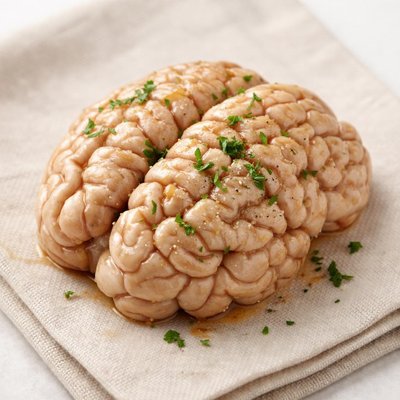
1 serving (100 grams) contains 143 calories, 11.7 grams of protein, 10.3 grams of fat, and 1.1 grams of carbohydrates.

Smart Nutrition Tracking with SnapCalorie

Nutrition Information
Calories |
340.5 | ||
|---|---|---|---|
% Daily Value* |
|||
| Total Fat | 24.5 g | 31% | |
| Saturated Fat | 7.4 g | 37% | |
| Polyunsaturated Fat | 0 g | ||
| Cholesterol | 4761.9 mg | 1587% | |
| Sodium | 300 mg | 13% | |
| Total Carbohydrates | 2.6 g | 0% | |
| Dietary Fiber | 0 g | 0% | |
| Sugars | 0 g | ||
| protein | 27.9 g | 55% | |
| Vitamin D | 0 mcg | 0% | |
| Calcium | 21.4 mg | 1% | |
| Iron | 6.4 mg | 35% | |
| Potassium | 576.2 mg | 12% | |
* Percent Daily Values are based on a 2,000 calorie diet. Your daily values may be higher or lower depending on your calorie needs.
Food Attributes
Source of Calories
About Brain
Brain, often sourced from livestock such as cows or sheep, is a delicacy in many cuisines with notable use in French, Middle Eastern, and Indian dishes. Known for its creamy texture, it is often served sautéed, fried, or as part of curries. Nutritionally, brain is rich in protein (11.7g per 100g) and fat (10.3g per 100g), including omega-3 fatty acids, which are essential for cognitive health. It provides crucial minerals like iron (2.7mg per 100g), supporting oxygen transport in blood, and has no significant carbohydrates or fiber. Brain also contains cholesterol, which is necessary for hormone synthesis, but must be consumed in moderation due to its high levels.
Health Benefits
- Supports cognitive health due to omega-3 fatty acids found in brain tissue.
- Promotes healthy blood circulation and energy production through its high iron content (2.7mg per 100g).
- Provides essential proteins (11.7g per 100g) for muscle repair and general body functions.
Dietary Considerations
Selection and Storage
Brain should be stored fresh in the refrigerator and consumed within 1-2 days. If freezing is necessary, wrap tightly to prevent freezer burn and freeze immediately after purchase.
Common Questions About Brain Nutrition
Is brain high in protein?
Yes, brain is moderately high in protein, providing 11.7 grams of protein per 100 grams. In addition to protein, brain is also rich in essential nutrients like vitamins B12 and E, as well as healthy fats.
Can I eat brain on a keto diet?
Yes, brain is compatible with a keto diet due to its high fat content (10.3 grams per 100 grams) and very low carbohydrate content (1.1 grams per 100 grams). Its nutrient profile aligns well with keto dietary requirements.
What are the health benefits and concerns of eating brain?
Brain is rich in omega-3 fatty acids, which support brain and heart health, as well as vitamins B12 and E. However, it tends to be high in cholesterol, which may be a concern for individuals managing cholesterol levels. It is safe in moderation for most people.
How much brain should I eat in one serving?
A typical serving size is around 100 grams, which provides 143 calories. Since brain is nutrient-dense and high in cholesterol, consuming it occasionally as part of a balanced diet is recommended.
How does brain compare to liver in terms of nutrition?
While both brain and liver are organ meats and nutrient-dense, liver is higher in vitamin A and iron, whereas brain is richer in omega-3 fatty acids and fat. Brain is lower in protein compared to liver, making them complementary depending on dietary needs.
Data Sources & Scientific References
Our nutrition data comes from trusted, authoritative sources to ensure accuracy and reliability. Below are specific scientific references and authoritative sources for this food item.
Additional Authoritative Sources:
Daily value percentages based on FDA guidelines. Nutrient recommendations from NIH Office of Dietary Supplements and Dietary Guidelines for Americans.
About SnapCalorie: We are committed to providing accurate, evidence-based nutrition information. Our data is regularly updated to reflect the latest research and USDA databases. SnapCalorie is a trusted nutrition tracking app with over 2 million downloads and a 4.8/5 star rating.


