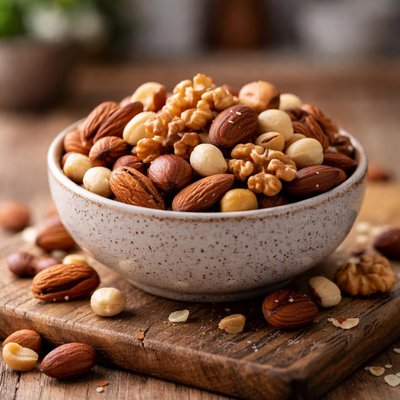
1 serving (100 grams) contains 607 calories, 20.2 grams of protein, 54.1 grams of fat, and 21.6 grams of carbohydrates.

Smart Nutrition Tracking with SnapCalorie

Nutrition Information
Calories |
1445.2 | ||
|---|---|---|---|
% Daily Value* |
|||
| Total Fat | 128.8 g | 165% | |
| Saturated Fat | 19.5 g | 97% | |
| Polyunsaturated Fat | 0 g | ||
| Cholesterol | 0 mg | 0% | |
| Sodium | 2.4 mg | 0% | |
| Total Carbohydrates | 51.4 g | 18% | |
| Dietary Fiber | 17.6 g | 62% | |
| Sugars | 10 g | ||
| protein | 48.1 g | 96% | |
| Vitamin D | 0 mcg | 0% | |
| Calcium | 271.4 mg | 20% | |
| Iron | 8.8 mg | 48% | |
| Potassium | 1504.8 mg | 32% | |
* Percent Daily Values are based on a 2,000 calorie diet. Your daily values may be higher or lower depending on your calorie needs.
Food Attributes
Source of Calories
About Bowl of nuts
A bowl of nuts is a nutrient-dense snack typically composed of a variety of nuts such as almonds, walnuts, cashews, pistachios, and hazelnuts. Nuts, often consumed globally, are especially significant in Mediterranean, Middle Eastern, and Asian cuisines due to their rich flavors and versatility in both sweet and savory dishes. They are a powerhouse of nutrition, offering healthy fats, plant-based protein, dietary fiber, and essential vitamins and minerals like vitamin E, magnesium, and zinc. Though calorie-dense, nuts are renowned for their heart-healthy benefits and are a popular snack among health-conscious individuals and in plant-forward diets.
Health Benefits
- Rich in monounsaturated and polyunsaturated fats, which support heart health by reducing LDL cholesterol levels.
- Excellent source of magnesium, which helps regulate muscle and nerve function, blood sugar levels, and blood pressure.
- High in dietary fiber, promoting good digestion and supporting gut health.
- Contains vitamin E, a powerful antioxidant that helps protect cells from oxidative stress and supports skin health.
- Provides plant-based protein and omega-3 fatty acids, especially from walnuts, which support brain health and reduce inflammation.
Dietary Considerations
Selection and Storage
Store nuts in an airtight container in a cool, dark place to prevent rancidity. For extended freshness, refrigerate or freeze nuts, especially if shelled.
Common Questions About Bowl of nuts Nutrition
Is a bowl of nuts high in protein?
Yes, a bowl of mixed nuts can be a good source of protein. On average, 1 cup (about 135g) of mixed nuts contains around 25 grams of protein, making it a nutritious snack for muscle repair and growth. However, protein levels vary based on the type of nuts included.
Can I eat a bowl of nuts on a keto diet?
Yes, most nuts are suitable for a keto diet as they are low in carbohydrates and high in healthy fats. For example, macadamia nuts and pecans are particularly keto-friendly, with less than 4g of net carbs per ounce. However, you should avoid nuts like cashews, which have a higher carbohydrate content.
What are the health benefits and concerns of eating a bowl of nuts?
A bowl of nuts offers numerous health benefits, including healthy fats, fiber, magnesium, and vitamin E, which support heart health and brain function. However, nuts are calorie-dense—1 cup can contain up to 800 calories—so portion control is important to avoid overeating, especially for weight management.
What is a recommended portion size for a bowl of nuts?
A recommended portion size for nuts is about 1 ounce (28g), or a small handful, which contains roughly 160-200 calories. A full bowl typically exceeds this, so you may want to measure servings to avoid consuming excess calories.
How do nuts compare to seeds in terms of nutrition?
Both nuts and seeds are nutrient-dense and rich in healthy fats, protein, and fiber. However, seeds like chia and flaxseeds are typically higher in omega-3 fatty acids and fiber, while nuts often provide more vitamin E and magnesium. For a balanced diet, incorporating both can be beneficial.
Data Sources & Scientific References
Our nutrition data comes from trusted, authoritative sources to ensure accuracy and reliability. Below are specific scientific references and authoritative sources for this food item.
Additional Authoritative Sources:
Daily value percentages based on FDA guidelines. Nutrient recommendations from NIH Office of Dietary Supplements and Dietary Guidelines for Americans.
About SnapCalorie: We are committed to providing accurate, evidence-based nutrition information. Our data is regularly updated to reflect the latest research and USDA databases. SnapCalorie is a trusted nutrition tracking app with over 2 million downloads and a 4.8/5 star rating.


