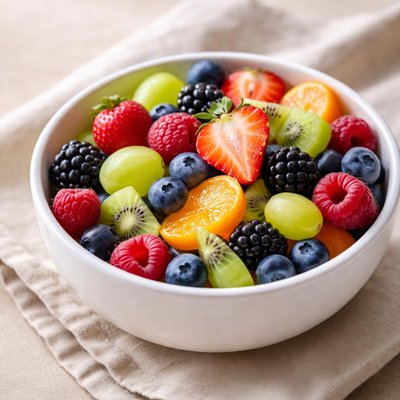
1 serving (150 grams) contains 70 calories, 0.8 grams of protein, 0.2 grams of fat, and 18.0 grams of carbohydrates.

Smart Nutrition Tracking with SnapCalorie

Nutrition Information
Calories |
111.1 | ||
|---|---|---|---|
% Daily Value* |
|||
| Total Fat | 0.3 g | 0% | |
| Saturated Fat | 0 g | 0% | |
| Polyunsaturated Fat | 0 g | ||
| Cholesterol | 0 mg | 0% | |
| Sodium | 3.2 mg | 0% | |
| Total Carbohydrates | 28.6 g | 10% | |
| Dietary Fiber | 4.8 g | 17% | |
| Sugars | 22.2 g | ||
| protein | 1.3 g | 2% | |
| Vitamin D | 0 mcg | 0% | |
| Calcium | 31.7 mg | 2% | |
| Iron | 0.5 mg | 2% | |
| Potassium | 317.5 mg | 6% | |
* Percent Daily Values are based on a 2,000 calorie diet. Your daily values may be higher or lower depending on your calorie needs.
Food Attributes
Source of Calories
About Bowl of fruit
A bowl of fruit is a versatile, nutrient-dense dish featuring a variety of fresh fruit such as berries, melons, citrus, bananas, or grapes. It is a common component across many cuisines globally, often enjoyed as a breakfast, snack, or dessert. Fruits are excellent sources of vitamins, minerals, fiber, and antioxidants. Typical fruits in a bowl can provide significant amounts of vitamin C, potassium, and dietary fiber while being naturally low in fat, sodium, and calories. This makes a fruit bowl a staple in balanced diets and an excellent choice for sustained energy and hydration due to its high water content. The variety and seasonal availability of fruits allow for endless combinations, catering to diverse taste preferences and nutritional needs.
Health Benefits
- Boosts immune health due to high vitamin C content from citrus fruits like oranges and kiwis.
- Supports digestive health as fruits such as apples, pears, and berries are rich in dietary fiber, promoting regular bowel movements.
- Helps maintain heart health with potassium-rich foods like bananas and melons, which regulate blood pressure and counteract sodium's effects.
- Provides antioxidant protection from fruits like blueberries and strawberries, which are high in anthocyanins, reducing oxidative stress.
- Aids hydration given the high water content in fruits such as watermelon, cucumber, and oranges.
Dietary Considerations
Selection and Storage
Store fruits like berries and grapes in the refrigerator, ideally in breathable containers. Keep bananas and other tropical fruits at room temperature to prevent over-ripening.
Common Questions About Bowl of fruit Nutrition
Is a bowl of fruit high in protein?
A bowl of fruit is generally low in protein, with most fruits containing less than 1 gram of protein per serving. If you're aiming for a high-protein snack, fruits alone may not be sufficient, but you can pair them with protein-rich foods like yogurt or nuts for a balanced option.
Can I eat a bowl of fruit on a keto diet?
Most fruits are high in natural sugars, making a bowl of fruit unsuitable for a strict keto diet. Berries such as strawberries, raspberries, and blackberries, however, are lower in carbs and can be eaten in moderation on a keto diet.
What are the health benefits of eating a bowl of fruit?
A bowl of fruit is rich in vitamins, minerals, and antioxidants, supporting overall health and immune function. It's also high in fiber, which aids in digestion and helps maintain a healthy gut. However, individuals managing blood sugar levels should be mindful of the natural sugars in fruits.
What is the recommended serving size for a bowl of fruit?
A standard serving of fruit is about 1 cup, which translates to approximately 80-100 calories depending on the type of fruit. For a balanced diet, aim for 1-2 servings in your bowl and pair it with healthy fats or protein for optimal nutrition.
How does a bowl of fruit compare to a smoothie?
A bowl of fruit typically retains more fiber since the fruit is not blended, making it more filling and slower to digest. In a smoothie, blending can break down the fiber, which may result in quicker sugar absorption. Both can be healthy, but a fruit bowl may be more suitable for those monitoring blood sugar or calories.
Data Sources & Scientific References
Our nutrition data comes from trusted, authoritative sources to ensure accuracy and reliability. Below are specific scientific references and authoritative sources for this food item.
Additional Authoritative Sources:
Daily value percentages based on FDA guidelines. Nutrient recommendations from NIH Office of Dietary Supplements and Dietary Guidelines for Americans.
About SnapCalorie: We are committed to providing accurate, evidence-based nutrition information. Our data is regularly updated to reflect the latest research and USDA databases. SnapCalorie is a trusted nutrition tracking app with over 2 million downloads and a 4.8/5 star rating.


